
GLP-1s can shrink appetite along with fat—and up to 40% of your weight loss may come from muscle, not fat, if you’re not careful. To protect lean mass, you’ll want 1.2–1.6 g of protein per kg of goal body weight daily, spaced across 3–4 meals, plus resistance training 2–3 times weekly. Since hunger cues are blunted, you’ll need to schedule protein intentionally. The strategies below break down exactly how to hit your numbers.
TLDR Key Takeaways
- GLP-1s can cause up to 25–40% of weight loss from lean muscle, not just fat, due to appetite suppression.
- Aim for 1.2–1.6 g/kg of goal body weight daily, or up to 2.0 g/kg if resistance training.
- Spread protein across 3–4 meals, targeting 20–40 g per meal to maximize muscle protein synthesis.
- Prioritize high-quality sources like eggs, dairy, lean meats, and protein shakes for easy absorption.
- Pair protein intake with 2–3 weekly strength training sessions to preserve and build lean muscle.
Why GLP-1s Put Your Muscle Mass at Risk
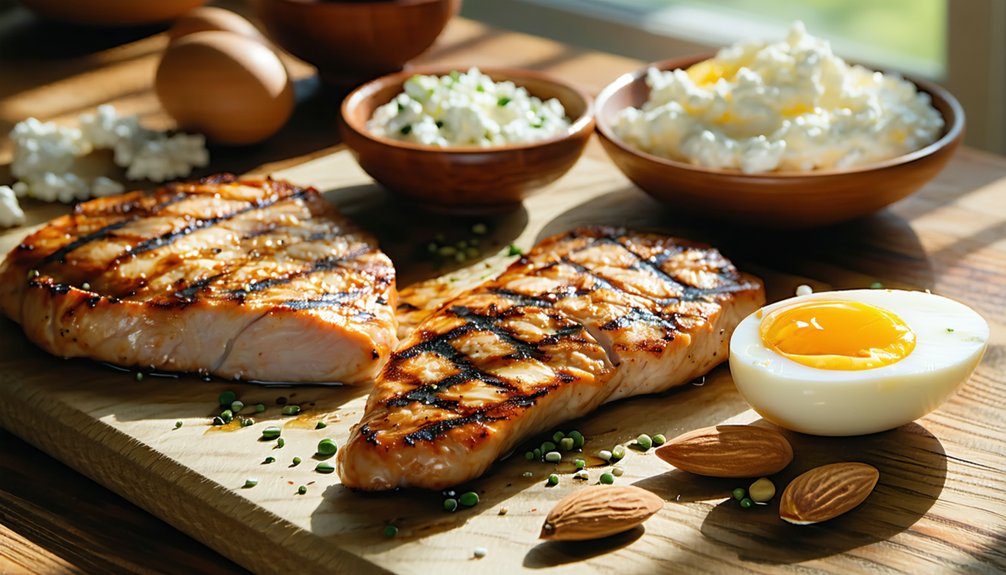
While GLP-1 medications excel at shrinking fat stores, they don’t discriminate perfectly between fat and muscle. Roughly 25% to 40% of your total weight loss can come from lean mass—not fat.
Here’s why: appetite suppression works so well that you often eat less protein without realizing it. Combine that with a calorie deficit, and your body starts breaking down muscle for energy instead of preserving it.
Metabolic signaling shifts too. Impaired mTOR activity slows muscle protein synthesis while proteolysis ramps up, accelerating breakdown.
Add chronic inflammation, common in obesity and type 2 diabetes, and you’ve got a recipe for muscle wasting. This pattern of lean-mass loss isn’t unique to GLP-1s—it also occurs with calorie restriction and bariatric surgery. In fact, physician surveys show a significant portion of prescribers report observing signs of muscle loss in their patients on these medications. Notably, research remains scarce and results are mixed, with some studies even suggesting these therapies may improve muscle quality by reducing myosteatosis, or fat infiltration within muscle tissue.
If you’re older, less active, or already frail, you’re at even higher risk. Understanding this mechanism is your first step toward protecting what matters.
Beating Low Appetite to Hit Protein Goals
Knowing the mechanism behind muscle loss doesn’t make eating any easier when GLP-1 medications have crushed your appetite. The fix isn’t willpower—it’s strategy.
Start with meal scheduling: eat 5-6 small meals every 2-3 hours instead of forcing three large ones. Hit hunger the moment it strikes, and load your biggest meal into whatever window your appetite peaks.
Make food count more per bite. Add peanut butter to toast, protein powder to pancakes, or cheese into soups—density beats volume when your stomach won’t cooperate. Try to spread protein evenly, aiming for around 30 to 40 g per meal, so each small sitting still supports fullness and muscle preservation.
Don’t underestimate flavor variety either. Rotating seasonings, textures, and colors keeps meals interesting when appetite fades fast. Sip shakes or eggnog for easy calories, and skip drinks right before eating so liquid doesn’t crowd out the protein you need. It also helps to have a bedtime snack, since going to bed hungry can affect your appetite at the next meal. If diabetes is part of the picture, prioritize protein and fats over added sugars, and check in with your GP or diabetes nurse if blood glucose starts creeping up.
How Much Protein Do You Need on a GLP-1?
How Much Protein Do You Need on a GLP-1?
Because standard nutrition advice wasn’t built for GLP-1’s appetite suppression, the old 0.8 g/kg RDA falls short once you’re actively losing weight. Your real target: 1.2 to 1.6 g/kg of goal body weight daily, per AACE/ACE guidelines. Lifting weights regularly? Push toward 2.0 g/kg to maximize muscle retention.
Age matters too. If you’re 60+, aim for the upper range—1.6 g/kg—since anabolic resistance blunts your body’s muscle-building response. Under 60 and active? 1.2 to 1.4 g/kg works.
To calculate: convert goal weight to kilograms (divide pounds by 2.2), then multiply by your target range. As a reference point, one common example used for protein calculations is a 150 lb person, whose target comes out to roughly 82 g/day.
Protein timing matters as much as the total. Eating protein first at meals sharpens satiety cues, helping you feel fuller before appetite drops off entirely. Because GLP-1 medications slow gastric emptying, this effect on fullness is amplified when protein is eaten first. Rather than concentrating your intake into one large meal, spreading protein evenly is best achieved through even distribution across meals throughout the day.
Calculate Your Personal Protein Target
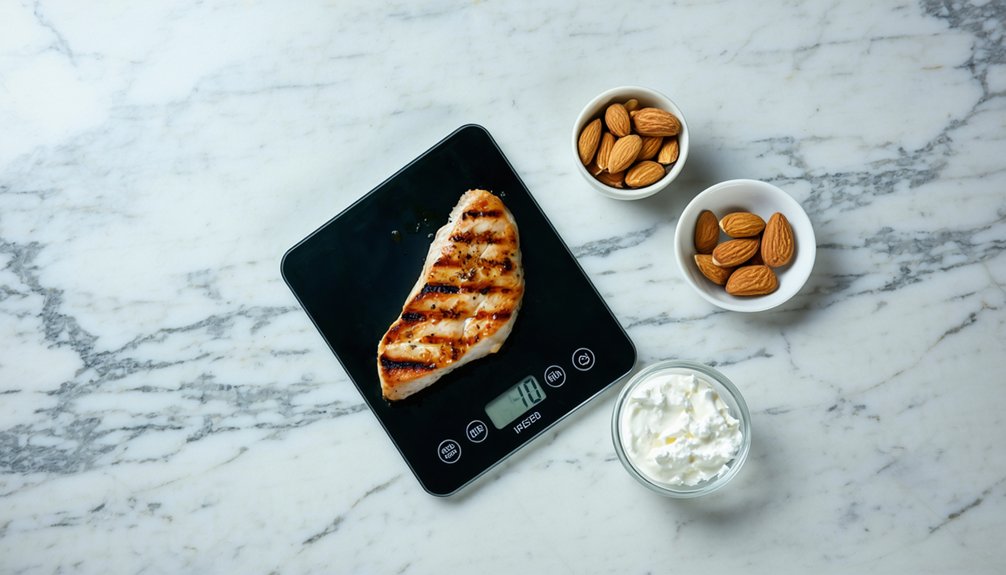
Once you know your goal weight, the math takes two minutes. Convert pounds to kilograms by dividing by 2.2. This goal weighting—not your current weight—drives the calculation. Multiply by 1.6 for a moderate target or 2.0 for the midpoint consensus, especially if you’re actively losing weight or over 50. Resistance training? Push to 2.4 g/kg.
Most adults land between 100–160g daily. That’s your number—no guessing required. This range aligns with the international consensus recommendation of 1.2–1.6 g/kg body weight per day to preserve muscle mass during weight loss.
Now factor in timing windows. Split that total across 3–4 meals, hitting 30–40g each. Front-load breakfast with 25–30g when appetite’s highest, since it drops faster than your protein needs. On days you train or do cardio, aim for one higher protein meal of 25–40g or more within a reasonable window to support recovery. This consistency matters because pairing protein intake with resistance training two to three times per week helps preserve and build lean muscle during weight loss.
Track intake for one week. Compare your target to reality, then close the gap.
What Counts as High-Quality Protein?
Hitting your gram target only matters if the protein you’re eating actually delivers. Quality comes down to amino balance—whether a food gives your body all nine essential amino acids it can’t make on its own. Meat, eggs, and dairy check that box naturally. Soy and quinoa do too, making them standout plant options. Other plant proteins fall short alone, but plant combinations like rice and beans close the gap.
Digestibility matters just as much. Eggs and dairy absorb efficiently, fueling muscle repair without waste. Bioavailability determines how much of that protein your body actually uses, not just consumes.
Whole foods win over processed ones—chicken breast and dried beans beat deli meats loaded with sodium. Choose foods that work as hard as you do. A half chicken breast, for example, delivers around 26.7 grams of protein in a lean, minimally processed package. For comparison, a 3-ounce serving of chicken breast provides roughly 26.5 grams of protein, making it one of the more efficient whole-food sources available. Beyond protein quality itself, remember that every food comes as part of a protein package that includes fats, carbs, sodium, and other nutrients worth weighing.
Best Protein Foods to Prioritize on GLP-1s
Lean animal proteins top the list for GLP-1 users steering a sensitive digestive system. Chicken breast, turkey, lean beef cuts, and lean seafood deliver roughly 7 grams of protein per ounce without triggering nausea or bloating. Ground turkey or chicken gives you 20–25 grams per 3-ounce serving—an easy win for meal prep.
Dairy and eggs offer low-fat density: non-fat Greek yogurt, cottage cheese, egg whites, and whole eggs (about 4 grams each) fit easily into small meals.
Plant-based options deserve equal priority. Tofu, plant tempeh, and seitan pack protein and versatility, while lentils, chickpeas, and edamame add fiber that supports blood sugar control.
When appetite dips, lean on whey or plant protein shakes—20 to 30 grams per serving keeps you covered without forcing solid food.
Spread Your Protein Across the Day

Timing matters as much as your total protein intake. This is protein pacing: spreading roughly 20-40 grams across four to five meals and snacks daily, rather than loading it all at dinner. Your muscles thrive on continuous amino timing—a steady stream of amino acids every three to four hours—not one massive evening dose.
On GLP-1s, appetite windows shrink, so structure counts. Anchor solid protein at breakfast (often the most neglected meal), lunch, dinner, and one or two snacks. Add an extra 20-gram portion after exercise, and consider a protein-rich snack before bed to fuel overnight recovery.
Even distribution stimulates about 25% more muscle protein synthesis than an evening-heavy pattern. Small, consistent doses—not sporadic large ones—protect the muscle you’ve worked hard to keep.
How Many Grams of Protein Per Meal?
Aim for 20-30 grams of protein per meal if you’re a healthy adult, and bump that up to 25-35 grams if you’re chasing peak muscle health. On GLP-1 medications, your appetite shrinks—so every bite counts. Prioritize age adjusted servings: if you’re 65+, target 20-30 grams per meal to protect muscle mass and prevent unwanted weight loss. If you’re sedentary, 15-20 grams may suffice, but active bodies need 30-40 grams to match higher demands.
Protein timing matters just as much as quantity. Spacing 0.4 g/kg across four meals hits the sweet spot for muscle protein synthesis. Don’t overload one meal—your body caps benefits around 0.55 g/kg per sitting. Own your intake, and eat with intention.
Why Protein and Strength Training Work Together
Hitting your protein numbers only tells half the story—what you do with that protein matters just as much. Strength training and protein don’t just coexist—they synergize. Both trigger mTOR signaling independently, but combine them and you get an additive effect neither achieves alone.
Here’s the mechanism: resistance training increases LAT1 content in your muscle membranes, speeding up leucine transport when you eat protein post-workout. That rapid leucine spike maximizes mTOR activation, driving muscle protein synthesis harder than protein or training could alone.
This is why training remains the primary driver of muscle and strength gains. Protein without training yields limited results. But skip training, and you’re leaving massive gains on the table—gains that come from combining both, not choosing one.
Strength Workouts That Protect Muscle on GLP-1s
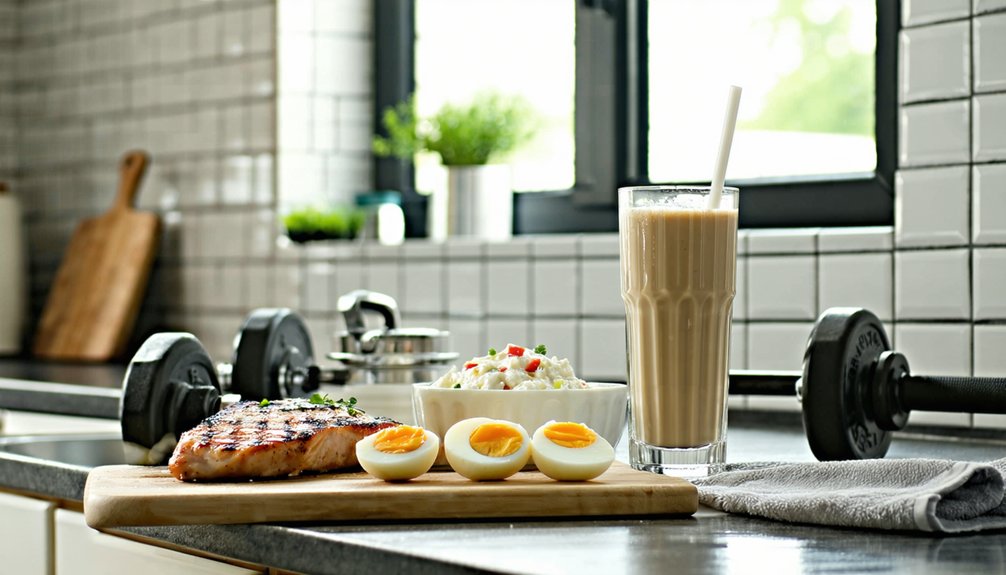
Forget marathon gym sessions—your body needs a clear signal, not a grueling ordeal. Two to three full-body workouts weekly, 15–50 minutes each, deliver that signal without draining you.
Smart exercise selection covers every major pattern: squats for legs, hinges for glutes and posterior chain, presses for chest and shoulders, pulls for back strength, and carries for core stability. Hit 8–12 reps for 2–3 sets per exercise, resting 60–120 seconds between. Beginners start with one set of 12–15 reps; aim for 6–10 weekly sets per muscle group.
Periodization strategies keep progress steady—cycle strength blocks (heavier, lower reps) with hypertrophy blocks (moderate weight, higher reps) over a 6-week plan. Warm up for five minutes, sleep 7–9 hours, and stay consistent. That’s the real formula for lasting muscle protection.
Should You Eat Protein After a Workout?
Because GLP-1 medications blunt your hunger cues, you can’t rely on appetite to remind you to refuel after training—you need a plan instead.
Yes, you should eat protein after a workout. Muscle protein synthesis stays elevated for 2 to 4 hours post-exercise, with the highest-priority window falling within that first two hours.
Timing subtleties matter less than consistency: aim for 25–30 grams within 60 minutes, or 25–40 grams within two hours, whichever fits your schedule.
Meal composition counts too—pair protein with carbohydrates to fuel recovery. Choose whey, eggs, poultry, fish, or a shake if appetite is low.
Don’t wait to feel hungry. Treat this meal as non-negotiable, scheduled liberation from guesswork—not a suggestion.
When Protein Powders and Shakes Make Sense
When food alone can’t close the gap, protein shakes step in. GLP-1 medications shrink your appetite fast, making 1.2–1.6 g/kg of protein daily feel impossible through meals alone. A shake delivers 10–30 g in minutes, no cooking, no forcing down food that won’t stay down.
They’re your backup when nausea hits or meals feel too small. Sip slowly over 15–20 minutes if early satiety is an issue. Smart meal timing—morning, post-workout, or between meals—keeps amino acids flowing for muscle repair all day.
Flavor variety matters too: rotating options prevents taste fatigue, so you’ll actually stick with it. For vegetarians, older adults, or anyone facing reduced food volume, shakes offer reliable protein without the fight.
Frequently Asked Questions
Can Too Much Protein on a GLP-1 Cause Kidney or Digestive Issues?
You won’t wreck healthy kidneys with adequate protein—that’s a kidney myth if you’re not CKD-prone. Digestive misconceptions abound too: you don’t need to fear bloating. Just space protein into smaller meals, choose easy-to-digest sources, and stay comfortable.
Will Protein Intake Affect How Well My GLP-1 Medication Works?
No—protein won’t blunt your GLP-1’s effects. It actually works with your medication, protecting muscle while fat melts away. Use timing strategies like protein-first meals and smart meal composition to fuel results, not fight them. You’ve got this.
How Long Does It Take to Notice Muscle Loss on a GLP-1?
You’ll typically notice early signs within 4-8 weeks, though timeframe variability exists based on your diet and training. Watch for unexpected weakness or fatigue—don’t wait for obvious symptoms. Track proactively, and you’ll stay ahead of silent muscle loss.
Can Blood Tests Confirm if I’m Losing Muscle Versus Fat?
No—blood biomarkers alone can’t confirm it. They flag hormonal or metabolic shifts, but you need imaging scans like DEXA or InBody to truly separate muscle from fat. Combine both for real answers, not guesses.
Do Older Adults Need Different Protein Targets on GLP-1S?
Yes—you need age adjusted protein, targeting 1.5–1.6 g/kg if you’re over 60. Anabolic resistance raises your sarcopenia risk, so don’t settle for standard RDA numbers. Claim higher intake, spread it across meals, and protect your independence.
Conclusion
GLP-1s can help you lose weight, but they don’t discriminate between fat and muscle. You’ve got to be proactive: prioritize protein at every meal, aim for that personalized target, and pair it with regular strength training. These two habits work together to protect the muscle you have while you lose fat. Don’t wait until you notice strength loss—start building these habits now, and you’ll protect your metabolism for the long run.
References
- https://ubiehealth.com/doctors-note/lean-mass-warning-prioritize-protein-glp-1-57-mass1e10
- https://davidprotein.com/blogs/the-column/protein-glp1-medications-muscle-preservation
- https://www.endocrinedirectcarephysicians.com/post/optimal-daily-protein-intake-and-strength-training-tips-for-glp-1-medication-users-to-preserve-muscl
- https://advances.massgeneral.org/endocrinology/article.aspx?id=1601
- https://www.glp1clinics.org/blog/new-protein-research-glp1-muscle-preservation-2026-03-28
- https://pmc.ncbi.nlm.nih.gov/articles/PMC12957034/
- https://casadesante.com/blogs/glp1-supplements/glp-1-muscle-loss-prevention-the-protein-and-supplement-protocol
- https://www.fellahealth.co.uk/guide/does-glp-1-decrease-muscle-mass
- https://academic.oup.com/ejendo/article-abstract/193/5/R31/8306985
- https://pmc.ncbi.nlm.nih.gov/articles/PMC13090617/

