
Weighted-vest walking enhances calorie burn, strengthens your heart, and builds muscle and core stability without replacing structured strength training. You’ll want to start light—around 5% of your body weight—and progress gradually to avoid joint strain or poor posture. It’s not for everyone: skip it if you have spinal issues, arthritis, or you’re pregnant. Get your fit, form, and progression right, and you’ll reveal benefits far beyond a regular stroll.
TLDR Key Takeaways
- Weighted-vest walking adds resistance to boost cardiovascular demand, calorie burn, and endurance beyond normal walking.
- Start with about 5% of body weight, never exceeding 10%, progressing gradually as fitness improves.
- Avoid weighted vests if pregnant, or with spinal conditions, arthritis, uncontrolled hypertension, or balance disorders.
- Maintain proper posture and gait to prevent joint strain, spinal compression, or injury risk.
- Limit sessions to 1–3 times weekly for beginners, allowing recovery between loaded walks.
What Is Weighted-Vest Walking?
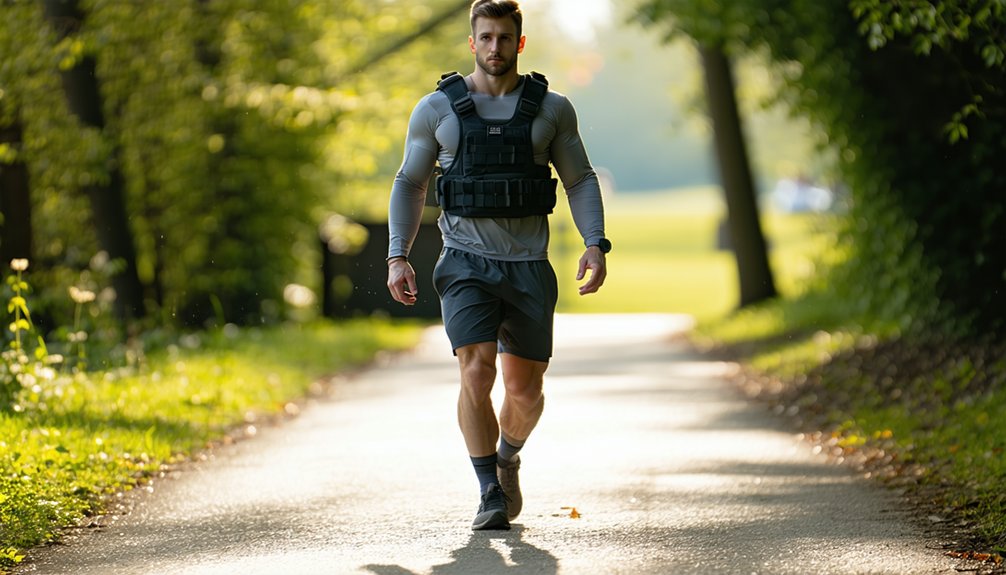
Strapping on a weighted vest turns your everyday walk into a more demanding workout. This method, sometimes called “rucking,” adds mass to your body during a standard walk, forcing your system to work harder and burn more calories. Its history origins trace back to military training, where soldiers carried loaded packs to build endurance—today’s cultural variations range from fitness enthusiasts chasing strength gains to everyday walkers seeking an efficient calorie burn.
The vest sits snugly against your torso, distributing weight evenly so you avoid shoulder strain or bounce. Beyond calorie burn, the added load also helps support bone density over time. A good starting point is a vest weighing about 5% of body weight, with gradual increases as fitness improves. This isn’t a replacement for structured resistance training—it’s low-intensity cardio with built-in resistance, giving you a straightforward way to reclaim your fitness routine and push your limits on your own terms. However, this practice should be avoided by people with neck pain or back pain, as the added load can aggravate these conditions.
How Weighted Vest Walking Boosts Calorie Burn and Heart Health
Once you’ve got the vest fitted snugly and you’re moving through your walk, the real question becomes: what does that extra weight actually do for your body? The added resistance forces your muscles to work harder, burning over 40% more energy than unweighted walking. An ACE Fitness study confirms weighted vests increase calorie burn by up to 12%. Your heart responds too—pumping harder to meet the increased demand, strengthening cardiovascular function with every step.
Pair your walks with interval training—alternating brisk paces with recovery periods—to amplify these effects further. But don’t skip recovery strategies; your body needs rest days to adapt and rebuild. Walking with a vest for 30–60 minutes hits the sweet spot for maximizing daily calorie expenditure while protecting your gains. Research also shows that heavier vests tend to reduce walking speed, which can influence how much total energy you burn during a session. Keep in mind, though, that claims about weight vests improving weight loss remain unclear and require more research to confirm. Beyond calorie burn, this added load also helps build bone density, reducing the risk of bone loss over time.
Building Muscle, Bone Density, and Posture With a Weighted Vest
Load your legs with extra weight, and you’ll build strength you can’t get from walking alone. The vest’s resistance forces your leg muscles to work harder with every stride, building mass without demanding high-impact activity. This added load also benefits bone health in your legs, though research on significant density gains stays inconclusive—some studies show promise, others show no real difference compared to weightlifting. In fact, experts note that walking and running, whether or not you’re wearing a vest, typically don’t provide enough muscle stress to trigger significant muscle growth.
Beyond your legs, the vest demands core endurance to stabilize your spine and torso. This engagement strengthens your abdominal and back muscles, supporting better posture throughout the day. But watch your gait mechanics closely: extra weight can trigger compensations like arching your back or leaning your head forward. Expert proper walking form first, then add resistance to build strength, not bad habits. Beginners should keep loaded sessions to 1–3 times per week, leaving other days unweighted so the body can adapt safely.
Bonus Benefits: Better Lungs, Metabolism, and Endurance

Beyond muscle and bone, your weighted vest pushes your cardiovascular and respiratory systems into higher gear. The added load demands greater oxygen intake, expanding lung capacity while sharpening your breath control during every stride. Your heart rate climbs, your blood pressure responds, and your circulation improves—all without needing to log extra miles.
This translates directly to your metabolism. You’ll burn more calories than walking alone, enhancing fat-burning potential and energy output throughout the day. Pair this with solid recovery nutrition, and you preserve muscle while shedding fat. Research shows weighted vest walking can also help lower insulin resistance, supporting better metabolic health overall.
Endurance builds fast, too. Short, intense sessions—even 10-15 minutes—elevate your training stress and conditioning. Over time, you’ll walk longer, breathe easier, and move with newfound stamina and freedom. A dynamic warm-up wearing a vest has even been shown to boost agility in young athletes preparing for sport.
Who Should Avoid Weighted-Vest Walking?
While weighted-vest walking offers real benefits, it isn’t safe for everyone. If you have back, neck, or spinal issues like spondylolisthesis, spinal stenosis, or disc herniation, skip the vest entirely—added load risks nerve damage and worsened pain.
Arthritis or osteoarthritis in your hips, knees, or ankles? The extra weight accelerates joint deterioration. Experts caution that individuals with poor joint health are advised to avoid weighted vests altogether. This aligns with broader guidance that people with chronic knee pain should not use a weighted vest.
Pregnancy precautions are non-negotiable: this is an absolute contraindication, no exceptions, since abdominal pressure compromises fetal circulation. Obesity considerations matter too—if your BMI exceeds 30 or you’re managing metabolic disease, get physician approval first, as excess load compounds joint stress.
Uncontrolled hypertension, cardiac devices, or balance disorders also demand caution or avoidance—fall risk doubles, and heart rate spikes unpredictably. New to exercise? Build your base with unweighted walking before adding resistance. Your safety comes first, always.
Injuries and Strains Linked to Weighted-Vest Walking
Even if you clear the safety checklist above, you’re not automatically injury-proof once you strap on that vest. Added weight loads your knees, hips, and lower back with every step—2,000 to 12,000 steps of extra strain adds up fast, opening the door to overuse injuries and aggravating existing arthritis.
Your spine takes a hit too: axial load can trigger new pain or, in vulnerable cases, spinal compression that worsens nerve issues or osteoporosis-related fractures. Muscle fatigue creeps in when you skip warm-ups or pile on weight too fast. As a rule of thumb, the vest’s load should never exceed 10% of body weight.
Poor posture—leaning forward or sitting into your hips—compounds the risk, turning a simple walk into a biomechanical liability. Wearing the vest for several hours at a stretch only heightens the chance of joint strain and fatigue-related missteps. The fix isn’t fear, it’s awareness: respect your limits, and progress deliberately.
How Much Weight Should You Start With?
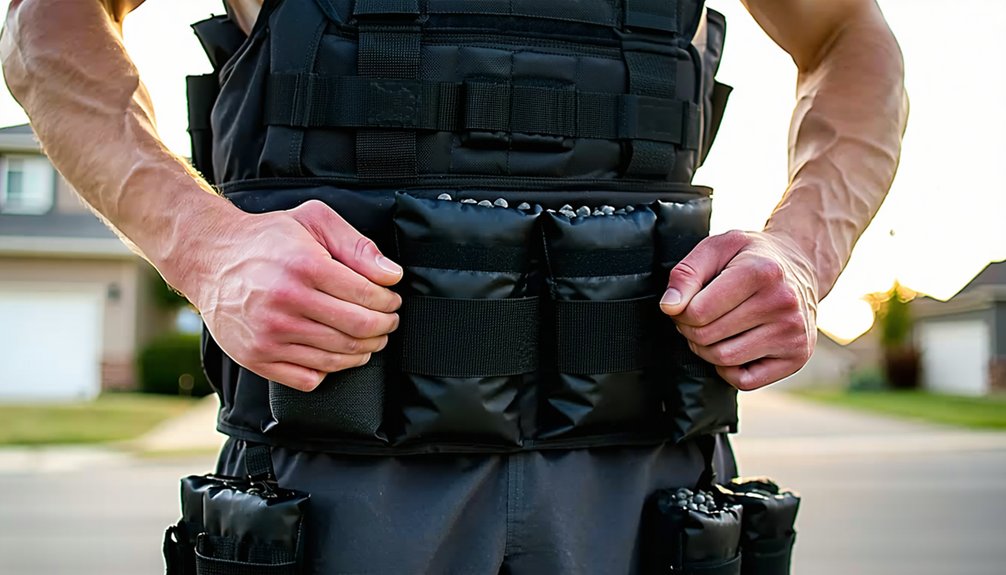
Skip the guesswork and start light: aim for roughly 5% of your body weight. For a 150 lb person, that’s about 7.5 lb; for 200 lb, roughly 10 lb. If math isn’t your thing, grab a fixed 5–10 lb vest and go.
One of the biggest beginner misconceptions is that heavier equals faster results—it doesn’t. Overloading too soon strains joints and wrecks form, killing the psychological motivation that keeps you consistent.
Already fit? You can start a bit higher, but the vest shouldn’t feel excessive. New to exercise entirely? Walk unweighted first, build a strength base, then add load. When you do progress, follow a set order: add time, distance, pace, hills, then small weight increases—never all at once.
Your goal isn’t to prove toughness on day one—it’s sustainable progress that keeps you moving freely, week after week.
Warm Up Right Before Your Weighted-Vest Walk
Strapping on a weighted vest cold is asking for trouble—your muscles and joints need a proper wake-up call first. Spend 5 to 10 minutes on lively mobility before you strap in. Leg swings, arm circles, hip circles, and shoulder rolls prime your hamstrings, glutes, and shoulders for the load ahead. Keep every movement controlled and rhythmic, never jerky.
Pair this with light, unweighted cardio—walking or jogging—to boost your heart rate and lock in your natural stride and arm swing. Skip jumping or sprinting until your form’s solid.
Add bodyweight squats, lunges, push-ups, and a short plank hold to activate your core and joints. Throughout, practice breath control—expand your chest, breathe deeply, and let that rhythm carry into your weighted walk.
Your First Weighted-Vest Walking Session
Load light for session one: aim for about 5% of your body weight, so if you’re at 150 pounds, cap your added weight at 7.5 pounds.
Start with indoor acclimation—walk your house for 5 minutes, doing normal tasks like dishes or laundry, testing stairs and kitchen turns for shifting or pressure points.
Run through your comfort checklist: straps snug but breathable, vest sitting high on your chest, no drooping toward your waist.
Once you’ve confirmed stability indoors, take it outside on flat, familiar ground—your driveway or a sidewalk loop—for 10 to 20 minutes at a conversational pace.
Keep your gaze 10 to 15 feet ahead, shoulders back, core lightly engaged. Stop if your gait or balance shifts.
This grounded, gradual start builds real freedom to move stronger, longer.
Choosing a Weighted Vest That Fits Right
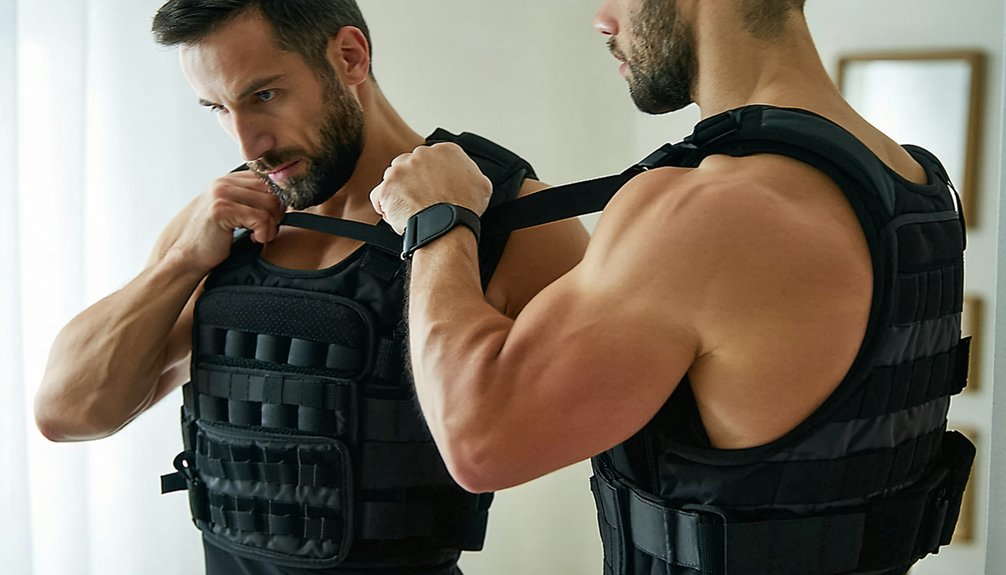
Before you buy anything, grab a soft tape measure and wrap it around the fullest part of your chest, just under your arms, keeping it level with a little room to breathe. That number matters more than the weight rating on the box—torso length and width determine whether a vest moves with you or against you.
Check the hem: it should sit just below your waist, not bunch up mid-stride. Armholes need to clear your armpits without gapping or pulling across your back. If you’re layering over a hoodie, size up 2–3 inches.
Prioritize fit adjustments—straps, buckles, side closures—so you can dial in comfort as your body changes. Gender specific sizing matters too, especially for shoulder width and chest shape. A vest that fits right gives you freedom to move, not restriction.
Perfecting Your Posture During Weighted-Vest Walking
Once your vest fits right, how you carry it matters just as much. Stand tall, brace your core, and hold your chest up so your spine stays vertical under load. Keep your neck mobility in check—chin tucked, head high, gaze fixed 10–15 feet ahead instead of down. Pull your shoulders back and down, opening your chest and resisting kyphosis or rounding.
Shorten your stride, roll heel to toe, and let flexible ankles absorb impact. Build pelvic tilt awareness: engage your glutes so your lower back doesn’t arch as you move. Breathe in a steady 4–4 rhythm to stabilize your core. Watch exertion levels, and shorten sessions if fatigue starts breaking your form.
Progressing Safely: Adding Weight, Time, and Terrain
Since progress happens gradually, you’ll want to start light and let your body set the pace. Begin at 5% of your body weight, walking flat, predictable routes for the first two weeks. Add time before load: extend by 3-5 minutes every 1-2 weeks until you hit 30 minutes. Only then apply progressive overload, nudging weight up by 1-2 lbs or 1-2% of body weight, never exceeding 7-8% in month one.
Once stable, expand your terrain with mild inclines and interval walks to build capacity without overloading joints. Weave in balance training and breathing drills to sharpen control under load. Watch for gait changes, joint pain, or unusual fatigue—these signal it’s time to pull back, not push through.
Frequently Asked Questions
Can I Wear a Weighted Vest Every Day of the Week?
No—you shouldn’t wear it all seven days. Limit yourself to three days weekly, embracing daily variation to protect your joints. Recovery importance can’t be overstated: rest days let your body adapt, keeping you strong, pain-free, and truly free to move.
How Long Should You Wear a Weighted Vest per Session Overall?
You start with 10–30 minutes per session, then build from there. Don’t rush it—gradual progression keeps your joints safe and your posture solid. Listen to your body, increase slowly, and you’ll earn lasting strength without unnecessary risk.
Can Weighted Vests Help With Weight Loss Specifically?
Yes—weighted vests can help you shed fat through increased calorie burn during workouts. They may also trigger metabolic adaptation via the gravitostat, helping you keep weight off long-term instead of yo-yo dieting endlessly.
Are Weighted Vests Safe for Running Instead of Walking?
Yes, but you’ll need caution: impact sprinting under load spikes ankle stress and joint strain. Build cardio fitness first, keep weight under 10% of your body weight, and progress gradually—your freedom to run harder comes with real responsibility.
How Much Does a Good Weighted Vest Typically Cost?
You’ll typically pay $80–$200 for a solid vest—that’s your price range for real durability. Look for quality indicators like reinforced stitching, adjustable plates, and even weight distribution. Skip cheap shells; free yourself with gear that lasts.
Conclusion
You don’t need fancy equipment to upgrade your walks—just a well-fitted weighted vest and a smart plan. Start light, focus on posture, and progress gradually to protect your joints and spine. Once you’ve cleared any health concerns with your doctor, you’ll burn more calories, build stronger bones, and enhance your endurance with every step. Stay consistent, listen to your body, and let the extra weight work for you, not against you.
References
- https://www.uclahealth.org/news/article/should-you-walk-with-weighted-vest
- https://www.youtube.com/watch?v=kwKtfJfJFFw
- https://www.womenshealthmag.com/uk/fitness/a60858706/walking-in-a-weighted-vest/
- https://www.verywellhealth.com/walking-with-a-weighted-vest-8674435
- https://www.health.harvard.edu/exercise-and-fitness/what-are-the-benefits-of-walking-with-a-weighted-vest
- https://www.menshealth.com/uk/fitness/cardio-exercise/a63630311/weighted-walking-increases-energy-burn/
- https://www.womenshealthmag.com/fitness/a68856672/walking-with-weighted-vest/
- https://www.womanandhome.com/health-wellbeing/weighted-vest-for-walking/
- https://www.runnersworld.com/uk/training/cross-training/a65488032/walking-in-a-weighted-vest-for-a-week/
- https://www.atlantichealth.org/health-articles/rehab-physical-therapy/weighted-vest

