
You’re not weak for feeling intimidated—you’re wired that way, and nearly half of Americans feel it too. Beat it with preparation: write a simple workout plan, preview machines online, and pick off-peak hours like early mornings or mid-afternoons. Bring a friend, ask staff for a quick orientation, and start with light weights on machines. Avoidance keeps anxiety alive; action shrinks it. Stick around, and you’ll pick up the exact steps that make walking in feel effortless.
TLDR Key Takeaways
- Understand that gym anxiety is common—about half of Americans feel intimidated, so avoidance only reinforces it.
- Prepare a written workout plan and preview equipment beforehand to build familiarity and reduce uncertainty.
- Visit during off-peak hours, like early mornings or mid-afternoons, for more space and staff attention.
- Ask gym staff for a quick orientation or bring a friend to boost confidence and accountability.
- Join beginner-friendly group classes to learn proper form while connecting with a supportive community.
Why Gym Intimidation Happens (And Why It’s Normal)

You’ve probably felt it: that tight chest walking through the gym doors, certain everyone’s watching your every move. That’s not weakness—it’s your nervous system reacting to real social hierarchies.
Gyms often feel steeped in power imbalances, and your body’s physiological responses are simply flagging a perceived threat to your sense of adequacy. You’re not broken; you’re wired to notice status and judgment.
Here’s the liberating truth: roughly half of Americans feel this exact same way. Gym anxiety is common enough to have a clinical name, and it hits beginners and regulars alike. If left unaddressed, this anxiety typically will not disappear on its own, since avoidance can perpetuate gymtimidation.
Upward comparison to other lifters doesn’t cause the fear—it just confirms you’re outside the norm, while deeper social forces do the real work. Feeling intimidated isn’t failure. It’s a rational response you can learn to override. The good news is that the right environment can make all the difference, since gyms offering inclusive programming tailored to women help ease that sense of not belonging. Simple steps like requesting an equipment orientation from gym staff can also help beginners feel more grounded and less lost when they walk in.
Build Your Written Workout Plan Before You Go
Understanding why intimidation happens only gets you halfway through the gym door—a written plan gets you the rest of the way in. Start with goal setting: pick one focus, weight loss or muscle gain, for the next 3-4 months. Assess your baseline first—measurements, weight, strength—so you know where you’re starting.
Map out your schedule: 150 minutes of moderate cardio weekly, plus two strength days, written into your calendar. Choose compound exercises before isolation work, hit 10 sets per muscle group weekly, and never train the same muscles back-to-back. Lock in 2-5 sets, 6-12 reps, and 1-2 minutes rest. If you increase your load, apply the 2-for-2 rule to know when you’re ready to add more weight.
Finally, commit to progress tracking. Write down every set, rep, and weight. Reassess your plan every 4-6 weeks and use that data to build your next phase. Before locking in your routine, take stock of your current fitness level by checking things like waist circumference and BMI. Data replaces guesswork—and confidence follows clarity, not chance.
Preview Equipment and Exercises Online First
Before you ever step foot on the gym floor, look up the equipment you’ll actually use. Cardio machines like treadmills and ellipticals raise your heart rate; resistance machines guide you through chest presses, lat pull-downs, and rows; cable machines handle pulling and pushing motions like tricep push-downs. Watch equipment videos to see proper form before you attempt it yourself—goblet squats, leg presses, and leg curls all have specific setups worth studying beforehand. On machines like the lat pulldown or chest press, beginners typically perform 2 sets x 12 reps with short rest periods between sets.
Many gyms offer virtual gym tours on their websites, letting you scope out machine layouts and free weight areas without pressure. This preview removes guesswork. You’ll walk in knowing what a leg extension machine looks like, how a shoulder press works, and where the power racks sit. Many exercise resources also let you sort and filter options by equipment availability, so you can plan your visit around what’s actually accessible to you. Knowledge replaces hesitation—that’s real freedom. This aligns with guidance from the ACSM recommending beginners perform 8–10 full-body exercises for a balanced routine.
Pick the Best Time to Avoid Crowds
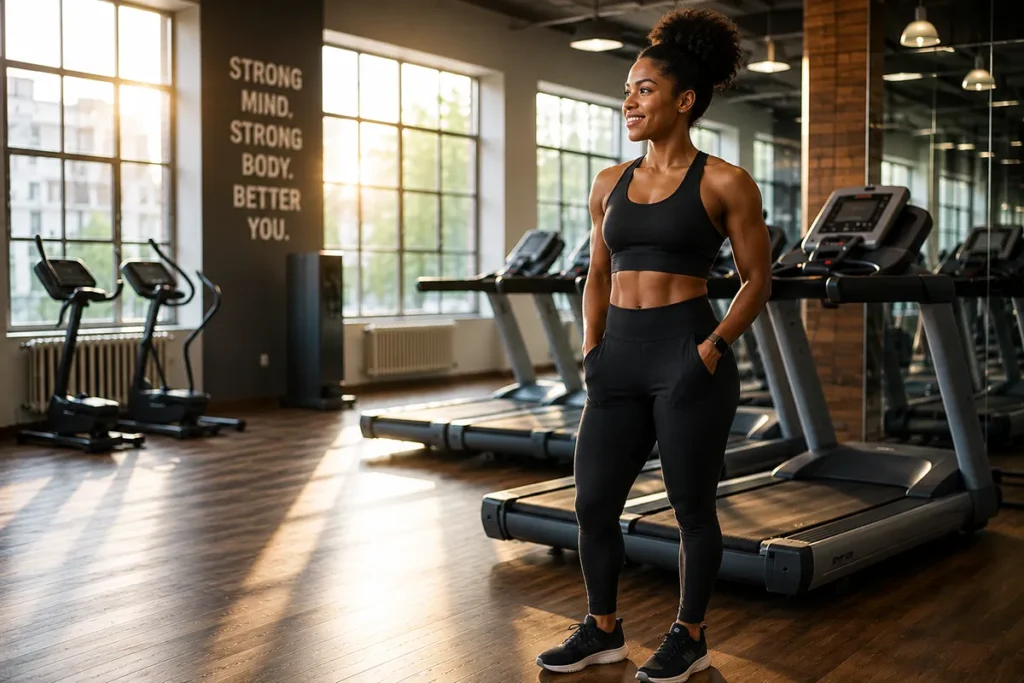
Timing often matters as much as technique when it comes to gym confidence. Walking into a packed gym can shake your nerve before you even touch a weight, so choose your hours wisely.
Skip Monday through Thursday’s 5–9 pm rush, the noon lunch surge, and Saturday late mornings—these windows draw the heaviest traffic. Instead, claim the gym during quieter stretches: early mornings between 5–6 am or 9–11 am, mid-afternoon from 1–4 pm, or late evenings after 7 pm. If you want peak muscle performance rather than just an empty room, aim for the 2–6 pm window when your body temperature and strength are naturally optimized.
Sundays tend to run slow all day, making them ideal for beginners. If you’re a beginner who feels self-conscious, off-peak hours also give you more personal attention from trainers since staff aren’t stretched thin. Beyond staff insight, many gyms now offer management software that tracks member check-ins so you can see real-time crowd levels before you even leave home. Check Google Maps’ “Popular Times,” ask staff directly, or track your own visits to pinpoint your gym’s calmest hours. Own your schedule, and the space becomes yours to dominate.
Your First Gym Visit: A Step-by-Step Walkthrough
Pack your gym bag the night before, and you’ll skip the morning scramble entirely. Your arrival checklist: water bottle, towel, headphones, clean shoes, a combination lock for locker etiquette, and your workout plan saved on your phone. Eat protein within three hours of training, and add carbs or fats about an hour out for steady energy.
Once inside, walk the whole gym floor without apologizing for your presence. If someone approaches, just say you’re new and getting oriented. Warm up 5–10 minutes with light cardio, then kinetic stretches—leg swings, arm circles, hip hinges. Pick one muscle group, run 3 sets of 10 reps per machine, resting 60–90 seconds between sets. Choose a weight you can comfortably lift for 10 reps while the last reps feel challenging. If something feels off during your sets, ask a coach or consider booking an induction session to refine your form. Cap the whole visit at 45–60 minutes. Keep in mind that muscles need about 48 hours to rebuild stronger, so rest days between sessions are just as important as the workout itself. Freedom starts with showing up prepared.
Warm Up the Right Way Without Overthinking It
Since your muscles need blood flow more than they need a philosophy, keep the warm-up simple: 5 to 10 minutes, moving the whole time, intensity climbing until you’re breathing harder and lightly sweating.
Skip breathing drills and mirror cues—you don’t need perfect form analysis before you’ve even broken a sweat.
Start with a light walk, jog, or bike spin for 1-2 minutes to get blood moving.
Add jumping jacks, heel digs, or air punches to wake up your upper body.
Move into bodyweight squats, lunges, and leg swings to open your hips.
Finish with shoulder circles, torso twists, and a few push-ups to prep your joints.
Match the warm-up’s length to your workout’s intensity, then walk into your session ready, not overthinking a single rep.
Start With Beginner-Friendly Machines to Ease Gym Anxiety
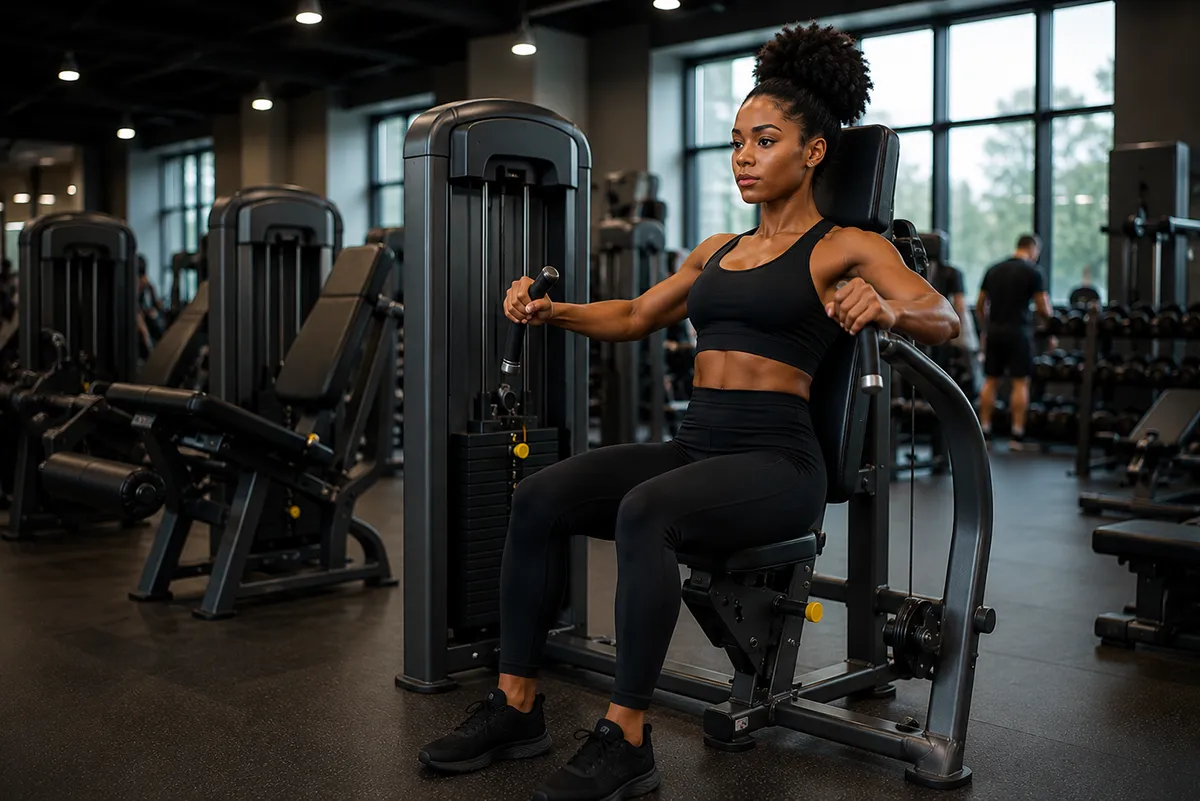
When you don’t know where to start, machines make the decision easy. They guide your movement path, so you’re not guessing how a squat or row should feel. Start with strength machines before moving to free weights—chest press, pulldowns, leg press, and curl machines target every major muscle group without demanding perfect form from day one.
Adjust the seat first. This single step determines your range of motion and keeps joints tracking correctly. Choose light resistance, learn the pattern, then add weight in small increments once it feels smooth.
Basic machine etiquette matters too: wipe down equipment, share during busy hours, and stick to one exercise per body part while you’re new. Progress tracking—noting weight and reps—shows you exactly how far you’ve come.
Bring a Friend or Ask Staff for Guidance
Machines get you moving on your own, but you don’t have to figure everything out solo. Bringing a friend builds social accountability—you text to confirm attendance, share a workout, or simply stand beside each other for support. That presence alone cuts self-consciousness and makes new equipment feel less intimidating.
No workout partner yet? Ask staff. Commercial gyms employ professionals who’ll walk you through machine setup, proper form, and adjustments during a quick orientation. Approach them between sets, not mid-lift, for focused answers. Staff introductions can also connect you with other members looking for a gym buddy—check bulletin boards or ask directly.
Visiting during off-peak hours gives you room to learn without crowds watching. Combine a friend’s support with staff guidance, and the gym stops feeling like foreign territory.
Try a Group Class to Feel Less Alone
Often, the fastest way to stop feeling like the only beginner in the room is to join one that’s full of them. Group classes shift your focus to the instructor, not your own performance, and that shared attention normalizes every stumble you make. You’re not steering equipment alone or guessing what to do next—certified instructors walk everyone through clear, step-by-step routines built for newcomers.
Themed sessions, whether dance, cycling, or strength-based, connect you with people who share your interests, making peer encouragement feel natural rather than forced. That social bond keeps you showing up: studies show connected participants attend more consistently and quit less often. Arrive early, introduce yourself, and let the group’s energy carry you through the workout. You’ll leave feeling supported, not scrutinized.
5 Mindset Shifts to Calm Gym Anxiety Fast

Group classes solve the social piece of gym anxiety, but the mental piece needs its own toolkit. Five shifts work fast.
First, gratitude reframing: swap “I’ll fail” for “I’m so excited! This is going to be great!” Your body reads excitement and anxiety the same way—choose the interpretation that serves you.
Second, run a 60-second evidence check on catastrophic thoughts. What proves this, what disproves it?
Third, label the worry within 10 seconds: “This is a performance worry” strips its power.
Fourth, try sensory anchoring—5 sights, 4 sounds, 3 textures, 2 smells, 1 movement—to pull yourself into the present.
Fifth, shift vague fears into concrete actions: “I’ll complete one set, then reassess.” Small, controllable steps beat spiraling predictions every time.
Stop Comparing Yourself to Other Gymgoers
Once you fix your mindset, the next battle is the comparison trap—that reflexive glance at the guy lifting twice your weight or the woman who makes burpees look effortless. Stop measuring yourself against strangers who’ve trained for years. Instead, measure yourself against yesterday’s version of you. Set concrete goals: walking 20 minutes straight, adding five pounds to your lift, finishing an extra rep. Progress journaling turns invisible gains into visible proof—flip back a few weeks and see how far you’ve come.
When comparison thoughts creep in, pause and practice body gratitude. Thank your legs for carrying you through a workout, your lungs for pushing through cardio. Nobody’s path mirrors yours, and that’s the point. Your only competition is the person you were before you walked through that door.
Turn Gym Anxiety Into a Lasting Weekly Habit
Most beginners quit not from lack of motivation but from lack of structure. Anxiety fades when you turn action into routine. Set a fixed start and end time for each session so you know exactly what you’re committing to. Use habit stacking—attach your gym visit to an existing routine, like going right after work or before breakfast, so it becomes automatic rather than optional.
Two to four workouts per week is enough to build real momentum. Preview each session beforehand so you walk in with a plan, not guesswork. Build reward systems into your schedule: a favorite smoothie, a relaxing shower, or simply checking off your calendar. Small wins compound. Consistency, not intensity, turns anxiety into ownership of your routine.
Frequently Asked Questions
What Should I Wear to the Gym as a Beginner?
Wear breathable fabrics like moisture-wicking t-shirts and stretchy leggings or shorts that let you move freely. Choose proper footwear with solid support for stability. You don’t need fancy gear—just comfort that frees you to move confidently.
How Long Should My First Gym Session Actually Last?
Keep your first session to 30–45 minutes—short duration that won’t overwhelm you. You’ll build confidence through gradual progression, adding a few minutes weekly as strength grows. Trust the process; you’re not racing anyone, you’re claiming your own freedom.
What if I Don’t Know How to Use a Machine Correctly?
Ask staff for a quick walkthrough—they’re there to help, not judge. Or watch tutorials on YouTube beforehand. Start light, align pivot points with your joints, and move with control. You’ll become proficient at it fast.
Do I Need to Shower or Change Clothes at the Gym?
No, it’s your choice. If you want post workout hygiene, public showers are there—just follow basic locker etiquette. Use personal lockers for your stuff, wear shower shoes, and change freely. You’re in control here.
How Soon Will I Start Seeing Real Results?
You’ll feel changes within weeks, but visible progress in the mirror takes 2–4 months as metabolic adaptation kicks in. Stay consistent, trust the process, and you’ll own real, lasting change on your own timeline.
Conclusion
You don’t need confidence to start—you need a plan. Walk in with your written routine, hit off-peak hours, and focus on your own progress instead of everyone else’s. Each visit builds familiarity, and familiarity kills intimidation faster than motivation ever will. Show up consistently, even when it’s uncomfortable, and you’ll notice the anxiety fading within a few weeks. That’s how you turn a scary first visit into a lasting habit.
References
- https://www.mindbodygreen.com/articles/beginner-gym-guide-steps-to-build-confidence-and-strength
- https://www.reddit.com/r/beginnerfitness/comments/1cxrrlr/how_to_build_confidence_for_the_gym/
- https://sweat.com/blogs/fitness/how-to-be-confident-at-the-gym
- https://equity.fitness/equity-blog/start-feeling-confident-in-the-gym
- https://girlslife.com/wellness/health/286926/the-beginners-guide-to-feeling-confident-at-the-gym/
- https://www.youtube.com/watch?v=FnfjH0Pnneg
- https://www.youtube.com/watch?v=CpnmL82zWis
- https://www.youtube.com/watch?v=d2RaJn5zadw
- https://www.totalfitnesscenter.com/post/10-beginner-gym-confidence-tips-that-work
- https://www.youtube.com/watch?v=vtMgLbVVI78

