
Water alone won’t fix cramps, fatigue, or palpitations caused by low magnesium or potassium—and you’re statistically more likely to face these gaps. Over 30% of Black women fall below magnesium requirements, and intracellular deficiency often hides behind “normal” bloodwork. Genetic, dietary, and socioeconomic factors compound the risk, from higher sodium intake to costlier potassium-rich foods. Understanding your specific electrolyte needs—and the warning signs your body sends—changes how you approach hydration entirely.
TLDR Key Takeaways
- Over 90% of African Americans miss recommended magnesium intake, the highest rate of any group.
- Intracellular magnesium can be low even when standard blood tests appear normal, masking true deficiency.
- Low magnesium accelerates insulin resistance, hypertension, and cardiovascular strain, raising health risks.
- Low-income Black adults face worse sodium-to-potassium ratios, plus limited access to potassium-rich foods.
- Persistent cramps, palpitations, or fatigue despite hydration signal electrolyte imbalance, not just dehydration.
Why Are Black Women at Higher Risk for Electrolyte Imbalances?

Because dietary patterns, chronic disease, and socioeconomic barriers often overlap in Black communities, your risk for electrolyte imbalances stems from several compounding factors rather than a single cause. Your body may hold a genetic predisposition toward lower intracellular magnesium, which links directly to higher hypertension rates.
Chronic conditions like diabetes and HIV compound this risk, often causing hyponatremia, hypomagnesemia, and hypocalcaemia. Add in medication interactions—thiazide diuretics, loop diuretics, and benzodiazepines all disrupt your sodium, potassium, and magnesium levels—and the image becomes clearer. Certain medications, including corticosteroids and antibiotics, can further throw these mineral levels off balance.
Socioeconomic status shapes your access to potassium- and calcium-rich foods, too. Lower income often means fewer nutrient-dense options, deepening existing deficiencies. Underlying issues such as kidney problems can also make it harder for your body to keep these minerals in balance. A simple blood test can reveal these imbalances early, along with checking your kidney function. None of this is coincidence—it’s a system. Understanding these layers is your first step toward reclaiming your health with clarity and power.
What Do Electrolytes Actually Do for Your Body?
Image your body as a finely tuned electrical grid—electrolytes keep the current running.
You’re 60% water, but water alone can’t hydrate you. Electrolytes drive fluid motion, moving fluid in and out of your cells so hydration actually happens.
They power cell signaling—the electrical charges that trigger muscle contractions and nerve function. Muscle contraction specifically requires calcium, sodium, and potassium, and an imbalance among these can cause weakness or excessive contraction.
Every heartbeat, every step, every automatic process your body runs depends on this electric current.
Electrolytes also balance your pH, keeping your internal environment stable while supporting tissue repair. A healthy blood pH normally stays within a tight 7.36 to 7.44 range, and electrolytes help maintain that narrow window.
They stabilize blood pressure and heart rhythm by signaling muscles and nerves directly.
Beyond that, they shuttle nutrients into your cells and flush waste out, protecting you from toxicity while fueling your energy. Electrolytes like sodium, calcium, and potassium are examples of essential minerals your body relies on to keep these processes running smoothly.
This is liberation at the cellular level—your body working exactly as it should.
Does Income Affect Your Sodium and Potassium Intake?
Yes—and the numbers don’t lie. Income gradients shape your electrolyte reality more than willpower ever could. Over 80% of low-income Black and White Americans blow past sodium guidelines, with low-income Black Americans hitting 4512 mg/d—nearly double the recommendation. This isn’t about discipline; it’s about access.
Potassium affordability is the flip side of this equation. Higher income and education directly predict higher potassium intake. Why? Because eating potassium-rich diets costs more—women consuming higher potassium spend 46% more on food. Low-cost options like beans, potatoes, bananas, and milk help, but systemic barriers persist.
The result: Black adults with lower income show worse sodium-to-potassium ratios than white counterparts—a gap that shrinks as socioeconomic status rises, but doesn’t disappear.
The Hidden Electrolyte Gap: Magnesium in Black Women’s Diets
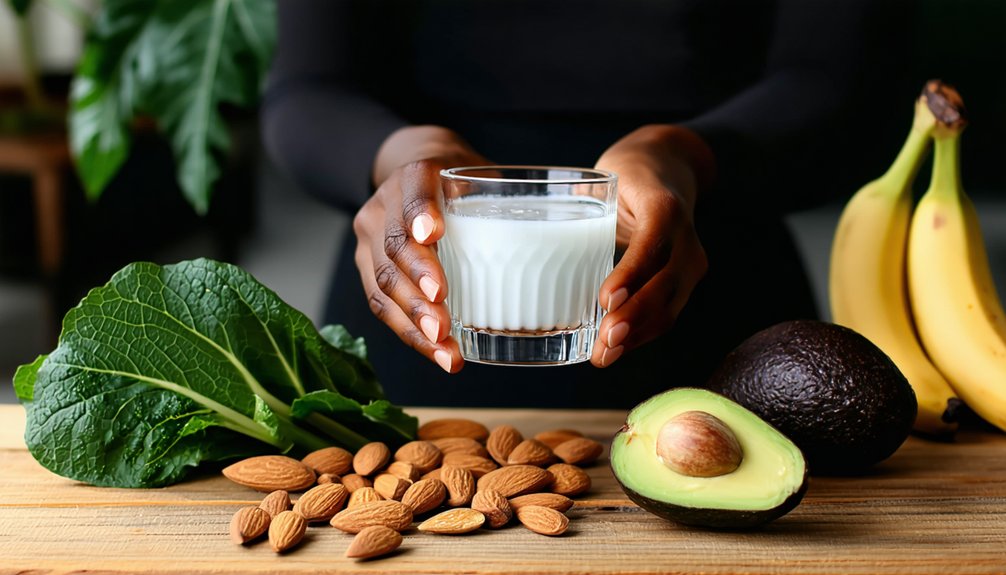
Magnesium’s the silent gap in your electrolyte trio—overshadowed by sodium and potassium, yet just as consequential. You’re not imagining the deficit: over 30% of non-Hispanic Black women fall below the Estimated Average Requirement, and 90.6% of African Americans miss recommended intake entirely—the highest rate of any group.
This isn’t just a numbers problem. Your intracellular magnesium runs lower than white counterparts, even when standard blood tests look “normal.” That’s why intracellular testing matters—surface-level bloodwork often misses what’s happening at the cellular level.
The stakes are real: hypomagnesemia accelerates insulin resistance, hypertension, and cardiovascular strain in Black bodies. You deserve dietary counseling that addresses this gap directly, not generic advice that ignores your biology. Demand testing that sees the full image.
What Are the Warning Signs of an Electrolyte Imbalance?
Your body sends clear signals when electrolytes drop out of range—you just have to know what to look for. Muscle cramps and recurring spasms often signal low magnesium or potassium, especially during exercise. You might notice weakness or fatigue that sleep doesn’t fix. Your heart matters too: irregular heartbeat or palpitations point to potassium, calcium, or magnesium imbalances—treat these as urgent.
Cognitive changes deserve your attention as well. Confusion, irritability, trouble concentrating, or memory lapses often trace back to low sodium. Calcium level changes can also lead to mood shifts like anxiety or depression. You may also experience headaches, numbness, or tingling in your hands and feet.
Digestive shifts—nausea, vomiting, diarrhea, or constipation—reflect disrupted mineral balance too. Chronic vomiting or diarrhea are prime causes of electrolyte loss, making fluid replacement essential to restore balance. Severe symptoms like seizures or delirium demand immediate care, since untreated severe imbalances can progress to kidney failure or cardiac arrest. Knowing these signs puts your health back in your hands.
Is It Dehydration or an Electrolyte Deficiency?
Is It Dehydration or an Electrolyte Deficiency?
When fatigue and headaches hit, you can’t always tell what’s causing them—dehydration or an electrolyte deficiency often look identical at first glance. Both share fatigue, dizziness, and confusion, but your body gives you clues if you know where to look.
Check your urine color first: dark, infrequent urination points to dehydration, while pale urine paired with muscle cramps, spasms, or numbness signals an electrolyte issue instead.
Palpitations or irregular heartbeats are your body’s alarm for mineral disruption, not simple fluid loss.
Don’t overlook medication interactions—diuretics, blood pressure drugs, and certain prescriptions can drain your electrolytes even when you’re drinking enough water. Know your body, know your meds, and you’ll know which crisis you’re actually facing. Left unaddressed, either imbalance can progress to more serious issues like seizures caused by disrupted potassium and sodium signaling in the body.
What Are the Best Foods for Natural Electrolyte Replenishment?

Once you’ve pinpointed dehydration versus an electrolyte deficiency, the next step is fixing it—and your kitchen probably has what you need already.
For sodium, reach for salted nuts, pretzels, or smoked salmon—they replenish fast and support fluid balance. Bananas, potatoes, and avocados deliver potassium your muscles need to prevent cramping and stay strong. Pumpkin seeds and spinach pack magnesium for hydration and nerve function, while almonds and yogurt provide calcium for bone and electrolyte support.
Don’t overthink combinations—your body knows what works. Avocado toast topped with leafy greens gives you potassium, magnesium, and calcium in one nutrient-dense meal. Peanut butter on a banana balances sodium and potassium instantly. Beyond fruits and vegetables, sources like seaweed, dark chocolate, and fatty fish can also round out your electrolyte intake. Just be mindful that reaching too often for salty snacks can mean excessive salt intake, which may throw your electrolyte balance off rather than restore it. If you’re sweating heavily, remember that sweat is rich in sodium and chloride, making these minerals a priority for replenishment.
Your food choices are power. Feed your body intentionally, and it’ll show up for you.
Which Magnesium-Rich Foods and Supplements Actually Work?
Magnesium deserves special attention, especially since Black women are specifically noted as a group likely missing this essential nutrient.
You need 310-420 mg daily, and real food gets you there fastest. Cooked spinach gives you 158 mg per cup, pumpkin seeds deliver 156 mg per ounce, and quinoa provides 118 mg per cup.
Traditional staples matter too: okra, sweet potatoes, black-eyed peas, and plantains all pack magnesium into culturally rooted meals.
Dietary pairings count—combine legumes, whole grains, and nuts most days for steady intake. Even your water can help, since some sources contain enough minerals to provide up to 240 mg of magnesium daily.
If food alone isn’t cutting it, magnesium glycinate or citrate offer better absorption. Supplement timing matters: take them about an hour before bed. Cashews are another smart addition, offering 83 mg of magnesium per ounce along with fiber and heart-healthy fat. But don’t self-prescribe—confirm deficiency with your doctor first.
Your healing deserves accuracy, not guesswork.
Do You Really Need Sports Drinks or Sea Salt?
When do you actually need a sports drink instead of plain water? Only when you’re sweating hard for over 60 minutes, training in heat or humidity, or losing more than a pound per hour. That’s it. Everyday hydration doesn’t require it.
Sea salt alone won’t cut it either—it gives you sodium, but skips potassium, magnesium, and calcium your body needs. Self-mixing without precision risks hypernatremia and irregular heart rate.
Skip the guesswork. Practice label reading before you buy anything commercial—check sugar and sodium content. Or try homemade rehydration: water, a pinch of salt, honey, and citrus juice. You control what goes into your body. That’s power.
How Can Electrolytes Help With Hot Flashes and Sweat?

How Can Electrolytes Help With Hot Flashes and Sweat?
Waking up drenched at 3am isn’t just uncomfortable—it’s your body hemorrhaging sodium, potassium, and magnesium right when you need them most. Hot flashes and night sweats drain your fluid stores fast, disrupting the thermoregulation that keeps hormonal chaos in check. That’s not weakness—that’s biology demanding replenishment.
Women with balanced electrolytes report 41% fewer severe hot flashes than those running dehydrated. Magnesium alone cuts fatigue by 20%, easing the intensity of what your body’s already fighting through.
Start sweat tracking to understand your personal loss patterns—how often, how much, how severe. Then pair that data with cooling beverages containing sodium and magnesium, sipped steadily rather than chugged. This isn’t extra self-care. It’s reclaiming control over a body doing exactly what it’s designed to do.
How Do Electrolytes Fix Afternoon Fatigue and Mood Swings?
That 3pm wall hits different when your electrolytes have already tanked from a night of sweating through sheets.
You reach for water, but plain water can’t replace what you’ve lost—sodium, potassium, and magnesium keep your cells talking to each other and your energy steady.
When those minerals drop, your nerves send scrambled signals, your muscles misfire, and irritability creeps in fast.
Hydration timing matters here. Sipping electrolytes throughout your morning—not just when you crash—builds cognitive resilience before the wall even shows up.
Add 1-2 servings to your daily water intake, and you’re working with your body’s chemistry instead of against it.
Rest matters too. Recovery lets your system rebalance, steadying both your mood and your focus.
When Should You Talk to Your Doctor About Electrolytes?
If your muscle cramps, twitching, or fatigue stick around for more than a day despite rehydrating and resting, that’s your cue to call a doctor. Confusion, numbness, or tingling that won’t quit also demands attention—your body’s telling you something water alone can’t fix.
Pay close attention to your heart. Irregular heartbeat, chest pain, fainting, or shortness of breath with minimal effort? Don’t wait. Sleep disturbances paired with rhythm changes are a red flag, not a coincidence.
If you’re starting new medications, ask about medication interactions—diuretics, laxatives, and certain prescriptions disrupt mineral balance fast. Kidney disease, heart conditions, and diabetes raise your risk too.
Seizures, severe disorientation, breathing trouble, or collapse mean emergency care—immediately. Trust your body. Advocate for yourself.
Frequently Asked Questions
Can You Take Too Much Magnesium or Potassium Accidentally?
You’re unlikely to overdose from food alone. Magnesium overdose mainly happens with high-dose supplements or laxatives; potassium toxicity mostly strikes with supplements or kidney issues. Healthy kidneys protect you—trust your body, but respect supplement limits.
Are Electrolyte Supplements Safe During Pregnancy or Breastfeeding?
Yes—you’re pregnancy safe and breastfeeding ready when you choose wisely. Keep sugar under 5g, sodium under 150mg, skip caffeine and artificial sweeteners. You’ve got autonomy here: hydrate smart, consult your doctor if conditions arise, and trust your body’s signals.
How Quickly Will I Feel Better After Fixing an Imbalance?
You’ll often feel better hours later—mild imbalances ease within 30 minutes to 2 hours. Moderate cases mean gradual recovery over 24-48 hours. Stay consistent with fluids and electrolytes; your body rewards the effort with real relief.
Do Certain Medications Interfere With Electrolyte Absorption or Levels?
Yes—antibiotic interactions like tetracyclines deplete calcium and magnesium, while diuretic effects from thiazides and loop diuretics drain potassium and sodium. You deserve to know your meds; ask your provider, track your levels, and reclaim your body’s balance.
Can Electrolyte Imbalances Affect Fertility or Menstrual Cycles?
Yes—when your electrolytes dip, you disrupt hormonal signaling, weaken ovulatory function, and shorten your luteal phase. You deserve menstrual regularity as a baseline, not a luxury. Balance sodium, potassium, and magnesium to reclaim your cycle’s rhythm.
Conclusion
You don’t need fancy sports drinks or trendy sea salt hacks—you need to understand your body’s real needs. Watch for warning signs, prioritize magnesium-rich foods, and pay attention to how income and stress shape your intake. If you’re dealing with persistent fatigue, mood swings, or hot flashes, don’t just push through. Talk to your doctor, get your levels checked, and treat electrolyte balance as essential healthcare, not an afterthought.
References
- https://madebydaily.com/community/blog/electrolytes-the-unsung-heroes-of-womens-health-after-40
- https://health.clevelandclinic.org/best-electrolyte-sources
- https://pmc.ncbi.nlm.nih.gov/articles/PMC8020496/
- https://www.rush.edu/news/essential-electrolytes
- https://pubmed.ncbi.nlm.nih.gov/1746658/
- https://blackdoctor.com/7-nutrients-black-women-are-most-likely-missing/
- https://www.ncbi.nlm.nih.gov/books/NBK234935/
- https://blackdoctor.org/the-10-vitamins-black-women-need/
- https://pmc.ncbi.nlm.nih.gov/articles/PMC2594609/
- https://my.clevelandclinic.org/health/symptoms/24019-electrolyte-imbalance

