
Cold plunges and saunas trigger real vascular, hormonal, and nervous-system shifts—heat dilates vessels and calms you, cold constricts them and sharpens focus. You’ll get better circulation, faster muscle recovery, deeper sleep, and lower long-term disease risk with regular sauna use. But you’re also facing real risks: blood pressure spikes, dehydration, and dangers for anyone with heart conditions or certain medications. Knowing your limits matters just as much as knowing the benefits—here’s what you need to weigh before stepping in.
TLDR Key Takeaways
- Heat causes vasodilation and parasympathetic calm; cold triggers vasoconstriction and sympathetic alertness via norepinephrine.
- Frequent sauna use (4–7x weekly) is linked to 40–50% lower mortality and 63% reduced cardiovascular disease risk.
- Cold plunges reduce DOMS and muscle soreness but may blunt hypertrophy if done within 4 hours post-training.
- Rapid heat-cold shifts cause blood pressure swings and strain, risky for heart disease or arrhythmia sufferers.
- Optimal doses: sauna 5–14 minutes at 80–99°C; cold plunge 2–5 minutes at 50–60°F.
What Happens to Your Body During Contrast Therapy?
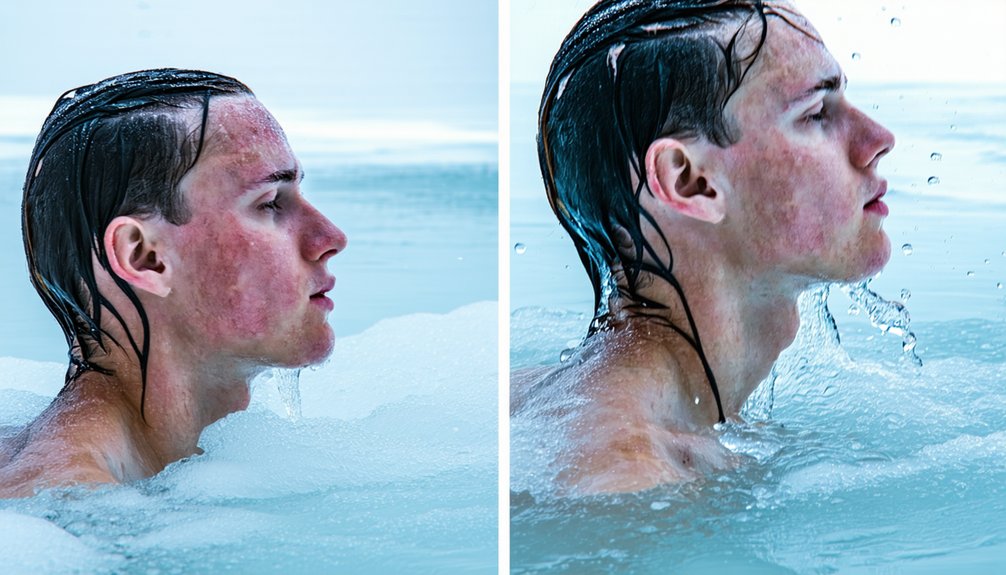
When you jump from a hot sauna into an icy plunge, your blood vessels get put through a workout of their own. Heat triggers vasodilation, widening vessels and flooding your skin and muscles with blood. Cold slams the brakes with vasoconstriction, redirecting circulation to your core and calming inflammation. This back-and-forth drives vascular remodeling, training your vessels to respond faster and more efficiently over time. Despite this long history of use, there’s actually limited scientific evidence confirming how effective these methods truly are.
The temperature swing also fires up lymph activation, pushing stagnant fluid out of injured tissue and clearing metabolic waste like lactic acid. Meanwhile, your nervous system flips between sympathetic and parasympathetic states—cold releases norepinephrine for alertness, heat lowers cortisol for relaxation. Your mitochondria get in on the action too, ramping up energy production and cellular repair. Research has even shown this alternating approach can be as effective as steroid injections for easing pain from conditions like plantar fasciitis. It’s a full-body reset. Most protocols recommend keeping the hot water around 98–104°F to maximize the vasodilation effect before plunging back into the cold.
How Does Contrast Therapy Improve Circulation and Heart Health?
That vascular workout doesn’t just feel good—it functions as a literal pump for your circulatory system. Hot water triggers vasodilation, widening vessels and flooding muscles with blood. Cold water forces vasoconstriction, narrowing vessels and driving oxygen-rich blood toward essential organs. Switch between the two, and you create sustained pumping action that accelerates waste removal and floods tissue with fresh oxygen.
This repeated cycling drives vascular conditioning—your blood vessels get better at expanding and contracting on demand, a hallmark of cardiovascular efficiency. The temperature shifts also trigger endothelial signaling, prompting the vessel lining to regulate blood flow more responsively. Over time, you’re building flexible, resilient vasculature. That translates to better circulation, reduced inflammation, and a heart that works smarter, not harder. This alternating vascular action essentially delivers a cardiovascular “workout” that conditions your blood vessels much like exercise conditions your muscles. Research even points to a standard protocol of alternating 3–4 minutes of heat with 1 minute of cold to maximize these vascular benefits. Even warm baths and low-temperature saunas can relax vessels and support circulation in ways that benefit those with chronic heart failure.
How Do Cold Plunges Speed Up Muscle Recovery?
Plunging into cold water sets off a cascade of physiological responses that directly target muscle damage. The cold constricts your blood vessels, limiting swelling and inflammation while flushing out cellular debris. These vascular dynamics don’t stop there—once you exit the water, your vessels dilate, sending oxygen-rich blood surging back into your muscles to accelerate healing.
Beneath the surface, metabolic signaling shifts too. Intracellular-intravascular fluid movement reduces edema, while creatine kinase and lactate levels drop markedly at 24 and 48 hours post-immersion. You’ll notice less soreness almost immediately, with DOMS relief stretching up to four days. However, if you’re strength training, timing matters—plunging within four hours of your workout can blunt the inflammation signals needed for muscle building. In fact, a 2024 meta-analysis suggests cold plunges done immediately after resistance training may blunt muscle hypertrophy, especially in strength-focused programs.
This isn’t just about feeling better—it’s about giving your body real, measurable tools to bounce back faster and reclaim your training momentum. For best results, water temperature should be 50 F or colder, with sessions progressing from as little as 30 seconds up to 5–10 minutes as tolerance builds.
Can Saunas and Cold Plunges Improve Your Sleep?
Because your body relies on temperature shifts to regulate sleep, both saunas and cold plunges can genuinely help—if you time them right. Sauna timing matters most: sessions ending 60–90 minutes before bed drive a rebound temperature drop that enhances deep sleep by nearly 15%. Cold plunges belong in your morning routine, syncing your circadian rhythm and activating wakefulness—reserve them for bedtime only if you finish 90–120 minutes prior, since late-night cold spikes norepinephrine and disrupts rest.
For maximum results, combine both through thermal priming: 15–20 minutes of heat followed by a brief cold plunge, finished 60–120 minutes before sleep. This contrast reshapes your sleep design, deepening slow-wave and REM cycles. Research shows this kind of contrast therapy can produce 25–40% greater sleep improvements than sauna alone. This mirrors the physiological rationale behind alternating heat and cold, which creates a vascular pump effect that improves overall circulatory function. Keeping your bedroom between 60–68°F after these sessions further supports optimal sleep quality. Build these into your bedtime rituals, and you’ll release sharper recovery and freedom from restless nights.
How Do Cold Plunges Build Mental Clarity and Stress Resilience?
How Do Cold Plunges Build Mental Clarity and Stress Resilience?
When icy water hits your skin, your sympathetic nervous system fires instantly, flooding your bloodstream with catecholamines and pushing norepinephrine levels sharply upward. These norepinephrine mechanisms sharpen focus within two minutes, conveying that “razor-sharp calm” you’re after—and the effects linger for hours afterward.
Beyond alertness, cold immersion trains your stress response. Cortisol drops with repeated sessions, meaning your body learns to handle psychological stress more efficiently over time. Think of it as a stress workout: each plunge activates hormetic pathways that build genuine resilience, not just temporary relief. Research even shows that fifteen minutes of cold water immersion at 50°F can keep cortisol levels considerably lower for up to three hours post-immersion. Beyond stress hormones, this same nervous system activation can boost levels of dopamine and endorphins, creating alertness and happiness that reinforce the practice.
For real results, target two to five minutes in 50-60°F water. Start with 30-second increments to strengthen practice adherence, then build toward longer sessions as your tolerance grows—freedom from stress reactivity is earned incrementally. Many people pair this practice with a full 25 minutes cold plunge session as part of a broader wellness protocol.
What Does Research Say About Saunas and Long-Term Brain Health?
While cold exposure sharpens your stress response in the moment, heat exposure plays a longer game with your brain’s future. Research on sauna neuroprotection is striking: men bathing 4–7 times weekly show a 65% lower Alzheimer’s risk and 66% lower dementia risk compared to once-weekly users. Even 2–3 sessions weekly cut dementia risk by 21%. The sweet spot is 5–14 minutes at 80–99°C—push past 100°C, and risk climbs instead of falls.
This is thermal hormesis in action: controlled heat stress triggers heat shock proteins, increases nitric oxide, and calms inflammation, all protecting your vascular and cognitive systems. Infrared saunas amplify these effects, easing oxidative stress while supporting mitochondrial function. Your brain isn’t just surviving the heat—it’s adapting, strengthening, and staying sharper for decades ahead.
Do Cold Plunges and Saunas Really Help You Live Longer?
When it comes to hard mortality data, saunas win decisively over cold plunges. Population studies from Finland show 4–7 weekly sessions cut all-cause mortality by 40–50% and cardiovascular disease risk by 63%, compared to once-weekly use. These aren’t small effects—they’re some of the strongest longevity signals in preventive health research.
Cold plunges tell a different story. The molecular pathways are persuasive—cold-shock proteins, brown fat activation, a 530% norepinephrine spike—but human longitudinal data simply doesn’t exist yet. Animal studies show up to 20% lifespan extension, hinting at real potential you can’t ignore.
Your smartest move: bank on sauna’s proven mortality benefits now, while treating cold exposure as a promising metabolic tool—not a guaranteed longevity hack.
Why Are Extreme Temperature Swings Risky for Your Heart?
Longevity numbers only tell half the story—your heart’s response to temperature swings tells the rest. Heat forces vasodilation, dropping your blood pressure and pushing your heart rate up to compensate. Cold snaps back with vasoconstriction, spiking blood pressure and vascular shear stress on artery walls. Jump between sauna and cold plunge too fast, and you’re subjecting your cardiovascular system to extreme blood pressure variability it’s not built to handle.
Add dehydration from heat exposure, and your blood volume drops while your heart works harder. Electrolyte shifts and thickened blood raise clotting risk. Your sympathetic nervous system fires on all cylinders, flooding you with stress hormones. For a healthy heart, this is manageable strain—but it’s still real physiological stress worth respecting.
What Are the Physical Risks of Cold Water Exposure?
What Are the Physical Risks of Cold Water Exposure?
Because your body can’t distinguish between a controlled plunge and a survival emergency, it reacts the same way to both. Sudden immersion triggers the gasp reflex, an involuntary inhalation that can cause drowning within seconds if your head goes under. Your heart rate, breathing, and blood pressure spike while blood vessels constrict, forcing your heart to work harder—dangerous territory if you have any cardiac vulnerability.
Blood retreats from your limbs to protect your core, setting off neuromuscular failure: numbness, cramping, and lost motor control that make swimming or exiting the water difficult. Extended exposure drops your core temperature, risking hypothermia. Even skilled swimmers face sudden incapacitation. Respect these mechanisms, and you control the risk instead of it controlling you.
Who Should Avoid Cold Plunges and Saunas?

Because these therapies stress your cardiovascular and nervous systems, certain health conditions turn a wellness practice into a genuine hazard.
If you have heart disease, arrhythmias, uncontrolled blood pressure, or recent cardiac events, skip both practices entirely.
Pregnancy precautions matter here—expecting or postpartum women should avoid saunas and cold plunges until cleared by a doctor.
Anyone with asthma, COPD, cold urticaria, Raynaud’s, or fainting history faces real injury risk.
Diabetics with nerve damage, weakened immune systems, or open wounds need extra caution or clearance first.
Medication interactions deserve attention too: blood thinners, stimulants, blood pressure drugs, and transdermal patches can amplify adverse effects.
If you’re prone to seizures or carry implanted devices, contrast therapy isn’t worth the gamble.
Know your body, then choose freely.
How Long Should a Contrast Therapy Session Last?
How Long Should a Contrast Therapy Session Last?
Since your body needs time to adapt to thermal stress, session length should match your experience level rather than an arbitrary clock target.
Beginners should stay in the 15–30 minute range, pairing 10–12 minutes of heat with 1–2 minutes of cold across 2–3 rounds.
Intermediate users can push toward 10–15 minutes of heat and 2–3 minutes of cold per cycle, while advanced practitioners extend total sessions to 60–90 minutes.
Whatever your level, session pacing matters more than total duration—rushing shifts defeats the purpose.
If you’ve built a home setup, you control the variables: temperature, cycle count, and timing.
Always end on cold to reduce soreness, and let your own recovery response guide when it’s time to progress.
What Safety Rules Should Beginners Follow?
Since your body hasn’t yet learned how to handle extreme temperature swings, you need clear boundaries before you start. Practice gradual acclimation: ease into cold water feet-first, never diving in cold after a sauna. Start warm—45–55°F—and limit your plunge to 10–20 seconds initially. Cap your first sauna sessions at 5-10 minutes, never exceeding 20 minutes total.
Social supervision matters just as much as technique. Never plunge alone—bring a friend or make sure someone’s nearby during early sessions. Tell someone your exact location and know where the nearest phone signal is.
Hydrate before heating up, skip lotions, and remove jewelry. Watch for shivering, numbness, dizziness, or confusion—these are your exit signals. Breathe steadily, and check with a doctor first if you have blood pressure concerns.
Frequently Asked Questions
Can You Do Contrast Therapy at Home Without Professional Equipment?
Yes, you can absolutely do DIY contrast therapy at home! You don’t need indoor tubs or professional gear—just two containers, a thermometer, and towels. Alternate hot and cold water, always ending cold, for real freedom-boosting recovery.
Is It Safe to Combine Contrast Therapy With Pregnancy Fitness Routines?
No, you shouldn’t combine them. Prenatal contraindications make contrast therapy risky—your maternal thermoregulation shifts during pregnancy, unpredictably affecting fetal safety. Choose safer stress-relief alternatives instead, and always consult your healthcare provider before modifying any fitness routine.
What Should You Eat or Drink Before a Cold Plunge Session?
Eat light snacks like a banana or yogurt 30-60 minutes beforehand, and nail your hydration timing by sipping water earlier. Skip heavy, greasy, or sugary foods—you’ll feel freer, steadier, and ready to welcome the cold’s full power.
Can Children or Teenagers Safely Try Sauna or Cold Plunge Therapy?
Yes, but you must follow strict age guidelines and never skip child supervision. Kids 6+ can try short sauna sessions; teens 13+ follow adult protocols. Cold plunges need extra caution—always supervise closely and respect their limits.
Do Cold Plunges and Saunas Help With Weight Loss or Metabolism?
Yes—you’ll enhance brown fat activity and calorie expenditure through cold plunges and saunas. You’re triggering thermogenesis and revving metabolism, but you can’t rely on heat alone. Pair these sessions with solid nutrition and exercise for real, lasting freedom from stubborn weight.
Conclusion
You don’t need extreme exposure to benefit from contrast therapy—just consistency and smart limits. Start slow, listen to your body, and always check with your doctor if you have heart, circulation, or nerve conditions. When done safely, alternating heat and cold can enhance circulation, ease muscle soreness, sharpen mental focus, and improve sleep. Respect the risks, follow time guidelines, and you’ll turn this ancient practice into a sustainable part of your recovery routine.
References
- https://www.joinframework.com/the-current/science-and-benefits-of-sauna-and-cold-plunge
- https://www.bbc.com/future/article/20250520-are-saunas-and-cold-plunges-good-for-your-health
- https://www.lung.org/blog/sauna-cold-plunges-health-impacts
- https://mitohealth.com/blog/cold-plunge-sauna-longevity-heat-therapy
- https://health.clevelandclinic.org/what-to-know-about-cold-plunges
- https://www.massgeneral.org/news/article/infrared-saunas-and-cold-plunges
- https://plunge.com/blogs/blog/the-combo-benefits-of-sauna-and-cold-plunge
- https://plunsana.com/sauna-cold-plunge-recovery-benefits/
- https://www.dulyhealthandcare.com/health-topic/are-saunas-and-cold-plunges-safe
- https://saintstudios.ie/blog/benefits-of-sauna-cold-plunge/

