
To pair iron-rich foods for better absorption, you’ll want to combine non-heme iron (beans, spinach, fortified cereals) with vitamin C sources like citrus, bell peppers, or strawberries—this can enhance uptake up to fourfold. Adding meat, fish, or poultry also helps non-heme iron absorb better. Avoid coffee, tea, and dairy within two hours of iron-rich meals since they block absorption considerably. There’s more strategy behind timing and food prep that’ll help you get it right.
TLDR Key Takeaways
- Pair non-heme iron foods with 25–75 mg vitamin C sources like citrus, bell peppers, or strawberries to boost absorption.
- Combine plant-based iron with meat, fish, or poultry (MFP factor) to significantly enhance non-heme iron uptake.
- Avoid drinking tea or coffee within two hours of iron-rich meals due to tannins blocking absorption.
- Keep calcium-rich dairy foods separate from iron meals since calcium inhibits both heme and non-heme absorption.
- Use simple formula: iron-rich base plus vitamin C/A enhancer, occasionally adding heme protein sources.
The Science Behind Iron Pairing and Absorption Rates
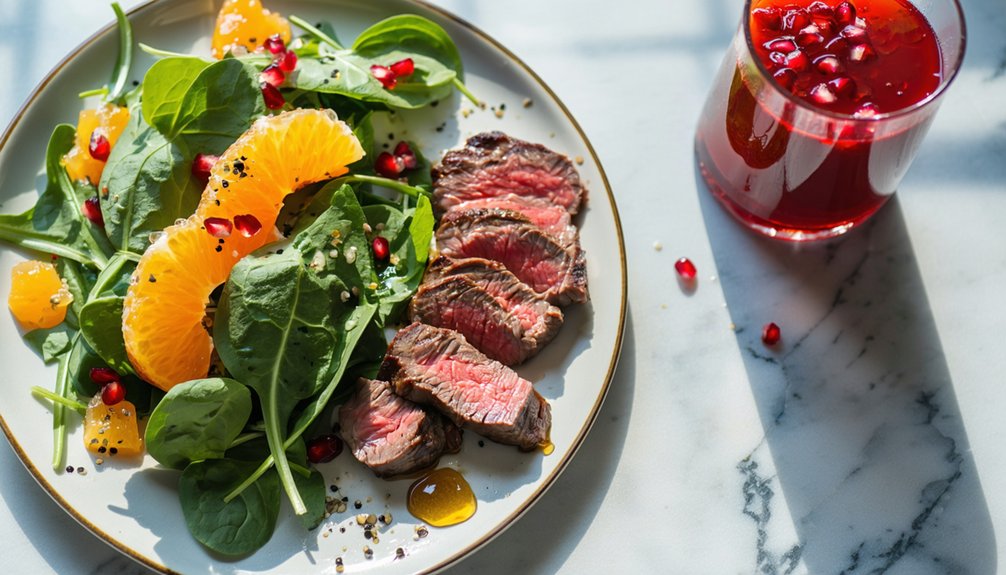
Because iron comes in two distinct forms—heme and non-heme—your body handles absorption very differently depending on the source and what you pair it with. Heme iron enters through dedicated intestinal transport pathways, making it resilient to dietary inhibitors.
Non-heme iron faces a tougher road: it depends on reduction from ferric to ferrous states before your gut can absorb it. Gastric acid and duodenal cytochrome B work together to convert ferric iron into the absorbable ferrous form, a process that can be disrupted by gastric acid suppression.
Pairing choices matter enormously here. Vitamin C drives this conversion, enhancing non-heme absorption up to fourfold. Meat, fish, and poultry deliver the same effect through the MFP factor. Excess calcium, zinc, or manganese in the same meal can work against you by diminishing absorption. Calcium in particular reduces the uptake of both heme and non-heme iron, so it’s best to keep iron-rich foods and calcium-rich foods separated by a couple of hours.
Your genetic variants also influence baseline absorption efficiency, but smart pairing gives you control regardless of biology. Understanding these mechanisms puts absorption power back in your hands.
Heme vs Non-Heme Iron: What’s the Difference?
These absorption mechanisms trace back to a fundamental split: where your iron comes from determines how your body treats it. Heme iron, found exclusively in animal flesh, absorbs at 15–35% no matter what else you eat. Non-heme iron—the kind in plants, fortified foods, eggs, and dairy—absorbs at only 2–20%, and that rate swings based on your meal’s composition.
This isn’t arbitrary; it’s iron chemistry shaped by dietary evolution. Your body recognizes heme’s molecular structure and shuttles it through efficiently. Non-heme iron faces more resistance, competing with phytates, tannins, and calcium for uptake. Because non-heme absorption is so tightly controlled by the body, it carries a lower risk of iron overload compared to heme iron, which is absorbed regardless of need.
Understanding this split gives you real control: you’re not stuck accepting poor absorption. You can strategically pair foods to work with your biology, not against it. Pairing a source of non-heme iron with 25–75 mg of vitamin C can substantially boost how much of it your body actually takes in. Meanwhile, washing down that same meal with tea can inhibit your absorption efforts, since tannins interfere with non-heme uptake.
Daily Iron Needs and How to Meet Them
Knowing your target number turns iron pairing from guesswork into strategy. Your needs shift with life stage: men need 8 mg daily, women 19–50 need 18 mg, pregnant women need 27 mg, and post-menopausal women drop back to 8 mg. Yet most men hit 16.3–18.2 mg from food alone, while women often fall short at 12.6–13.5 mg. That gap is where dietary adjustments matter most.
You don’t need supplements to close it—smart portion control with iron-dense foods like beans, fortified cereals, and lean meats gets you there. Know your number, track your intake, and build meals that match your body’s actual demands. If you do consider a supplement, doses of 17 mg or less per day are unlikely to cause harm. Pairing these foods with vitamin C–rich foods like oranges or broccoli can further boost how much iron your body actually absorbs. Keep in mind that vegans need about 1.8 times the RDA due to the lower bioavailability of nonheme iron in plant-based diets. That’s liberation: eating with purpose, not restriction.
Boost Iron Absorption With Vitamin C
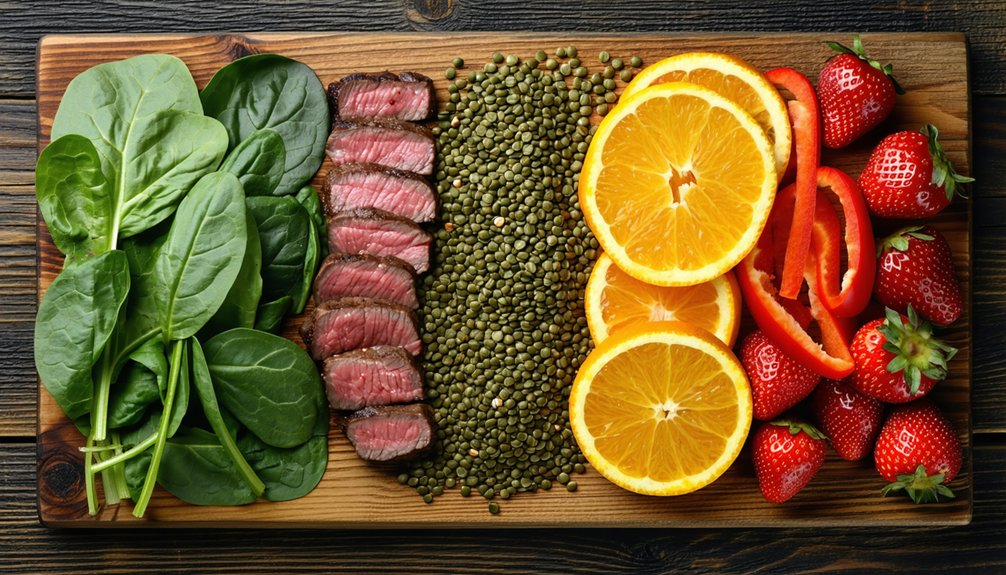
Hitting your target number is only half the battle—what you eat alongside your iron sources determines how much your body actually absorbs. Vitamin C is your most powerful ally here. Its ascorbic mechanisms convert ferric iron into the ferrous form your gut readily takes up, while enabling plant chelation that keeps iron soluble even in your alkaline intestine.
This matters most with nonheme iron from plants, beans, and grains. Pair vitamin C-rich foods—citrus, peppers, strawberries—with these sources, and you’ll counteract inhibitors like phytates, tannins, and polyphenols that would otherwise block absorption. Even tea’s inhibiting effects lose their grip when you add enough vitamin C. Notably, ascorbic acid can also reverse the inhibiting effects of calcium and phosphate found in many meals.
The dose matters: more vitamin C means more absorbed iron, especially in single plant-based meals. This is especially important for vegans and vegetarians, who lack access to heme iron and rely entirely on nonheme sources to meet their needs. A large clinical study of adults with iron deficiency anemia found that adding vitamin C to oral iron produced no meaningful improvement in hemoglobin recovery compared to iron alone. Take control—pair smart, and stop leaving iron unabsorbed on your plate.
Best Vitamin C Foods to Pair With Iron
Which foods actually deliver the vitamin C punch you need? Citrus fruits—oranges, lemons, limes—top the list, converting stubborn non-heme iron into a form your body actually absorbs. Don’t sleep on strawberries either; toss them into citrus desserts for a nutrient-dense finish that still fuels iron uptake.
Bell peppers, red and green, pack concentrated vitamin C that pairs perfectly with spinach or legumes. Blend them into bell pepper smoothies for a fast, portable absorption enhancement. Broccoli and Brussels sprouts are also excellent vitamin C sources worth adding to an iron-rich meal.
Kiwifruit works wonders alongside tofu, lentils, and leafy greens, while tomato juice offers an easy, drinkable ascorbic acid source for any iron-rich meal. Pairing these vitamin C foods with iron-rich dishes is especially important since heme iron can be absorbed up to 40%, far more efficiently than non-heme sources. Vitamin C is particularly valuable for plant-based eaters, since vegetarians and vegans may face a higher risk of iron deficiency from relying solely on non-heme iron sources.
You’ve got options—citrus, berries, peppers, kiwi, tomato juice. Choose what fits your plate, and let vitamin C release the iron you’re already eating.
Combine Heme and Non-Heme Iron
Pair meat with plants, and you’ll liberate way more iron than either delivers alone. This is heme interaction in action: heme iron absorbs at 15–35% efficiency, while non-heme iron struggles at just 2–20%. When you combine them, the MFP factor (meat, fish, poultry) kicks in, pushing your body to absorb more iron from lentils, spinach, or fortified cereals than it would otherwise.
The absorption kinetics matter here—heme iron bypasses phytates and tannins that normally block non-heme uptake, and it mitigates calcium’s inhibitory effects too. Try chicken liver with broccoli, or oysters with tempeh. Small amounts of animal protein act as an enhancer, making mixed meals genuinely more effective for your iron status.
Top Iron-Rich Foods Worth Pairing Strategically
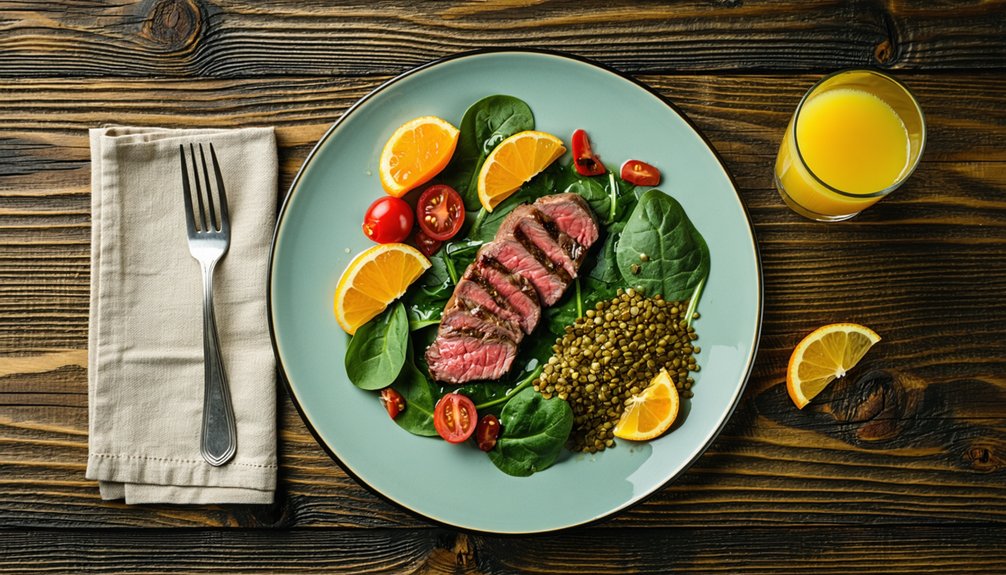
Stock your kitchen with the right combinations, and iron absorption stops being a guessing game. Focus on sustainable iron sources you can rotate year-round: iron-fortified cereals, dried figs, dates, pumpkin seeds, and tofu deliver steady non-heme iron, while lean beef, chicken, salmon, and oysters bring heme iron that multiplies uptake threefold when mixed into the same meal.
Build seasonal pairing ideas around what’s fresh. Summer berries and citrus pair naturally with fortified cereal; fall brings squash and sweet potatoes rich in beta-carotene and vitamin C together; winter citrus and bell peppers enhance bean dishes and dark greens.
Keep it simple: iron-rich base, vitamin C or A enhancement, occasional heme protein. That’s the formula worth repeating.
Foods and Drinks That Block Iron Absorption
Because pairing works both ways, you’ll need to know what sabotages iron just as well as what enhances it.
Tea and coffee, often tied to cultural practices around meals, cut absorption by 60-80% thanks to tannins. Cocoa and turmeric are surprisingly aggressive, blocking up to 90%. Dairy—milk, yogurt, cheese—brings calcium and casein that compete directly with iron for absorption channels.
Eggs, sardines, and soy products layer on more interference through phosvitin and phytates. Spinach and berries add oxalates and polyphenols to the mix. Even herbal interactions matter: certain teas and supplements marketed as “natural” can block iron just as effectively as coffee.
Your move: separate these foods from iron-rich meals by a couple hours, and reclaim control over your own nutrition instead of leaving it to chance.
When to Avoid Coffee, Tea, and Calcium
Knowing which foods block iron only helps if you know exactly when to avoid them.
Coffee timing matters more than you’d think: drinking it 1 hour before a meal causes zero inhibition, but sipping it 1 hour after still blocks absorption just as much as drinking it during the meal. Your safest bet is waiting 2 hours after eating before reaching for coffee or tea.
Tea drinkers should shift consumption between meals entirely, since polyphenols only bind iron when eaten simultaneously.
Calcium scheduling follows the same logic. Since calcium and iron compete for the same absorption pathway, keep dairy and supplements separate from iron-rich meals. Pair your iron with vitamin C instead, and you’ll sidestep the interference completely.
How to Reduce Phytates in Beans and Grains
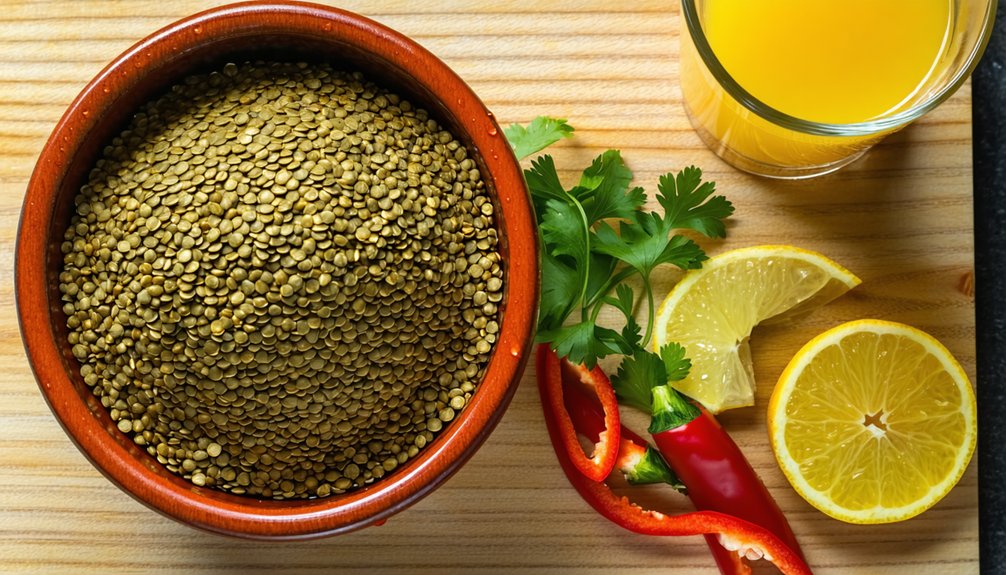
Timing your prep matters as much as timing your meals when it comes to phytates.
Soaking protocols work best with a 4:1 water-to-legume ratio for up to 12 hours—change the water once or twice to enhance mineral availability.
Sprouting techniques cut phytic acid by 35–60%, making germination the most effective single method for legumes. Rinse and drain sprouting seeds every 8–12 hours, 2–4 times total, in a warm spot for maximum results.
Cooking legumes for an hour slashes phytic acid by up to 80%, while roasting grains reduces it by roughly 40%.
Combine methods for real power: sprout, then soak, then cook. Add lemon juice, vinegar, or kombu to accelerate breakdown further.
You control your body’s mineral access—use these tools deliberately.
Easy Meal Combos That Maximize Iron Uptake
Regarding practical application, pairing matters more than counting milligrams. You don’t need complicated formulas—just smart lunch pairings that combine iron with vitamin C or heme sources.
Try grilled chicken thighs with spinach salad, or turkey wrapped with leafy greens and hummus for a poultry-legume combo. Baked salmon with brown rice and broccoli covers both animal and plant iron in one plate. Eggs with mushrooms and tomatoes work well for breakfast-to-lunch flexibility.
For snack combos, keep it simple: pumpkin seeds with oranges, trail mix with citrus or berries, or dried apricots alongside fresh fruit. Dark chocolate paired with fruit satisfies cravings while supporting absorption. These combos free you from restrictive rules—just build meals that naturally work together.
Build a Weekly Meal Plan for Better Iron Absorption
Once you’ve nailed individual meal pairings, the next step is structuring your entire week to keep iron levels steady rather than sporadic. Don’t cram all your iron into one meal—spread it across breakfast, lunch, and dinner for consistent absorption. Aim for 2–3 iron sources daily, alternating heme (chicken, beef) and non-heme (lentils, tofu, fortified cereals) options.
Meal prep works in your favor here: batch-cook lentil soups, roast bell peppers, and portion out fortified oatmeal ahead of time so pairing iron with vitamin C isn’t an afterthought. Lean into seasonal produce—citrus in winter, tomatoes and berries in summer—to keep vitamin C pairings fresh and affordable.
Keep meal timing consistent, separate calcium and tannins from iron-rich meals, and let your weekly rhythm do the heavy lifting toward better absorption.
Frequently Asked Questions
Can Cooking in Cast Iron Pans Increase the Iron Content of Food?
You’ll increase iron through cast iron leaching, especially when cooking acidic foods. The acidic impact on iron release means your tomato sauce or chili gains 6-8mg iron—reclaiming nutrition naturally, without pills, right from your own kitchen.
Do Iron Absorption Strategies Differ for People With Anemia Versus Healthy Individuals?
Yes—you’ll need customized dosages if you’re anemic, using higher vitamin C amounts and stricter inhibitor avoidance. Healthy individuals can use moderate strategies. Your body’s underlying causes determine intensity: deficiency demands aggressive intervention, while normal stores need only balanced, sustainable habits.
How Long Does It Take to Notice Improved Energy From Better Iron Absorption?
You’ll typically notice improved stamina and cognitive clarity within 2 to 4 weeks of consistent iron intake. Pair it with vitamin C, skip coffee nearby, and you’ll accelerate absorption—reclaiming your energy faster and breaking free from fatigue’s grip.
Are There Any Risks to Taking Iron Supplements Alongside These Food Pairing Strategies?
Yes—you’re not immune to risks. You’ll want to watch for supplement interactions with antacids, levothyroxine, and antibiotics; space them apart. Don’t chase excess iron beyond 45mg UL without guidance—your body deserves informed, not reckless, enablement.
Can Children Follow the Same Iron Pairing Guidelines as Adults?
Yes, you can apply the same core principles, but you’ll adjust for age appropriate portions and taste preferences. Pair iron-rich foods with vitamin C, skip tea/coffee at mealtimes, and let your child’s palate guide creative combinations.
Conclusion
You don’t need complicated rules to absorb more iron—you just need smart pairings. Add vitamin C to your non-heme meals, soak or sprout your beans and grains, and skip coffee or tea within an hour of eating. Combine heme and non-heme sources when you can. Small, consistent choices at each meal add up fast. Start with one swap today, and build your weekly plan from there.
References
- https://www.healthline.com/nutrition/increase-iron-absorption
- https://www.redcrossblood.org/donate-blood/blood-donation-process/before-during-after/iron-blood-donation/iron-rich-foods.html
- https://www.medicalnewstoday.com/articles/322272
- https://health.clevelandclinic.org/how-to-add-more-iron-to-your-diet
- https://www.goodrx.com/well-being/diet-nutrition/foods-high-in-iron
- https://www.cedars-sinai.org/content/dam/cedars-sinai/programs-and-services/blood-donor/documents/iron-rich-foods.pdf
- https://www.canr.msu.edu/news/iron_and_vitamin_c_the_perfect_pair
- https://www.spectrumhs.org/iron-rich-foods-to-eat-if-you-have-anemia/
- https://www.healthdirect.gov.au/foods-high-in-iron
- https://www.sbs.com.au/food/article/what-to-eat-to-improve-your-iron-absorption/prtzz7t6k

