
Cycle-based training sounds smart in theory: sync your workouts to estrogen and progesterone shifts, and you’ll train more efficiently. But the evidence tells a messier story. Meta-analyses show no real fitness advantage over traditional periodization, and studies confirm muscle protein synthesis doesn’t differ much between phases. That doesn’t mean it’s useless—it just means the benefits may come from awareness, not hormones alone. Here’s what actually holds up.
TLDR Key Takeaways
- Cycle-based training aligns workouts with hormonal phases, but research shows mixed, often trivial performance effects.
- Follicular phase favors high-intensity training like sprints and heavy lifts due to rising estrogen and better fuel use.
- Luteal phase warrants lower-intensity activities since injury risk and perceived exertion increase significantly.
- Large studies, including a 55-study meta-analysis, found no consistent fitness benefits from phase-based training programs.
- Tracking personal data for three months helps determine if cycle syncing genuinely improves individual training outcomes.
What Is Cycle-Based Training?
Because your hormones shift predictably across roughly 28 days, cycle-based training aligns workout type, intensity, and recovery with those specific phases rather than forcing you into a static, one-size-fits-all plan.
Instead of ignoring your biology, you sync your routines with the follicular, ovulatory, and luteal phases, adjusting training variables based on hormonal fluctuations rather than guesswork. This mirrors the broader principle that variation over time is preferred to static routines when organizing workouts and eating patterns into recurring phases.
This approach requires menstrual literacy—you learn how estrogen and progesterone shifts affect your strength, energy, and recovery capacity. Menstrual cycle disturbances, such as amenorrhea, can act as an important warning signal of underlying energy deficiency.
You balance challenging workouts with adequate rest, listening to what your body signals rather than pushing through blindly. Notably, research shows that athletes are 5–6 times more likely to be injured during the luteal phase compared to the menstrual phase.
Because individual variability means no two cycles look alike, you personalize your plan rather than copying someone else’s.
You work with your biological changes instead of against them, shifting your mindset from restriction to empowerment through alignment.
Cycle-Based Training vs. Bicycle Cycling: What’s the Difference?
The word “cycle” trips people up here, so let’s clear the confusion.
Bicycle cycling means pedaling—it’s a mechanical skill built on balance, guidance, and leg power. You’re building aerobic endurance, torching around 312 calories per 30 minutes, and developing muscle bulk through outdoor terrain or indoor spin classes. Whether ridden indoors or outdoors, bicycle cycling reliably strengthens the cardiovascular system and lower body. Both outdoor and indoor bicycle cycling also engage the quadriceps, hamstrings, glutes, and calves, along with some upper-body muscles.
Cycle-based training is different territory entirely. It’s about menstrual ergonomics—syncing your workout intensity to hormonal shifts across your cycle’s phases. There’s no bike involved, no balance required. You’re tracking hormone data, not handlebars.
This distinction matters for training accessibility. You don’t need special equipment or riding skills to practice cycle-based training—just awareness of your own physiology. Bicycle cycling builds your legs; cycle-based training builds smarter, phase-aligned workouts that work with your body, not against it. Choosing whichever approach fits your lifestyle increases adherence, making it more likely you’ll stick with a routine long-term.
How Hormones Affect Cycle-Based Training Results
While your hormones do shift throughout your cycle, the science on how much they actually affect your training results is messier than most fitness content admits. Research shows short-term hormonal variability has trivial effects on strength, power, or muscle growth—differences as small as 0.36 kg in bench press performance, smaller than a collar clip. When studies verify cycle phase properly, these “effects” often disappear entirely.
Men and women build muscle and strength at equivalent relative rates despite completely different hormone profiles. That said, some evidence suggests the follicular phase may support harder training efforts, while the luteal phase could demand more recovery attention. Individual variability matters too, since hormone effects vary with age, maturity, and pregnancy history. Much of this uncertainty stems from the fact that women are underrepresented in sport and exercise research, leaving many questions about hormonal impact unanswered. Rather than rigidly syncing every workout to your cycle, use this information for genuine training personalization—listen to your body first, let data inform, not dictate.
The Follicular Phase: Your Window for High-Intensity Gains
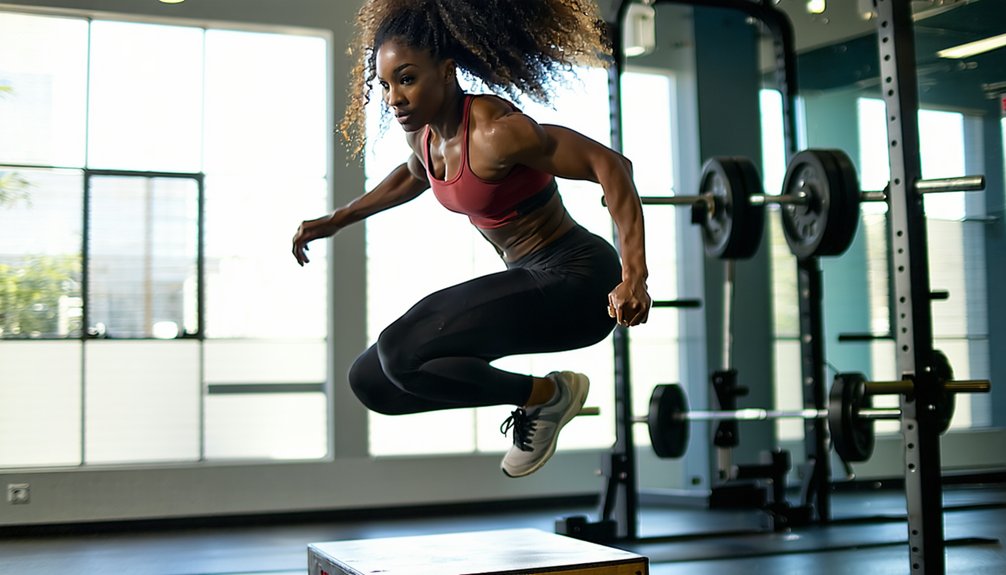
If one phase deserves your attention for hard training, it’s the follicular phase. Rising estrogen fuels your energy, sharpens glucose uptake, and improves insulin sensitivity, so your muscles use fuel more efficiently under load.
This surge triggers fast twitch activation, giving you more explosive power for sprints, heavy lifts, and HIIT sessions. Your body stays cooler here too, lowering overheating risk during max efforts—making this the ideal window to test 1RMs or chase new records. In fact, research suggests that anaerobic capacity and muscle strength peak during this phase when estrogen is at its highest.
Smart carbohydrate timing matters now. Prioritize complex carbs like oats and legumes to sustain energy, pair them with iron-rich foods, and add omega-3s to manage inflammation. Research even shows that training during this phase comes with fewer complaints of pre-exercise pain, water retention, and autonomic reactions like dizziness or nausea compared to the menstrual phase. Newer research also indicates minimal impact on muscle protein synthesis after resistance exercise during this window, reassuring lifters that recovery gains remain consistent.
This is your body’s built-in green light—use it to push limits and claim real strength gains.
Why the Luteal Phase Calls for a Gear Shift
As progesterone and estrogen surge, your body shifts into a higher hormonal load that changes how you burn fuel. Your basal metabolic rate climbs 5-10%, while bloating, fatigue, and heat sensitivity signal hormonal fatigue setting in. This isn’t the time to chase HIIT or breathless intervals—it’s time to shift gears.
Trade explosive workouts for brisk walks, swimming, yoga, or bodyweight moves like squats and lunges. Keep movements controlled, not fast-paced. Your nervous system needs recovery, not more stress hormones. This phase-specific approach mirrors mobility/functional training recommendations for lower-energy days. Rising progesterone also increases your resting heart rate and breathing rate, which can make even moderate movement feel more taxing than usual.
Heat becomes your enemy here—skip hot yoga and steamy studios since your body struggles to regulate temperature. Smart hydration strategies matter more now: sip water consistently, keep it within reach, and fuel with carbs before and during sessions. Restorative practices like child’s pose and legs-up-the-wall can further ease tension while supporting your body’s natural recalibration.
Listen to your body. It’s not slowing down—it’s recalibrating.
What Does the Research Say About Cycle-Based Training?
Even cycle-adapted running programs show equal results to traditional periodization—no extra edge, no faster gains. What does this mean for you? Menstrual variability doesn’t have to dictate your training.
Your consistency and training adherence matter more than syncing workouts to hormones. You’re free to train on your terms. Research from McMaster University found no detectable differences in muscle protein synthesis between the high-estrogen and high-progesterone phases of the cycle.
Does Cycle Syncing Actually Improve Performance?
Why does cycle syncing keep gaining traction despite shaky science? The appeal is real, but the data’s mixed. You’ll find studies showing better metabolic health and lower mental fatigue when women align workouts with hormonal phases, yet other research shows no significant muscle protein synthesis differences across your cycle.
Nutritional timing tied to phases has reduced inflammation markers in some trials, but methodological flaws limit how much you can trust these claims.
Your body isn’t a textbook case. Individual variability means what works for one woman might do nothing for you. Muscle building doesn’t lock itself to a specific week—consistency matters more than perfect timing. Track your own patterns before buying into universal rules.
Where the Science on Cycle Syncing Falls Short
Since researchers first proposed menstrual synchrony in 1971, decades of follow-up work have failed to confirm it. McClintock’s original study had methodological limitations that better-designed research couldn’t replicate.
Larger samples, stronger research design, and diverse populations—lesbian couples, dorm roommates, natural fertility groups—all found no synchrony effect.
The same shaky foundation extends to cycle matching for exercise and diet. A meta-analysis of 55 studies (928 participants) found no fitness benefits from phase-based training.
A 2025 study showed cycle phase doesn’t affect muscle protein synthesis at all. When people report feeling better after syncing their workouts, you’re likely seeing placebo effects, not physiology.
You deserve strategies backed by real evidence, not anecdotes dressed up as science. Question the hype—your body deserves accuracy, not assumptions.
How to Start Tracking Your Cycle for Training Insights
In light of the shaky research on cycle syncing, your best bet is building your own evidence base. Start simple: mark Day 1 of bleeding on a calendar, app, or spreadsheet. Clue, Flo, FitrWoman, or your Garmin/Fitbit/Apple Watch can automate this if you’d rather skip manual entry.
Track what matters: period start/end dates, cervical fluid changes, sleep quality, mood, and energy. Log whether you hit your workout goals and how hard sessions felt. Add your hydration strategies and breathwork techniques to see if they shift your recovery or focus during different phases.
Give this three months minimum before drawing a determination—don’t overhaul your training early. Consistency is everything here. Your body’s patterns are personal, not generic; only your own data reveals what actually works for you.
Building a Training Plan Around Your Cycle Patterns
Once you’ve logged three cycles’ worth of data, you’ve got enough to start mapping workouts onto your actual hormonal patterns instead of a generic template.
Schedule strength training, HIIT, and cardio during your follicular phase—estrogen’s enhancing glucose uptake and muscle-building capacity, so push hard here.
As luteal phase hits, shift gears: lower intensity, add rest days, and dial in nutrition timing with pre/post-workout protein to counter progesterone’s protein breakdown effect.
Menstruation calls for walking, yoga, or Pilates, not heavy lifting.
This isn’t about limiting yourself—it’s about training smarter.
Build mental resilience by trusting body cues over rigid schedules.
Adjust weekly load increases downward during low-hormone phases, and never stack three intense sessions back-to-back when energy’s already tanking.
How to Talk to Your Coach About Cycle Syncing
Because cycle syncing touches on something deeply personal, the conversation with your coach deserves more thought than a quick mention before a workout. Request a private meeting away from training hours—privacy considerations matter when discussing something this personal. Ease into it by linking your cycle to nutrition and sleep, rather than diving straight into protocols.
Effective communication strategies start with inclusive language: say “some athletes notice” instead of universal claims. Skip prescriptive statements like “I have to skip cardio today.” Your coach should acknowledge that research on cycle syncing remains limited, while explaining general patterns like lower cortisol in your cycle’s first half.
If pain or bleeding disrupts your life, your coach should redirect you to a healthcare provider—that’s beyond their scope, and knowing that boundary protects you both.
Reviewing and Adjusting Your Cycle-Based Plan
Before you adjust anything, gather real data instead of relying on how you think you feel. Symptom journaling gives you the raw material: sleep quality, fatigue, stress, cramps, headaches, bloating. Pair it with readiness checkpoints—a quick 30-second scan of energy, sleep, symptoms, and coordination before each session. Your warm-up doesn’t lie; if it feels sloppy, that’s your signal to dial back.
Change one variable at a time. Start with load, then intensity, then structure, and give it two to three weeks before judging results. If power or pace drops across three sessions at the same effort, that’s data worth acting on. If HRV trends down or performance stalls, schedule a recovery week at 50–60% volume. Treat your plan as adjustable, not fixed.
Frequently Asked Questions
Can Birth Control Pills Affect How I Approach Cycle-Based Training?
Yes—hormonal contraception flattens your natural fluctuations, so rigid cycle-syncing won’t apply. You’ll see minimal performance variability between pill phases. Skip the rigid schedule; instead, track your own symptoms and energy, then adjust recovery and training freely based on what you feel.
Is Cycle-Based Training Safe for Athletes With Irregular Periods?
Yes, you can train safely with irregular timing—just skip rigid phase rules. Focus on individualized adjustments, track hormonal fluctuations, and consider monitoring biomarkers. If periods stop entirely, see a doctor—your body’s signals matter most.
Does Cycle Syncing Work the Same Way During Perimenopause or Menopause?
No, it shifts. You’ll need perimenopause adaptations—tracking symptoms, not calendar days. Post-menopause, you focus purely on menopausal symptom management: energy, mood, cravings. Ditch rigid phases; trust your body’s signals. You’re free to adapt, not follow outdated rules.
Can Men Benefit From Any Form of Cycle-Based Training Strategies?
Yes—you’ll thrive with circadian, seasonal, and recovery-based cycles instead. Without dramatic hormonal fluctuations, you can focus on structured loading, deloading, and morning training for real performance adaptation. Skip the myth of a “male cycle” and train smarter, freely, on proven rhythms.
What Apps or Tools Are Best for Tracking Menstrual Cycle Training?
You’ve got solid options: try FitrWoman or Clue as fertility apps for phase-based training perspectives, and pair them with a heart rate variability tracker—like Whoop or Oura—to truly own your body’s data and freedom.
Conclusion
Cycle-based training isn’t hype—it’s biology. You’re not imagining the strength dips or the surprise PRs; your hormones drive real, measurable shifts in performance. Track your cycle, match your training intensity to your phase, and talk openly with your coach about what you’re noticing. Then adjust as you go. You don’t need a perfect system, just consistent data and willingness to tweak. Start small, stay curious, and let your body’s patterns guide smarter training decisions.
References
- https://pmc.ncbi.nlm.nih.gov/articles/PMC10823667/
- https://helloclue.com/articles/diet-and-exercise/the-truth-about-cycle-syncing-and-exercise
- https://blog.urbansportsclub.com/en-de/health/womens-health/cycle-based-training/
- https://www.healthpartners.com/blog/how-tracking-your-period-can-help-improve-athletic-performance/
- https://carefocusdaily.com/outdoor/cycle-based-training-nutrition-guide
- https://www.lesmills.com/articles/six-reasons-to-love-cycling-workouts
- https://pubmed.ncbi.nlm.nih.gov/25804386/
- https://www.livescience.com/cycling-as-exercise
- https://www.bikeradar.com/advice/fitness-and-training/base-training-cycling
- https://newzapiens.com/magazine/train-like-a-woman-how-cycle-based-training-unlocks-performance-and-protects-health

