
You don’t need meat to build a nutritious, protein-rich plate. Fill half your plate with colorful vegetables, a quarter with plant protein like beans, tofu, or tempeh, and a quarter with whole grains like quinoa or farro. Add a tablespoon of healthy fat for absorption. Research shows Black women on plant-based diets see markedly lower rates of diabetes, obesity, and hypertension. Keep going to see exactly how to portion, pair, and prep these meals for real results.
TLDR Key Takeaways
- Plant-based diets can lower diabetes, obesity, and hypertension risk, offering major health benefits for Black women.
- Build balanced plates: half vegetables, a quarter protein (beans, tofu, tempeh), and a quarter whole grains like quinoa.
- Combine legumes with grains, like rice and beans, to create complete proteins with all essential amino acids.
- Use culturally rooted staples—black-eyed peas, lentils, black beans, and groundnuts—to meet daily protein needs affordably.
- Add healthy fats like avocado or tahini and consider B12 supplementation to round out nutrition.
Why Plant-Based Protein Matters for Black Women
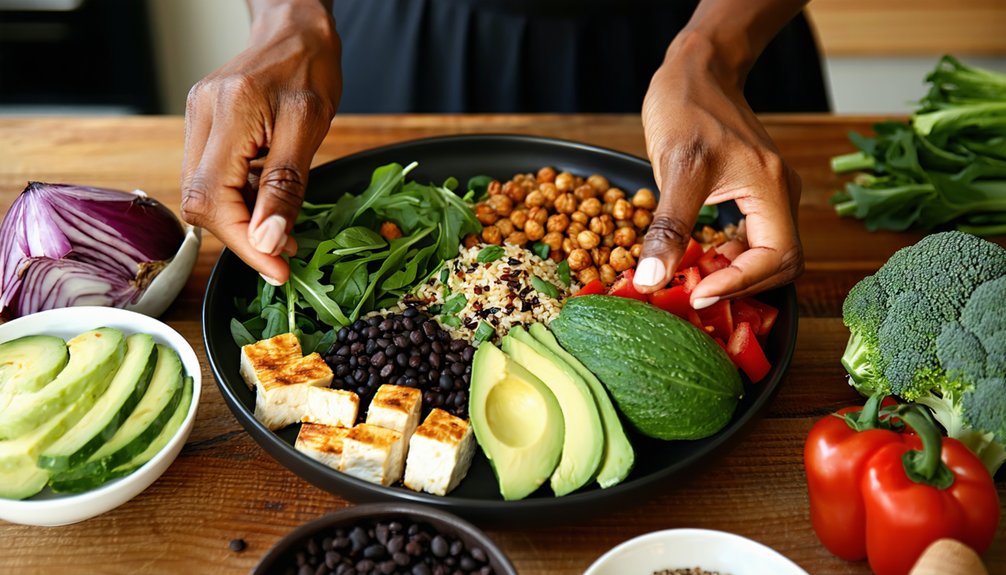
Resilience shouldn’t come at the cost of your health—yet Black women face disproportionately high rates of hypertension, diabetes, and cardiovascular disease compared to other groups. Plant-based protein offers a path forward. Research shows Black women on plant-based diets have 70% lower odds of diabetes, 60% lower odds of obesity, and markedly reduced cholesterol and blood pressure levels—all without sacrificing flavor or cultural identity. Despite these disproportionate disease burdens, little research has specifically examined plant-based diets among Black populations.
Your cultural foodways already hold the blueprint: beans, greens, grains, and vegetables have nourished generations before you. Reclaiming these traditions isn’t a trend—it’s liberation rooted in ancestral wisdom. In fact, an Adventist Health Study-2 analysis found that African American participants following a vegetarian or vegan pattern had 44% reduced risk for hypertension compared with nonvegetarians. National surveys also show that 8% of Black individuals report following vegan or vegetarian diets, compared to just 3% of the overall U.S. population.
Community gardens are amplifying this shift, making fresh, affordable produce accessible while strengthening collective power. When you prioritize plant-based protein, you’re not just protecting your body—you’re reclaiming autonomy over your health, one plate at a time.
How Much Protein Do You Actually Need?
How Much Protein Do You Actually Need? Forget portion myths that tell you protein has to come from meat-sized servings. Your baseline sits at 0.8 grams per kilogram of body weight, but that’s just the floor, not the ceiling.
If you’re sedentary, you need around 46 grams daily. Moving your body regularly? Push that to 1.3 grams per kilogram. Training intensely? You’re looking at 1.6 grams per kilogram to support real muscle function.
Age changes the equation too—after 65, aim for 1.0 to 1.2 grams per kilogram to fight muscle loss. Pregnant or lactating? You need 71 to 100 grams daily. A cup of dry beans delivers about 16 grams of protein, making legumes an easy way to hit these targets without relying on meat. Healthy adults can safely consume up to 2 grams per kilogram without issue, giving you plenty of room to experiment with plant-based sources.
Protein timing matters less than hitting your daily total consistently. For active adults, RDA-level protein intake can supply as little as 10% of daily calories. Know your number, then build your plate around it.
What Counts as a Complete Protein?
Once you know your number, the next question is where that protein actually comes from—and not all sources are created equal. A complete protein contains all nine essential amino acids—the ones your body can’t make on its own. Your body already produces 13 aminos; the other nine depend on what you eat.
Forget soy myths that paint tofu, tempeh, and edamame as inferior—these are legitimate complete proteins. Quinoa, hemp seeds, chia seeds, and spirulina also stand alone. Lentils and beans don’t cut it solo, but paired with grains, nuts, or seeds, they build a complete profile. Buckwheat and amaranth are two more whole grains that also qualify as complete grains on their own.
Don’t stress amino timing—you don’t need every amino acid in one sitting. What matters is variety across your day. Rice and beans, pita and hummus: these combinations have fueled liberation for generations. Even a peanut butter sandwich works, since wheat’s low lysine is balanced by peanuts’ high lysine content. Research shows that amino acid absorption from plant-only meals is essentially the same as from meals that include animal foods, as long as calorie needs are met. Trust the pairing, not the panic.
Build a Plant-Based Protein Plate, Step by Step
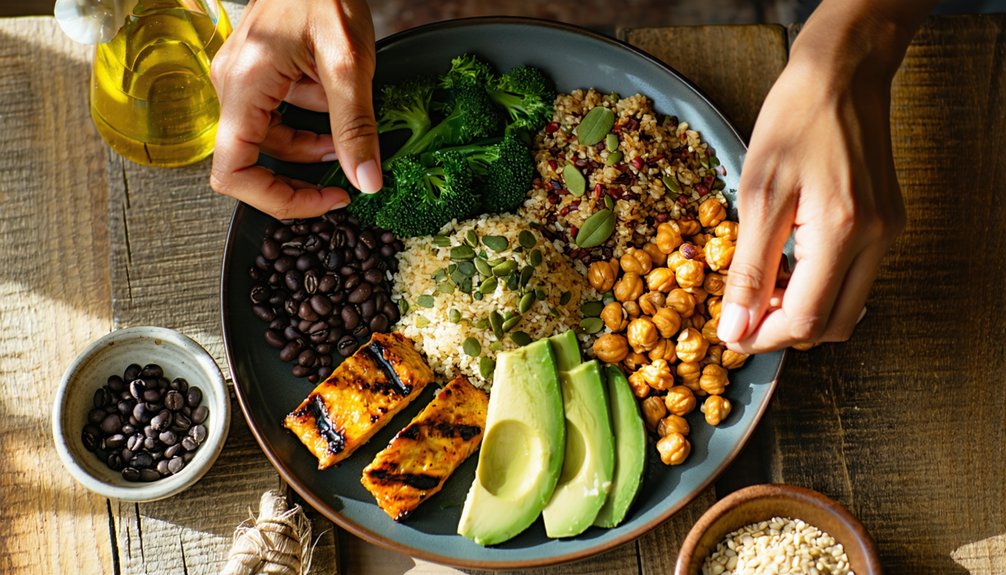
Image your plate divided before you even pick up a fork. This meal assembly starts with colorful roasted vegetables—spinach, broccoli, asparagus—filling half your plate.
Next, claim one quarter for protein: beans, tofu, tempeh, or seitan. Use the final quarter for hearty whole grains like quinoa or farro. Top it off with a tablespoon of healthy fat—avocado, seeds, or tahini—for flavor and better nutrient absorption.
Need more calories or protein? Portion swaps make this easy. Swap starchy vegetables for sweet potato or squash to increase calorie density.
Add plant-based cheese or a protein-rich snack later if your meal falls short. Prep grains and greens ahead of time, so building this plate becomes second nature, not another task on your list. Stocking frozen vegetables can also save prep time while keeping nutrients intact.
Portion Control Made Simple
Not every meal needs a food scale to stay balanced. Your hands are built-in tools for visual portioning: a palm-sized serving of protein, a cupped hand of vegetables or fruit, a fist of carbs, and a thumb of fats. Everyday objects work too—think tennis balls for fruit, baseballs for veggies, decks of cards for protein and carbs, dice for fats. Still, for calorie-dense items like nuts, seeds, and dried fruit, using measuring cups and food scales can help you stay mindful of portions without falling back into rigid tracking.
This kind of mindful eating puts you back in control without obsessing over numbers. It’s about tuning into your body, not policing it. Plant-based legumes count as both protein and carbs, so adjust your plate accordingly. If you’re unsure how to measure legumes by hand, a cupped hand of cooked beans is roughly equivalent to 125 grams, counting as mostly carbs with some protein. Many chronic diseases affecting Black women 50 and older can be prevented or even reversed by adopting a whole plant-based diet. Simple visual cues free you from diet culture’s rigid rules, giving you practical, sustainable tools to nourish yourself on your own terms.
Top African Protein Sources to Stock
Because your kitchen already holds culturally rooted staples, building a plant-forward pantry doesn’t require a total overhaul. Stock white beans and lentils—each supplying 22-25 g protein per 100 g dried—alongside black-eyed peas and black beans for versatile weeknight meals. Soybeans pack 36-37 g protein per 100 g, making them your highest-yield plant option; convert them into Wara Soya for a West African staple.
Egusi versatility earns its reputation as a protein powerhouse, blending into stews while providing healthy fats your body craves. Pair these with groundnuts and cashews for grab-and-go energy, and don’t overlook Bambara groundnuts, a traditional legume offering over 20 g protein per 100 g.
Dried fish preservation techniques mean you can keep traditional protein sources shelf-stable, anchoring soups without refrigeration demands. Round out your stock with fonio and amaranth—ancient grains rich in protein and iron, honoring lineage while fueling liberation. Quinoa is another whole grain worth adding, often prized as a complete protein containing all nine essential amino acids.
Beans, Grains, and Pairings That Complete Each Other
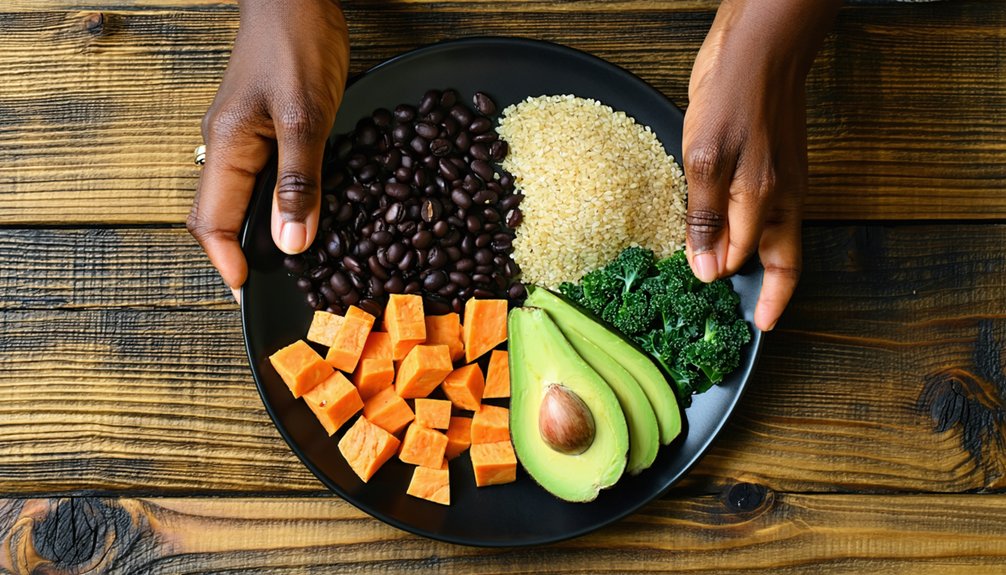
Once you understand why beans and grains work together, you’ll never look at rice and stew the same way again. Beans bring lysine; grains bring methionine. Neither is complete alone, but together, they cover all nine essential amino acids. This isn’t new science—it’s ancestral wisdom your grandmother practiced without a nutrition degree.
Smart Bean Pairings make this simple: black beans with rice, chickpeas with pasta, lentils with whole-grain bread. Try Grain Swaps too—quinoa, millet, or corn polenta instead of your usual base, since all three deliver protein on their own.
Skip the myth that you need these foods in one sitting. Your body stores amino acids and uses them across the day. Stock two beans, two grains weekly. Batch-cook. Build your plate with intention, not perfection.
B12, Iron, and Calcium: Nutrients to Watch
While beans and grains handle your protein needs, three nutrients still deserve your close attention: B12, iron, and calcium.
Your plant-based plate won’t naturally supply B12, so B12 supplementation—at least 250 µg of oral cyanocobalamin daily—isn’t optional; it’s essential. Skip unreliable sources like spirulina and unfortified nutritional yeast.
Iron bioavailability is your next focus. Non-heme iron from lentils and beans absorbs less efficiently than animal-based iron, so pair these foods with vitamin C sources—tomatoes, citrus, peppers—to enhance absorption. Keep tea, coffee, and calcium supplements 1-2 hours away from iron-rich meals.
For calcium, lean on almonds and fortified plant milks. As a Black woman, you’re already at higher risk for these gaps—ask your doctor for periodic ferritin and iron panel screening to protect your bone and blood health.
Choosing the Right Plant-Based Milk and Supplements
Since not all plant milks deliver equal nutrition, your choice matters as much as your decision to go dairy-free. Soy milk stands out as your best option—it’s a complete protein, cholesterol-free, and closely mirrors cow’s milk when fortified. Pea milk offers another solid protein source, while almond, rice, and coconut varieties fall short unless protein isn’t your priority.
Seek out fortified choices with B12, calcium, and vitamin D listed on the label—brands vary widely, so check before you buy. Skip added sugars by choosing unsweetened versions.
If allergies limit your options, allergen swaps keep you covered: hemp milk works for nut allergies, while oat milk serves those avoiding soy. Your milk should fuel your freedom, not complicate it—read labels and choose with intention.
Boost Flavor Without Adding Calories
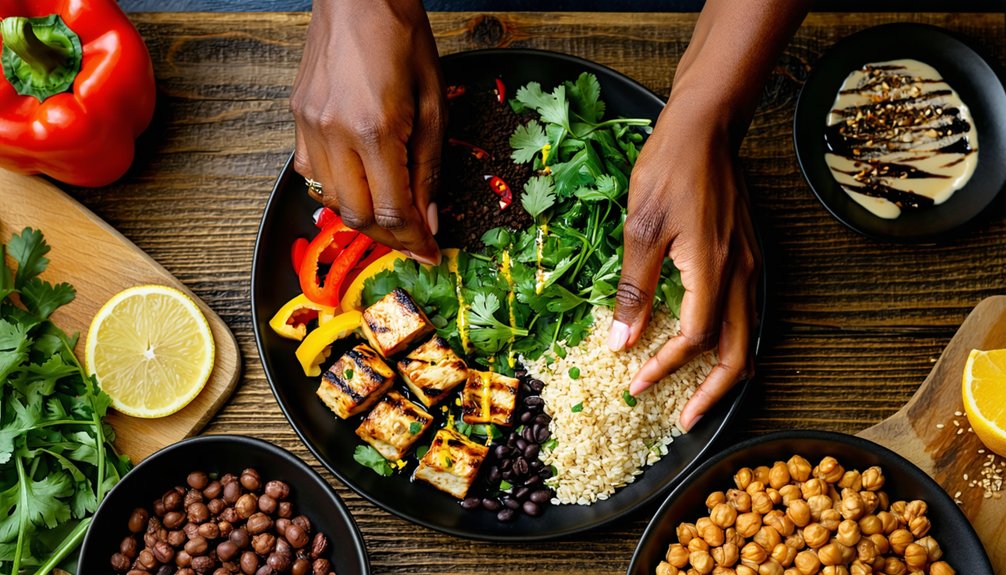
Picking the right milk solves half the equation—what you add to your protein shakes and meals determines whether you’ll stick with them long-term.
You don’t need sugar to make black beans, lentils, or chickpeas taste like liberation on a plate. Herb infusions—fresh mint, basil, rosemary, ginger, cilantro—turn plain plant protein into something you crave, not tolerate. Spice blends built from cumin, turmeric, smoked paprika, garlic, and onion powder deliver savory complexity without a single added calorie. Reach for vanilla extract, citrus juice, or berry powder to sweeten shakes naturally. Tahini-lemon dressings, pickled vegetables, and vinegars add tang that mutes blandness instantly. Finish dishes with nutritional yeast or toasted seeds for texture and depth. Flavor is your tool for freedom, not restriction.
Easy Plant-Based Meals for Breakfast, Lunch, and Dinner
How do you build a plate that fuels you without a recipe book in hand? Use simple formulas instead. Breakfast means whole grains, fruits, and nuts or seeds—think overnight oats with dates, cinnamon, and plant milk, or a sweet potato bowl topped with blueberries and muesli.
Lunch and dinner follow the same pattern: vegetables, whole grains, and legumes. Beans, lentils, or tempeh anchor your plate, paired with a grain or tortilla and roasted or fresh vegetables.
Let seasonal produce guide your choices—swap in what’s fresh and affordable. Meal swaps keep things flexible: trade rice for pasta, black beans for lentils, or sweet potato for grain bowls. This isn’t about perfection—it’s about building freedom into every meal you make.
Quick Protein Boosts for Busy Mornings
Mornings don’t leave much room for elaborate cooking, but you don’t need a full recipe to hit your protein target. On the go chia works fast—stir a tablespoon into yogurt or a smoothie for 3 quick grams. Hemp heartshots deliver even more, packing 6 grams per tablespoon when sprinkled on toast or blended straight into your drink. Pair either with soy milk for a 9-gram protein base, and you’re already building toward your 20–30 gram goal.
Your liberation includes reclaiming your mornings from rushed, protein-poor choices. A smoothie with protein powder, hemp hearts, and almond butter hits 30 grams in two minutes—no stove required. Even roasted chickpeas or hummus with hemp hearts work as grab-and-go options when time isn’t on your side.
Frequently Asked Questions
Can Plant-Based Protein Diets Support Muscle Recovery After Intense Workouts?
Yes—you’ll fuel muscle repair by pairing protein blends with smart amino timing. Eat recovery foods within an hour post-workout, combining legumes and grains for complete aminos. Your body deserves this power; reclaim recovery on your own terms.
Are Plant-Based Proteins Safe for Children and Teenagers?
Yes, you can safely raise your kids on plant-based proteins! With allergen awareness and consistent growth monitoring, you’ll make certain they thrive—hitting milestones, building strength, and breaking free from outdated diet dogma while flourishing on their own terms.
How Long Does It Take to Adjust to a Plant-Based Diet?
Your adjustment timeline typically runs 2-4 weeks, though gut adaptation to new fiber sources starts within 4-5 days. You’ll feel more energized by week three—stay hydrated, go gradual, and trust your body’s wisdom as it reclaims its rhythm.
Can Plant-Based Eating Help Manage Conditions Like PCOS or Fibroids?
Yes—you can support your body’s healing. Plant-based eating aids hormone regulation and inflammation reduction, easing PCOS and fibroid symptoms. You’re not just managing conditions; you’re reclaiming your health, one nourishing, fiber-rich plate at a time.
What Budget-Friendly Tips Help Make Plant-Based Eating Affordable?
Bulk buying beans, rice, and lentils cuts costs fast. You’ll stretch every dollar further with batch cooking—prep staples weekly, freeze extras, and rely on store brands. Your freedom from food anxiety starts with smart, strategic shopping, not sacrifice.
Conclusion
You don’t need meat to meet your protein needs—you need a plan. Combine legumes, grains, nuts, and seeds throughout your day, and you’ll hit your targets without overthinking every meal. Start with one balanced plate today: beans, quinoa, and greens work well together. Track your portions, choose fortified plant milks, and season with herbs instead of salt. Small, consistent choices build lasting results. Your plate, your rules—make it work for you.
References
- https://meatout.org/wp-content/uploads/2021/03/AA_VeganStarterGuide.pdf
- https://oldwayspt.org/wp-content/uploads/2024/06/African-Heritage-Power-Plate-Booklet.pdf
- https://blackculturerecipe.com/can-you-get-enough-protein-from-african-plant-foods/
- https://rblwellnessbeauty.com/plant-based-diet-a-day-of-eating-in-my-life-as-a-black-woman-50/
- https://www.foodnetwork.com/healthyeats/recipes/how-to-make-balanced-fully-plant-based-vegan-plate-meal
- https://abcardio.org/wp-content/uploads/2020/06/ABC_Cookbook.pdf
- https://blackgirlseat.com/easy-plant-based-protein-recipes-you-can-make-today/
- https://www.mayoclinichealthsystem.org/hometown-health/speaking-of-health/tips-for-eating-more-plant-proteins
- https://hr.ucmerced.edu/sites/g/files/ufvvjh1046/f/documents/plant_bsed_helathy_plate.pdf
- https://www.massgeneral.org/news/article/spotlight-on-plant-based-proteins

