
You can extend your healthspan by building daily habits, not just relying on genetics. Move most days, hitting 150 weekly minutes of aerobic activity plus strength and balance work. Eat a MIND-style diet rich in leafy greens, fiber, and healthy fats. Prioritize sleep, manage stress through meditation and joy, stay current on vaccines, and track blood pressure, sugar, and cholesterol early. Strong social ties matter too. Keep going for the specific numbers and habits that make the biggest difference.
TLDR Key Takeaways
- Prioritize healthspan by focusing on movement, cognition, and independence, not just lifespan alone.
- Aim for 150 minutes weekly aerobic activity plus twice-weekly strength training to protect muscles and bones.
- Support gut health with 25–30 grams daily fiber and probiotic-rich foods like kefir and fermented vegetables.
- Follow the MIND diet with leafy greens, berries, olive oil, and fish to lower Alzheimer’s risk significantly.
- Address sleep disparities through consistent bedtimes, stress reduction, and acknowledging chronic emotional and cultural burdens.
Why Healthspan Matters More Than Lifespan
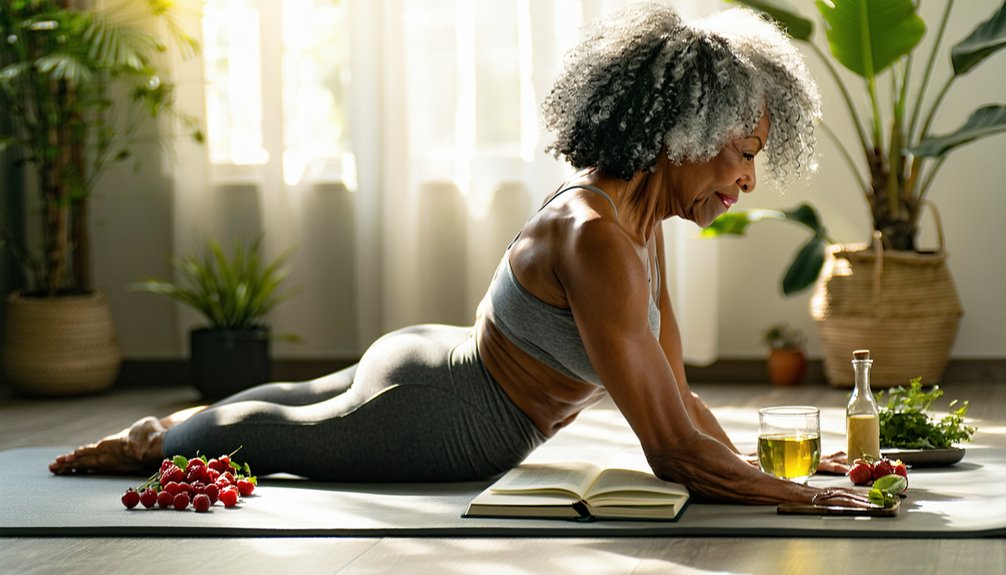
When you ask how long you’ll live, you’re asking the wrong question. Lifespan only tells you a final number—it says nothing about how you’ll feel getting there. Healthspan is different. It measures whether you can move freely, think clearly, and stay independent without disease or disability stealing your years first.
This distinction reflects values based priorities: living well matters more than living long. A significant gap exists between how long Black women live and how many of those years remain healthy. Closing that gap isn’t just personal—it carries real policy implications for healthcare access, prevention, and community support. Many people live a decade or more burdened by multiple chronic conditions despite longer lifespans overall. Your goal isn’t survival alone. It’s claiming years where you move, think, and connect on your own terms. Genetics, lifestyle, and environment all work together to shape how many of those years stay healthy. Research increasingly points to cellular senescence as a key driver of tissue deterioration and age-related disease that can shorten this window of healthy living.
Hit Your Weekly Movement Targets for Longevity
Claiming those healthy years starts with a number you can actually track: minutes per week. Aim for 150 minutes of moderate aerobic activity—brisk walking, cycling—to cut all-cause mortality risk. Walking five hours weekly drops your hazard ratio to 0.69. Even 60 minutes offers real benefit, and 7 to <15 MET-hours weekly reduces mortality by 33% in African American women.
Add strength training twice weekly, working every major muscle group to protect bone density and mass. Staying physically active also supports overall wellness alongside efforts to manage conditions like type 2 diabetes, which disproportionately affects Black women.
Round it out with 2–3 sessions of balance and flexibility work—yoga, tai chi, stretching—to prevent falls and preserve independence. Consistent movement can also help counter the weathering effects of chronic stress that accelerate biological aging in Black women. Balance-focused practices are especially valuable since reduced balance raises fall risk substantially as adults age.
Make it sustainable: join community walking groups for accountability, try music-paced workouts for motivation, or split movement into three 10-minute walks. Your freedom lives in consistency.
Eat the MIND Diet to Fight Aging and Inflammation
In addition to moving your body, feed your brain: the MIND diet delivers benefits 6% greater for women, and research shows the effect is most pronounced in Black individuals. This isn’t restriction—it’s reclamation of your cognitive future. Load your plate with 6+ weekly servings of leafy greens, and make berry swaps your default dessert, trading pastries for antioxidant-rich blueberries and strawberries. Build olive rituals into every meal, replacing butter with olive oil as your primary fat source, since healthier fats like monounsaturated fats found in olive oil support long-term health better than saturated options. Add fish weekly, nuts daily, whole grains as your foundation.
Limit red meat to under 4 servings weekly. One added component drops your cognitive age by 2 years. Highest adherence cuts Alzheimer’s risk by 53%. This protective effect was first identified in the Rush Memory and Aging Project, a cohort of over 1,000 participants followed for up to a decade. The REGARDS cohort study, which tracked over 14,000 adults, found this dietary pattern was also linked to slower cognitive decline among Black participants compared to White participants. Your fork is power.
Prioritize Sleep to Recover and Reduce Stress

Resting isn’t optional—it’s biological maintenance your body demands, yet Black women face a stark sleep gap.
In 2018, Black people reported short sleep at a rate 11 points higher than white people—up from 7.5 points in 2004. Research shows these disparities are especially pronounced among Black women and are linked to work and employment factors. You’re carrying more than exhaustion; you’re carrying the weight of “strong Black woman” emotional buffering—suppressing feelings, resisting vulnerability, feeling obligated to help everyone else first. That suppression correlates directly with poor sleep quality and fragmented rest, which slows your cognitive processing and memory.
This isn’t a personal failing—it’s structural, tied to financial hardship, trauma, and chronic stressors. Still, sleep hygiene matters: consistent bedtimes, limiting screens, and naming your emotional load instead of swallowing it. Protecting your rest is protecting your mind, your body, and your right to age well.
Manage Stress Through Meditation, Journaling, and Joy
Sitting meditation and body scans give you a restorative time-out from a world that rarely offers one. Mindful journaling lets you observe your thoughts without judgment, revealing patterns instead of drowning in them—a practice elder Black women have long used to stay rooted in their core-self. In a pilot study at a Chicago health center, participants who practiced these techniques at home averaged 2.5 hours per week of consistent engagement.
Pair this with joy rituals: leaning on family, faith, and loving-kindness practices to counter historical trauma with intentional presence. Mindful stretching, walking, or yoga adds physical release to mental clarity. A related qualitative study of older African American women found that stress often stems from race-based microaggressions tied to neighborhood and workplace experiences, underscoring the value of culturally tailored coping practices.
None of this is extra. It’s how you reclaim balance, one grounded moment at a time.
Hydrate and Support Your Gut for Longevity
Rarely does one habit move the needle on longevity like gut health does, and it starts with what you drink and eat every single day.
Start with morning hydration: plunge 16 ounces of room-temperature water before you eat anything. This simple act eases constipation, lubricates your joints, and lowers your risk of kidney stones and gout.
Then, build probiotic diversity by eating kefir, kimchi, sauerkraut, and traditional African fermented foods alongside yogurt or dairy-free options with live cultures. As we age, the diversity and stability of our gut microbiome naturally declines, making these probiotic-rich foods even more essential for immune function.
Pair this with 25–30 grams of daily fiber from lentils, chickpeas, sweet potatoes, and whole grains. If food alone doesn’t get you there, lean on fiber supplements with inulin or psyllium husk. Beyond fiber alone, chronic stress and racial trauma can disrupt your gut ecosystem through the gut-brain axis, affecting both mood and digestion over time.
Add daily movement—walking, yoga, strength training—to keep your gut working and your body free. Even a short 10-minute walk each day can support heart and digestive health while easing stress on your system.
Build Fiber and Flossing Into Your Daily Routine
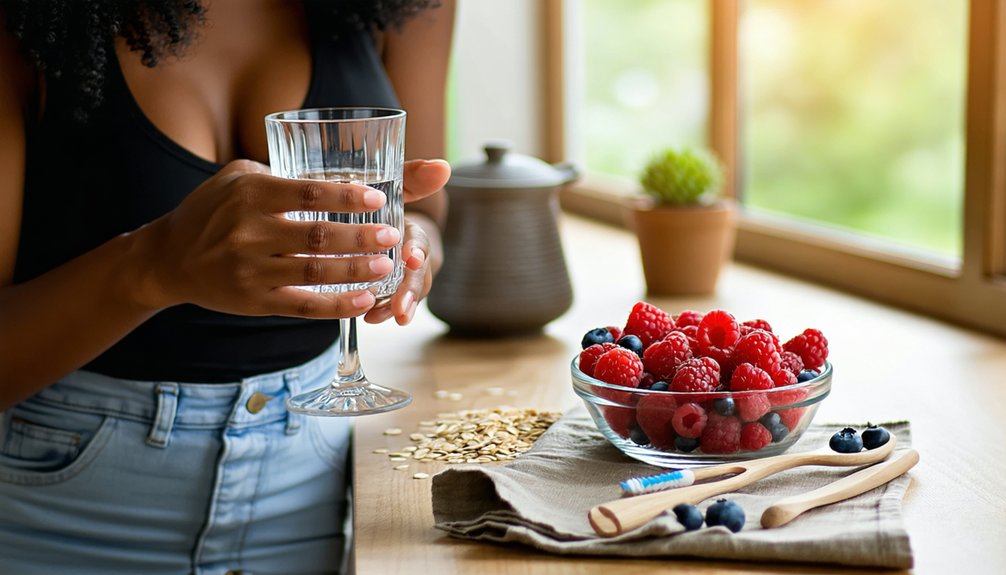
Gut health doesn’t stop at what you drink—it depends heavily on what you chew and swallow daily, especially fiber.
As a Black woman over 50, you need at least 21 grams daily, though 22.4 grams gives you extra protection.
Build high fiber breakfasts with whole grains, chia seeds, or ground flaxseed—aim for cereals with 5+ grams per serving.
Add legumes, fruit peels, and five servings of produce throughout your day.
Increase intake gradually over two weeks and drink plenty of water to avoid cramping.
Every 10 grams you add can lengthen telomeres by 67 base pairs—reclaiming years for your body.
Don’t stop at fiber.
Daily flossing protects your gums and supports whole-body inflammation control, another piece of your longevity strategy.
Small, consistent habits build lasting freedom in your health.
Schedule the Screenings That Catch Disease Early
Screenings consistently catch what symptoms miss, so don’t wait for warning signs to schedule yours.
Check your blood pressure yearly, keeping it under 120/80.
Start cholesterol screening at 20, or by 45 with population-adjusted guidance.
Get your baseline mammogram at 35—earlier than the standard age 40—especially with family history of breast cancer.
Begin diabetes screening at 35 if you’re overweight, repeating every three years.
Between ages 30 and 65, get Pap tests every three years or HPV tests every five.
Start colorectal screening at 45, sooner with family history.
Add bone density testing at 65 or earlier if at risk.
Take control of your health data: set screening alerts, track your own results, and join community screenings that make prevention accessible and affordable.
Your longevity depends on consistency, not luck.
Stay Current on Vaccines That Protect Longevity
Too often, vaccines get dismissed as childhood business, yet they’re a lifelong longevity tool you can’t afford to skip. The numbers demand your attention: Black adults received the flu vaccine 6% less often than the general population, and those 65+ got pneumococcal protection 16% less.
This gap isn’t accidental—it’s why HPV outreach matters so much for preventing cervical, throat, and other cancers before age 26, with shared decision-making available through 45.
If you’re pregnant, maternal immunizations like Tdap and RSV vaccines protect both you and your baby. After 50, ask about shingles and pneumococcal vaccines. Reclaim your right to full protection—don’t let disparities dictate your healthspan. Vaccination is self-determination, not an afterthought.
Monitor Blood Pressure, Sugar, and Cholesterol Early
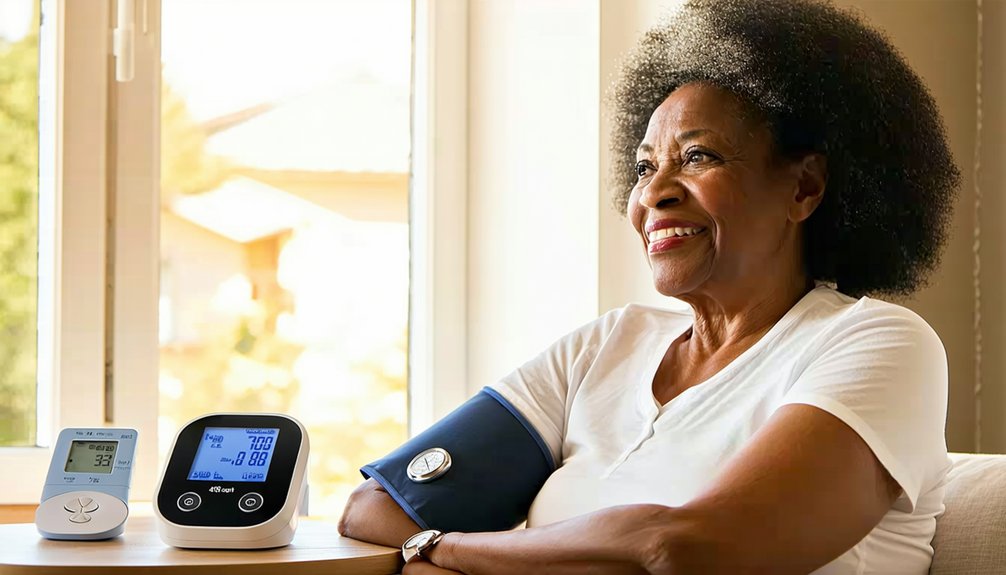
Numbers don’t lie, and for Black women, blood pressure numbers matter earlier than you might think.
About 58% of Black adults live with high blood pressure, and developing it before 35 can triple your stroke risk. Get screened before 35, not after a crisis forces the issue.
Home BP monitoring puts control in your hands. Invest in a validated device from validatebp.org, and track readings twice daily in a seven-day log. This data activates a personalized wellness plan built around your body.
Don’t stop at blood pressure—early lipid testing catches cholesterol issues before they compound. Genetics, sodium intake, and weight all play roles. Knowledge is liberation: the earlier you know your numbers, the more power you have to protect your future.
Build Social Connections That Fuel Longevity
Your lab results tell only part of the story—your relationships tell the rest. Strong social bonds give you a 50% greater chance of survival compared to isolation. For you, this matters even more: isolation raises inflammation as much as physical inactivity does in youth, and drives hypertension risk higher than diabetes does in later years.
Community engagement changes this course. Persistent, diverse connection improves physical functioning and lifts anxious or depressed mood. Build your network intentionally—join intergenerational mentorship programs that link you to elders and youth alike, and root yourself in faith based circles that offer belonging and accountability.
Check in regularly. Volunteer. Seek people who share your values. Prosocial living isn’t optional—it’s protective. Your freedom includes living long enough to enjoy it.
Keep Learning to Sharpen Cognitive Longevity
Keep your brain in the game, because learning doesn’t stop paying off once school ends. Weekly reading, puzzles, or games act as neuroplasticity exercises, strengthening the neural pathways tied to memory and processing speed. You don’t need a degree program to benefit—consistent mental engagement matters more than credentials.
That said, higher education levels amplify cognitive health life expectancy, and this effect is especially strong for you as a Black woman, particularly if you’re U.S.-born. College attainment or even completing high school builds a foundation your brain draws on for decades.
Consider lifelong courses, community classes, or structured learning as investments in your future clarity. Every session you show up for is a vote against decline—your mind deserves that continued sharpening, that continued freedom to think clearly, decade after decade.
Frequently Asked Questions
What Age Should Black Women Start Focusing on Healthspan Habits?
You should start in your 30s. You’re building early prevention through protein intake, consistent sleep, and body composition management. Then you’ll shift into midlife focus by 40, screening proactively and reclaiming control over your long-term health.
Are These Longevity Habits Affected by Genetics or Family History?
No specific genetic predispositions or family history determine your longevity. Research shows no longevity SNPs exist for African American women—your environment and daily habits matter more. You’re not bound by genetics; you’re enabled to shape your own healthspan through action.
How Do I Stay Motivated When Building so Many New Habits at Once?
Don’t try everything at once—you’ll burn out. Break goals into micro goals, then use habit stacking: attach one new action to something you already do. You get to build freedom one small win at a time.
Can These Habits Help Offset Higher Chronic Disease Risks in Black Women?
Yes—these habits directly address disparities that burden your body biologically. You’re not just managing symptoms; you’re reclaiming years. Pair daily action with community resources and support systems, and you’ll build resilience that counters systemic neglect with liberation-driven, evidence-based self-care.
What’s a Realistic First Step if I Feel Overwhelmed by This List?
Start small: pick just one habit, like a warm glass of water or a 5-minute dance break. Prioritize joy over perfection—you don’t need to overhaul everything today. Small, consistent steps build lasting freedom.
Conclusion
You don’t need a complete overhaul to extend your healthspan—you need consistency. Move your body weekly, eat with the MIND diet in mind, protect your sleep, and manage stress through practices that bring you joy. Stay current on vaccines and screenings, nurture your relationships, and keep challenging your brain. Each habit compounds over time, building resilience against chronic disease. Start where you are, choose one habit today, and let small, steady changes add years of liveliness to your life.
References
- https://www.cdc.gov/womens-health/features/age-just-a-number.html
- https://www.utphysicians.com/healthy-aging/
- https://www.youtube.com/watch?v=Mhbuc03ku9Q
- https://www.healthinaging.org/tools-and-tips/blackafrican-american-older-adults-guide-managing-your-health
- https://www.youtube.com/watch?v=uB8wpz26idA
- https://blackdoctor.org/the-most-important-healthcare-tips-for-black-women/
- https://rblwellnessbeauty.com/over-50-healthy-black-womens-secrets-to-defying-age/
- https://www.health.harvard.edu/healthy-aging-and-longevity/lifespan-vs-healthspan-why-how-you-age-matters-more-than-how-long-you-live
- https://www.partnermd.com/blog/healthspan-vs-lifespan-what-is-the-difference
- https://newsnetwork.mayoclinic.org/discussion/mayo-clinic-q-and-a-lifespan-vs-healthspan/

