
If you’re Black and have endometriosis, you’re likely waiting over a decade for diagnosis—2.6 years longer than white women. Providers often dismiss your pain as “normal cramps” or misdiagnose you with PID, missing endometriosis in roughly 40% of those cases. Systemic bias, myths about who “really” gets this disease, and no reliable blood test all compound the delay. Keep going to see exactly what’s driving this gap—and what you can do about it.
TLDR Key Takeaways
- Diagnostic delays often stretch a decade, with Black women diagnosed 2.6 years later than white women on average.
- Racial bias and myths that Black patients feel less pain lead to dismissal and fewer referrals or treatments.
- Misdiagnosis is common; nearly 38-40% of Black women labeled with PID actually have endometriosis.
- No reliable biomarkers exist, and laparoscopy—the gold standard—is costly, invasive, and inaccessible for many.
- Limited access to specialists, insurance gaps, and imaging limitations further delay accurate diagnosis and treatment.
Why Are Black Women Diagnosed With Endometriosis So Much Later?

Delay defines the diagnostic experience for most Black women with endometriosis, often stretching the wait for an accurate diagnosis to a decade or longer. You’re traversing a system built on systematic racism and pain minimization, where your symptoms get dismissed as normal cramps instead of investigated.
Historical bias tells doctors you tolerate pain better than you do, so your reports get discounted before you finish speaking. Diagnostic bias normalizes your suffering, delaying referrals to specialists who could actually help you. Research shows Black women are 50% less likely to be diagnosed than white women. This bias traces back to the 1930s, when a prominent physician’s observations helped brand endometriosis a white woman’s disease.
Cultural stigma around discussing reproductive health compounds this, silencing conversations that could speed up care. Provider mistrust grows as you’re repeatedly ignored. In some clinical series, nearly 38% of Black women eventually diagnosed with endometriosis had first been labeled with pelvic inflammatory disease. Add limited access to gynecological specialists and insurance gaps, and you’re fighting a system stacked against your healing.
The Numbers Behind the Diagnostic Gap
The numbers don’t lie: lower diagnosis rates don’t mean lower disease rates. They mean gaps in diagnostic awareness among providers. When diagnosed, Black women receive diagnoses on average 2.6 years later than white women.
Your pain is real, even when the data shows it’s recognized late—or not recognized enough.
How Systemic Racism Shapes Pain Treatment for Black Women
Awareness gaps don’t explain the whole image—bias does. Roughly half of medical trainees still believe Black patients tolerate pain better than White patients—a myth rooted in slavery-era pseudoscience about “thicker skin” and “stronger immune systems.” That belief doesn’t stay abstract; it translates into fewer specialist referrals, fewer interventional treatments, and dismissed pelvic pain that delays your endometriosis diagnosis. In fact, studies show Black patients are 22% less likely than White patients to receive any pain medication at all.
As a Black woman, you’re facing compounded bias—race and gender collide, and no amount of wealth or education shields you from it. Over 70% of Black women report negative interactions with providers, including having their pain dismissed outright. This bias even shows up in children: Black children with appendicitis were offered opioids at just 12.2% compared to 33.9% for white children.
Fixing this requires provider training that confronts these false beliefs directly, plus data transparency—tracking diagnoses and treatment by race so institutions can’t ignore the pattern.
Why the “High Pain Tolerance” Myth Still Persists
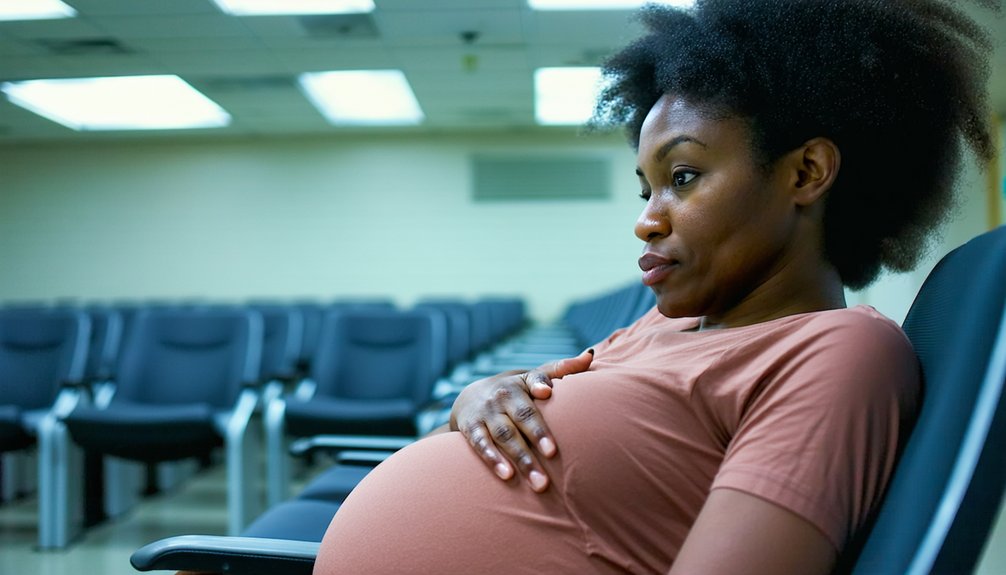
Because 19th-century physicians built entire medical theories around Black women supposedly feeling less pain, you’re still inheriting their false legacy today. These racist origins didn’t disappear—they embedded themselves into medical curricula that trained generations of doctors to question your suffering. You’re not imagining the bias: studies confirm many white doctors still view Black patients as less pain-sensitive. Some medical trainees even hold false biological beliefs about Black physiology, such as assumptions about nerve sensitivity.
Community narratives compound this problem. The “Strong Black Woman” stereotype tells you endurance is virtuous, so you swallow pain instead of naming it. Stigma keeps you silent; fear of being labeled “dramatic” keeps you waiting.
Meanwhile, research gaps let clinicians plunge into assumption instead of evidence. Without diverse data, the myth survives unchecked—leaving you to fight for diagnosis your pain has already earned. This diagnostic uncertainty is compounded by the reality that a laparoscopic surgery is required to confirm endometriosis, a costly and inaccessible barrier for many.
Why the “Rare in Black Women” Myth Persists
Pain dismissal isn’t the only myth working against you—a second one claims endometriosis simply doesn’t happen much in Black women. That belief traces back over a century to poorly designed studies, yet it still shapes medical education today. Surgical data tells a different story: 12.5% prevalence in Black women versus 67% in White women—a gap reflecting who gets diagnosed, not who’s actually affected.
You’re also more likely to be told it’s fibroids or pelvic inflammatory disease instead. That misattribution delays real answers by an average of 2.5 years. Meanwhile, research funding rarely reaches African and African-descended populations, leaving genetic and epidemiological data thin. This same pattern of dismissal has roots in gynaecology’s own history, including experimental surgeries performed on enslaved women without their consent. A persistent misconception frames endometriosis as a white career women’s disease, further reducing recognition among patients of colour. The myth survives on outdated training and unequal investigation—not on truth. Demanding better research is part of demanding better care.
What Makes Endometriosis So Hard to Diagnose?
Even when you push past dismissal and misdiagnosis, getting a confirmed diagnosis still isn’t easy. Endometriosis has no reliable diagnostic biomarkers—no blood test or simple scan confirms it. Laparoscopy remains the gold standard, but it’s expensive and inaccessible to many, especially in underfunded communities.
Trained specialists who catch early-stage disease are scarce, and that scarcity is worse for Black patients navigating systems already stacked against them.
Your patient narratives matter, but they’re often not enough on their own—not because your voice lacks value, but because clinical guidelines built on limited research don’t know how to hear it. Fewer studies on African American women mean fewer tools for recognizing your symptoms. This gap reflects a broader diagnostic inertia rooted in systemic and racial biases within medicine. This isn’t a personal failure. It’s a system that hasn’t invested in seeing you clearly.
Why There’s No Simple Test for Endometriosis

If you’re hoping for a simple blood test to confirm endometriosis, you won’t find one—researchers have screened 122 different blood markers across 141 studies, and none reliably diagnose the disease. CA 125 doesn’t cut it. Urine and menstrual fluid tests fare no better; major guidelines actively recommend against them. Even promising endometrial biomarkers like PGP 9.5 and CYP19 failed accuracy standards under scrutiny.
Imaging isn’t the answer either. Ultrasounds and MRIs catch deep-infiltrating disease, but most endometriosis is superficial—invisible to any scan. A normal ultrasound doesn’t mean you’re symptom-free or disease-free. Transvaginal ultrasound can pick up retroperitoneal and uterosacral lesions fairly well, but it struggles badly with small endometriomas and peritoneal disease.
This is the truth you deserve to know: noninvasive biomarkers and novel imaging haven’t caught up to your body’s reality yet. Laparoscopy remains the only definitive path—expensive, invasive, but honest. Even during laparoscopy, doctors must remove tissue for microscopic evaluation to confirm the diagnosis with certainty. Surgeons also assign a stage based on rASRM points, ranging from Stage I to Stage IV, though this number doesn’t reliably predict how severe your pain will be.
Conditions Often Mistaken for Endometriosis
Without a definitive blood test or imaging marker, doctors often lean on symptom patterns to guess at a diagnosis—and that guesswork frequently leads them astray.
If you’re Black, you’re often told you have PID—yet 40% of Black women given that label actually have endometriosis.
Higher fibroid prevalence in Black women skews diagnostic pathways further: surgical data shows endometriosis diagnosed in just 12.5% of Black women versus 67% of White women, even though incidence doesn’t differ by race.
Adenomyosis, IBS, UTIs, and musculoskeletal pain often absorb blame too. Definitive diagnosis actually requires direct visualization and tissue biopsy through laparoscopy, not just symptom guessing.
Bloating gets called digestive trouble.
Bleeding gets called “normal.”
Without differential awareness, your real diagnosis stays buried—and your body keeps paying the price for someone else’s incomplete depiction.
Money, Location, and Access to Specialists
On top of diagnostic bias, your bank account and zip code shape how fast you get answers. Endometriosis care stays underfunded, and out-of-pocket costs for imaging, hormone therapy, and surgery push treatment out of reach if you’re uninsured or living below the poverty line. That’s not an accident—it’s a predictor. Add rural transportation gaps, and specialists might sit hours away, if they exist at all. Africa and underserved U.S. regions share the same shortage of trained providers.
You deserve better options: community clinics offering sliding scale fees, mobile outreach bringing screenings to your neighborhood, and providers trained to take your pain seriously. Access shouldn’t depend on your zip code or your paycheck—it should depend on your body’s needs.
How Insurance Gaps Delay Diagnosis
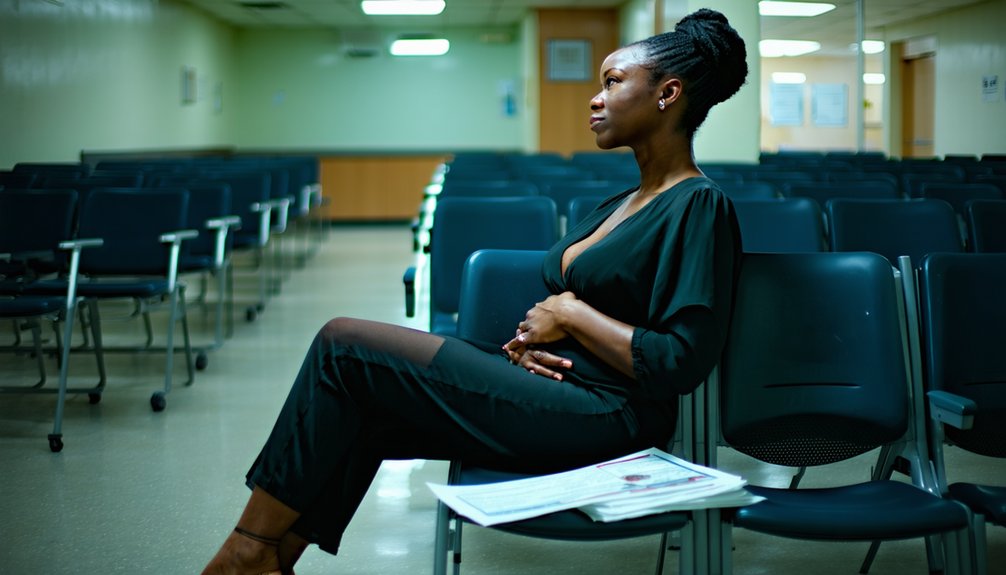
Insurance gaps stack up right when you need answers fastest. Laparoscopy, the gold standard for confirming endometriosis, often falls outside covered procedures. Pelvic floor physical therapy—essential for recovery—gets denied despite proven clinical value. These coverage barriers don’t stop at surgery. Multidisciplinary care, involving the specialists you actually need, rarely fits standard benefit structures. Alternative pain management approaches face routine denials, justified by “insufficient evidence,” even when they work for you.
Diagnostic affordability becomes the real gatekeeper. When insurers won’t pay for the tests that confirm what you’re feeling, you’re left choosing between debt and delay. This isn’t about lack of options—it’s about systems designed around outdated evidence standards, leaving your body waiting for coverage to catch up.
Closing the Diagnostic Gap: What’s Being Done?
Systems built around outdated evidence standards are finally starting to shift.
New 2026 guidance from ACOG confirms you don’t need surgery to get diagnosed—symptom assessment and physical exams are enough to start treatment. Transvaginal ultrasound now leads as first-line imaging, with MRI available for deeper insight.
You’re also seeing real accountability building around you. Providers are being trained to recognize implicit bias and dismantle the myth that endometriosis is rare in Black women.
Multistakeholder convenings have produced a research roadmap demanding diverse clinical data and disaggregated diagnosis timelines.
Community outreach is connecting you to specialists who listen. Policy monitoring is tracking whether governments meet targets—like the UK’s one-year diagnosis goal—and holding systems accountable to end outcome inequalities.
What Black Women Can Do to Get Diagnosed Faster
In addition to policy reform, your own preparation can shrink the diagnostic timeline right now. Track symptoms daily on a menstrual calendar, noting pain frequency, duration, and severity. Write detailed impact notes before appointments, and bring a trusted advocate to reinforce your concerns.
Research endometriosis thoroughly—know that no blood test confirms it; only laparoscopy does. Seek out endometriosis specialists, not general practitioners, and verify their track record with Black patients.
Demand pelvic exams and ask directly why surgery isn’t on the table. Join peer support networks and advocacy workshops to learn tactics other Black women have used successfully.
Document every visit, every dismissal, every misdiagnosis. Your paper trail is power—use it to demand the diagnosis you deserve.
Frequently Asked Questions
Can Endometriosis Affect Fertility Differently in Black Women?
Yes—you face unique fertility disparities rooted in delayed diagnosis, not biology. Years of unchecked scarring can compromise your ovarian reserve and reproductive organs. You deserve early screening and answers, so demand testing and reclaim your fertility timeline now.
What Questions Should I Ask My Doctor About Endometriosis?
Ask about diagnostic tests, excision versus laser surgery, and fertility risks. Bring your questions to ask list and symptom tracking records. Demand specifics on treatment timelines, pain management options, and surgeon experience—your voice deserves answers, not dismissal.
Are There Support Groups Specifically for Black Women With Endometriosis?
Yes—you’ll find real Black sisterhood through Endo Black, Inc. and Resilient Sisterhood Project. These spaces offer cultural matchmaking with women who understand your experience, validate your pain, and help you reclaim your health, your voice, and your liberation.
Can Lifestyle Changes Help Manage Endometriosis Symptoms?
Yes—you can reclaim your body’s power. Focus on dietary adjustments: anti-inflammatory foods, less sugar and red meat. Pair this with stress reduction—mindfulness, breathing, movement. You’re not powerless; small daily choices add up to real relief.
How Do I Find a Doctor Who Specializes in Treating Black Patients?
Search Find A Black Doctor or blackhealth.org for Black-led clinics near you. Filter by specialty, verify NPI and licenses, then confirm the provider’s culturally competent—ask how they handle pain reports and second-opinion requests.
Conclusion
You deserve a diagnosis that doesn’t take a decade. If you’re facing dismissive doctors, trust your body and keep pushing. Document your symptoms, seek out endometriosis specialists, and don’t settle for “it’s just cramps.” Bring research to appointments, ask for imaging, and get second opinions when needed. The system’s flawed, but you can advocate smarter. Your pain is real—don’t let anyone convince you otherwise.
References
- https://www.endofound.org/the-endometriosis-resource-portal-for-people-of-color
- https://pmc.ncbi.nlm.nih.gov/articles/PMC9578059/
- https://pmc.ncbi.nlm.nih.gov/articles/PMC6767495/
- https://www.wgbh.org/news/health/2025-02-28/black-women-with-endometriosis-are-often-gaslit-at-the-doctors-office
- https://amwa-doc.org/an-overlooked-condition-addressing-endometriosis-disparities-in-healthcare/
- https://www.everydayhealth.com/endometriosis/endometriosis-and-black-women-what-you-need-to-know/
- https://www.endonews.com/body-in-battle-black-womens-endometriosis-experience
- https://www.mhqp.org/2025/02/04/multistakeholder-convenings-reveal-systemic-neglect-and-unheard-pain-in-endometriosis-care-for-black-women-leading-to-research-roadmap/
- https://pmc.ncbi.nlm.nih.gov/articles/PMC9066945/
- https://www.blackhealth.org/articles/endometriosis-black-women-diagnosis-delay/

