
You can keep soul food’s soul without the sodium. Build flavor with garlic, onion, smoked paprika, and cayenne instead of salt. Brighten dishes with lemon juice and vinegar, and rinse canned beans to cut sodium by up to 41%. Swap table salt for Nu Salt or kosher salt, and choose reduced-sodium broths. These small swaps protect your heart—every 1,000 mg less sodium lowers systolic pressure by 2.8 mmHg. Ahead, you’ll find exact ratios and techniques for each swap.
TLDR Key Takeaways
- Build savory depth with garlic powder, onion powder, black pepper, and smoked paprika instead of salt.
- Brighten soul food classics like greens and fish with lemon juice or vinegar for salt-free flavor.
- Soak, rinse, and drain beans to cut sodium significantly before adding to stews or sides.
- Simmer rice, beans, and pasta in homemade low-sodium broth instead of salted water.
- Swap regular cheese and salt for low-sodium cheddar or potassium-based salt substitutes.
Build Bold Flavor With Herbs and Spices Instead of Salt
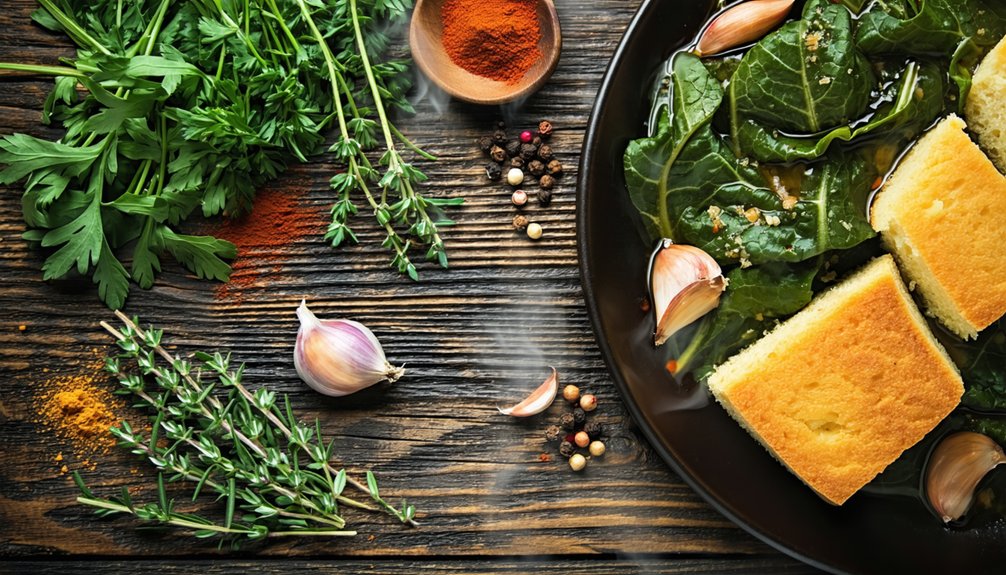
Because sodium raises your risk of high blood pressure, stroke, and heart disease, swapping salt for herbs and spices in your soul food cooking makes a real difference. You don’t have to sacrifice bold flavor to protect your heart—you just need smart herb pairings and spice layering.
Mix black pepper, cayenne pepper, and paprika with onion powder, garlic powder, and one ground bay leaf for a homemade, salt-free blend. Sprinkle basil and oregano over green beans, or simmer peppercorns, parsley, and bay leaves into a savory broth for salmon steaks. Avoid relying on seasoned salt, garlic salt, and cajun seasoning, since these blends are packed with sodium.
Add dry herbs early in cooking; save fresh herbs for the end. Reach for thyme and rosemary on vegetables, fish, and meats, and let cayenne bring the heat to stews and sauces—no sodium required. Cayenne’s active compound, capsaicin, can also help ease pain signals while adding flavor without salt. Garlic, another soul food staple, is rich in antioxidants and has been shown in clinical studies to help lower blood pressure and cholesterol.
Your kitchen, your rules, your health.
Let Citrus and Vinegar Cut Sodium Without Cutting Flavor
Squeezing a lemon or splashing vinegar into your dish does what salt does—it wakes up flavor and sharpens every other ingredient on the plate. You don’t need the shaker when acidic swaps deliver the same brightness. Squirt lemon juice on fish, toss lime zest into salads, or splash vinegar over chicken to release flavor without adding sodium. Build a marinade with vinegar, citrus, honey, and low-sodium broth for lean meats, or mix your own vinaigrette instead of buying one loaded with salt.
Layer herbs and spices first, then finish with a squeeze of lemon for flavor balance that satisfies your palate. Choosing these seasoning methods over reaching for the shaker supports lower sodium intake, which in turn supports heart health. The American Heart Association recommends keeping sodium under 2,300 mg per day to maintain healthy blood pressure. If dining out, ask for any sauce or dressing to be served on the side so you can control how much sodium you add to your meal. This isn’t restriction—it’s freedom to season boldly, protect your heart, and command your kitchen on your own terms, one citrus swap at a time.
Mix Your Own Low-Sodium Seasoning Blends at Home
Citrus and vinegar handle brightness, but your spice cabinet handles depth—and that’s where homemade blends take over. Garlic powder, onion powder, and black pepper build a savory foundation that mimics saltiness without sodium. Smoked paprika adds char, while oregano, thyme, and basil bring herb-forward complexity to Italian or Cajun-style mixes. Don’t skip umami enhancers like nutritional yeast and mushroom powder—they deepen flavor without a grain of salt.
Whisk your ingredients for at least 30 seconds, then grind for a finer, professional texture. Store in airtight containers, and use spices bought within the last 6–12 months for maximum potency. Many of these blends, like Italian seasoning, can be stored this way for up to one year without losing effectiveness. This matters because more than 9 in 10 U.S. adults exceed the recommended daily sodium limit, making every homemade, salt-free blend a meaningful step toward better health. Excess sodium can also lead to water retention and added strain on the kidneys, so cutting back benefits more than just blood pressure.
Once you’ve built your base, adjust cayenne or garlic to taste. This is your seasoning, your rules—no sodium required.
Choose Nu Salt or Kosher Salt Over Table Salt
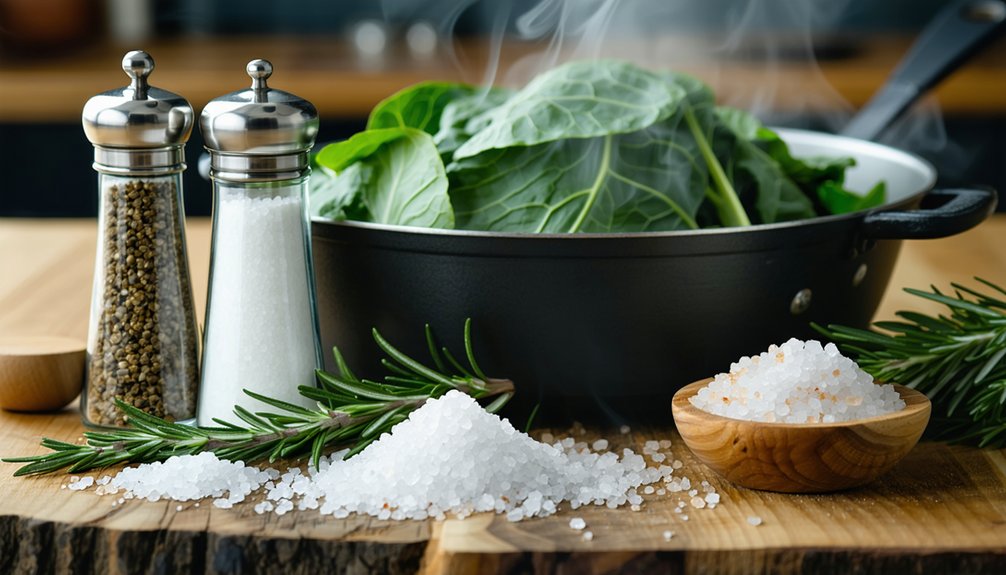
Swap your table salt for something smarter, and you’ll cut sodium without sacrificing flavor. Nu Salt, a potassium chloride-based substitute, delivers that familiar salty punch with zero sodium—just 600 to 800 milligrams of potassium per ¼ teaspoon. It’s the only option that truly eliminates sodium while keeping your dishes tasting like home.
If you’re not ready to ditch sodium entirely, Kosher Salt is your next best move. Its coarse crystals mean less sodium per teaspoon than table salt—Diamond Crystal packs just 280 mg per ¼ tsp, versus 590 mg in table salt. You control the grain, you control the pour, and you control your health. Unlike table salt, kosher salt is not usually iodized, so it lacks the fortified thyroid-supporting benefits some people rely on.
Before switching to Nu Salt, check with your doctor if you have kidney disease or take blood pressure medication. Regardless of which salt you choose, trace minerals like magnesium and calcium are present in such negligible amounts that they offer no real nutritional benefit. Ultimately, the type of salt you choose matters less than the amount consumed when it comes to protecting your heart.
Cook Beans, Pasta, and Grains the Low-Sodium Way
Building beans, pasta, and grains into your lower-sodium repertoire starts at the grocery store. Choose dried beans, peas, and lentils with no added salt, or grab unsalted canned beans. Check labels: 5% Daily Value or less means low sodium; 20% or more means high.
Soak beans overnight to cut cooking time, then pressure-cook for 18 minutes or simmer for an hour. Discard that cooking liquid—it holds the sodium you’re trying to avoid. Combine your beans with low-sodium broth, rosemary, and other aromatics instead. If using canned varieties, be sure to rinse and drain them first, which further reduces sodium content.
Skip salted water for pasta and grains entirely. Try one pot cooking: simmer pasta directly in low-sodium broth, stirring often, then fold in spinach and tomatoes near the end. A blender or food processor can also help you purée some of the beans into the broth for a creamier, more satisfying texture without added salt. Finish with Parmesan and olive oil for real richness. This entire dish can come together in about 15 minutes, making it an easy weeknight option.
Rinse Canned Goods to Cut Sodium Fast
Pop open a can, and you’re not stuck with all that sodium—draining and rinsing knocks it down fast. Draining alone cuts sodium in canned beans by 36%, and rinsing pushes that reduction to 41%. Brine disposal matters most here—foods packed in salty liquid see the biggest drop once that liquid’s gone.
After brine disposal, run cool water over the food for 30 seconds to a minute, tossing gently in the colander. Rinse timing counts: a 3-minute rinse slashes tuna sodium by 80% and cottage cheese by 63%. Vegetables see up to 23% reduction. This isn’t about giving up flavor—it’s about taking control of your plate, one rinse at a time, without spending extra money on specialty products.
Swap Regular Broth for Reduced-Sodium Stock
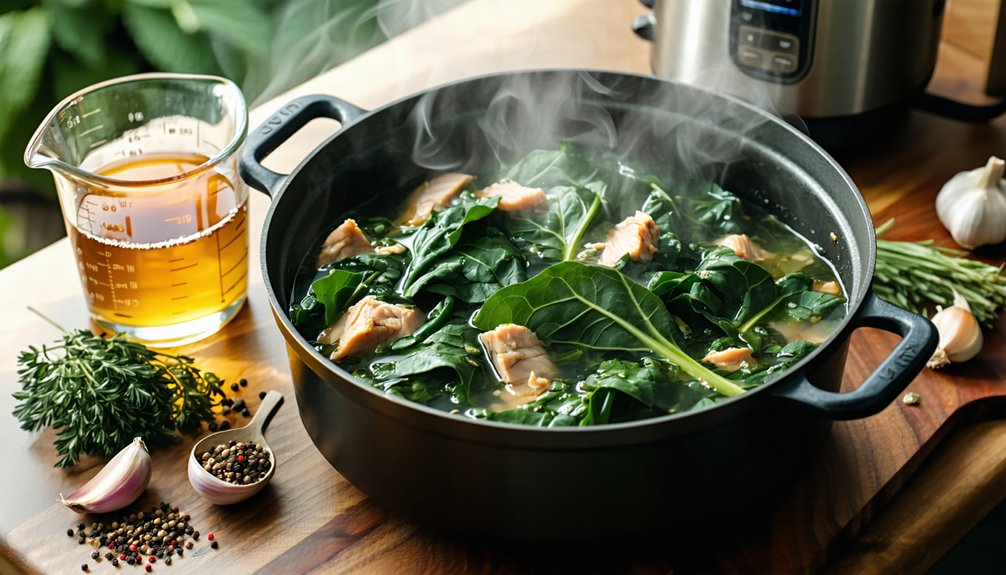
Rinsing cans handles part of your sodium problem, but your stockpot deserves the same scrutiny. Regular broth and stock often pack 400 mg or more sodium per 100 g—that’s high. Reduced-sodium versions stay under 120 mg. Check the nutrition panel, compare per-100g figures, and choose the lowest option available.
Better yet, make your own. Homemade bonebroth and vegetable stock put you in control of every gram of salt that goes in. Simmer bones or vegetables with garlic, ginger, and herbs like rosemary or thyme—no sodium required for depth of flavor.
Every 1,000 mg you cut lowers systolic pressure by 2.8 mmHg. That’s real freedom: your seasoning, your rules, your heart working easier because you decided it should.
Read Labels Like a Pro to Avoid Hidden Sodium
Flip that soul food package over and let the label do the talking. You don’t need permission to demand transparency—ingredient decoding is your power move. Scan for salt, sodium bicarbonate, monosodium glutamate, and sodium nitrate. If they’re near the top of the list, that product’s likely loaded. Don’t trust “no added salt” claims blindly; sodium hides naturally, even in bread, cereal, and cheese.
Next, master serving math. That “7% DV” number only counts for one serving—eat three, and you’re at 21%. Check the servings per package before you commit to a portion. Aim for 5% DV or less per serving, and stay wary of anything hitting 20% or more. Processed meats, canned soups, and frozen meals deserve extra scrutiny. Reading smart means eating free.
Reinvent Candied Yams With Orange Juice and Zest
Because salt’s traditionally been the shortcut to flavor, candied yams often carry 200–400 mg of sodium per serving from butter and added kosher salt.
You can break free from that reliance by swapping salt for a citrus syrup built from orange juice concentrate and fresh zest.
This zest infusion delivers aromatic oils that trick your palate into perceiving richness—without a single added grain of salt.
Melt butter with zest and brown sugar, whisk in orange juice, then simmer until thickened.
Boil your yams in water with just a pinch of salt, drain, then baste with the citrus syrup every 15 minutes while baking.
Cinnamon and nutmeg deepen the flavor further.
The result: up to 90% less sodium, and potassium that actually supports your heart.
Make Low-Sodium Mac and Cheese That Still Tastes Rich
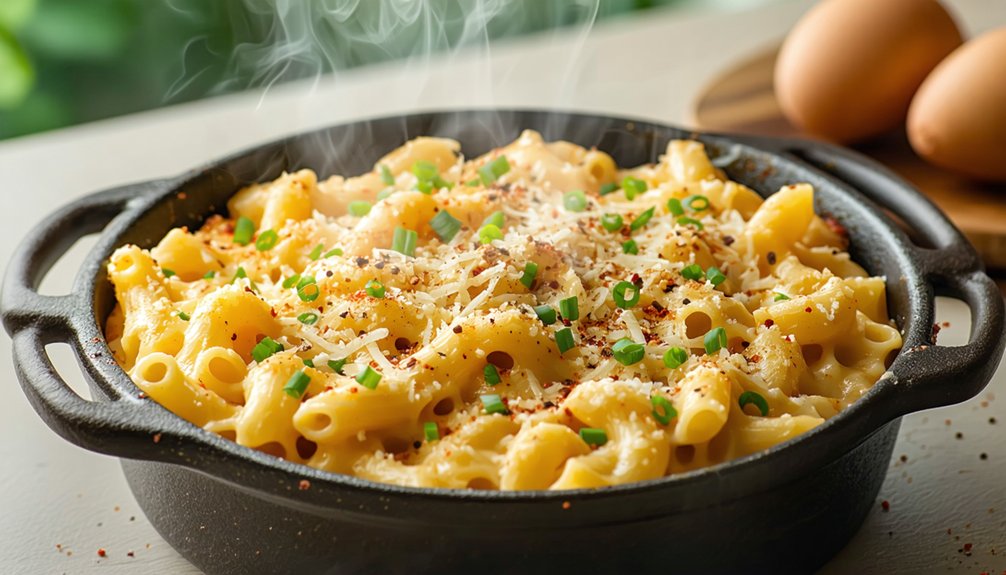
Swap your cheddar for Swiss, and you’ll cut sodium from roughly 200 mg per ounce down to 55–60 mg per 5-ounce block—without sacrificing that melty, comforting texture soul food mac and cheese demands.
Low-sodium sharp cheddar melts into a creamy sauce with zero added salt, while nutritional yeast delivers cheesy umami without the sodium spike of traditional cheese powders.
Blend cream cheese with mozzarella or Swiss for richness that doesn’t compromise your heart health goals.
These cheese swaps work best paired with smart creaminess techniques: toss grated cheese with cornstarch to stop clumping, whisk milk in ¼-cup increments for a lump-free roux, and simmer your cream-water base 2–3 minutes before adding cheese.
Cook pasta al dente so it absorbs sauce instead of drowning in it—rich, satisfying, and liberated from excess sodium.
Lighten Up Chicken and Rice Without the Salt
That same low-sodium logic that converts mac and cheese applies just as well to chicken and rice, another soul food staple that traditionally leans hard on salt for its comfort-food punch. Herb marinating with thyme, rosemary, black pepper, and garlic builds the aromatic backbone salt used to provide. Sear your chicken in olive oil, then toast rice in those same drippings before swapping water for low-sodium broth at a 2:1 liquid-to-rice ratio.
Sautéed onions, carrots, celery, and mushrooms add earthy depth, while a splash of lemon juice brightens the whole pot.
Texture tweaking finishes the job: bake covered to lock in moisture, roast chicken separately for crispness, then let everything rest so grains firm up. You’re reclaiming flavor on your own terms—no salt shaker required.
Sweeten Soul Food Naturally With Honey and Fruit Juice
Sweetness rounds out soul food’s flavor profile, and honey steps in as a natural stand-in for refined sugar. Swap 3/4 cup honey for every cup of sugar, then cut liquid by 1/4 cup to keep consistency right. Lower your oven by 25°F, since honey caramelizes faster and burns easier than sugar. Warm honey first for smoother mixing, and add a pinch of baking soda to balance its acidity.
For savory dishes, honey marinades bring depth without sodium—pair honey with soy sauce, garlic, ginger, or mustard, then brush glazes on grilled meats during the final minutes to lock in flavor without scorching.
Juice reductions offer another path: concentrate apple juice at a 1-to-3 ratio with fruit juice or pulp, replacing syrup while adding natural tartness that complements your dish’s character.
Frequently Asked Questions
Can Lowering Sodium in Soul Food Recipes Affect Their Overall Shelf Life?
Yes, it can—especially with meats. You’ll lose salt’s preservative impact, encouraging microbial growth and faster spoilage. But don’t worry: fresh veggie-based dishes stay safe, and smart swaps like potassium lactate keep you protected without sacrificing freedom or flavor.
Is It Safe for Children to Eat Low-Sodium Soul Food Regularly?
Yes, it’s safe—you’re protecting your child’s growth milestones while shaping healthier tastebuds early. You’re not sacrificing flavor or nutrition; you’re bolstering lifelong heart health. Skip the salt, adopt herbs and spices, and let your child’s palate thrive naturally.
How Long Does It Take to Adjust to Lower-Sodium Flavors Overall?
You’ll fully complete taste adaptation within about three weeks. Cut salt gradually, lean on herbs and citrus, and you’ll avoid a palate reset from shock. Stay consistent—your taste buds will free themselves from needing excess sodium.
Will Low-Sodium Cooking Increase My Grocery Budget Significantly Over Time?
No, you won’t see a negative budget impact. Smart shopping strategies—dried beans, store brands, bulk grains—actually cut costs. You’ll save money while eating well, proving healthy freedom doesn’t require a bigger wallet, just smarter choices.
Can These Swaps Help Manage Blood Pressure Without Medication Changes?
Yes, these swaps can lower your blood pressure markedly without medication changes. Pair them with regular blood pressure monitoring and dietary counseling to track progress, stay accountable, and reclaim control over your health—no pills required.
Conclusion
You don’t have to abandon soul food to protect your heart—you just need smarter swaps. Lean on herbs, citrus, and vinegar for flavor, mix your own seasoning blends, and choose kosher salt or Nu Salt when you need that classic taste. Cook grains and beans without added sodium, lighten up your mac and cheese, and sweeten dishes naturally. Small changes add up, letting you enjoy every bite while supporting your health.
References
- https://www.facebook.com/groups/366370344212821/posts/2077554619761043/
- http://www.gleanersnutritionhub.org/uploads/2/9/7/6/29762123/recipes-african-american.pdf
- https://blackdoctor.com/five-soul-food-recipes-without-the-soul-food-sodium/
- https://www.nhlbi.nih.gov/files/docs/public/heart/cooking.pdf
- https://www.nhlbi.nih.gov/health/healthdisp/pdf/recipes/Recipes-African-American.pdf
- https://www.mayoclinic.org/healthy-lifestyle/recipes/low-sodium-recipes/rcs-20077197
- https://www.transamericainstitute.org/docs/resources/healthier-traditions-cookbooks/soul-food.pdf?sfvrsn=d92abb19_1
- https://cooking.nytimes.com/article/low-sodium-recipes
- https://theurbannews.com/lifestyles/2022/create-a-healthy-soul-food-meal/
- https://www.hopkinsmedicine.org/health/wellness-and-prevention/5-spices-with-healthy-benefits

