
After 40, you’re facing real changes—declining estrogen accelerates bone loss, muscle decline, and inflammation. Strength training counters all of it. You’ll want 2-3 full-body sessions weekly, hitting squats, hinges, lunges, pushes, and pulls with 2-3 sets of 8-12 reps. Pair that with 1.6-2.2g protein per kg daily and solid recovery habits, and you’re building real resilience. There’s a practical structure ahead that makes this doable.
TLDR Key Takeaways
- Train 2–3 times weekly with full-body strength sessions to protect bone density and preserve lean muscle after 40.
- Follow a structured session: warm-up, then squat, push, pull, hinge, and lunge patterns for balanced strength.
- Use 2–3 sets of 8–12 reps at RPE ~7, progressing weights gradually while keeping 1–2 reps in reserve.
- Prioritize unilateral and back-strengthening exercises to correct imbalances and support joints as hormones shift.
- Eat 1.6–2.2 g protein per kg daily to fuel muscle repair and combat menopause-related muscle loss.
Why Strength Training Matters After 40

Turning 40 changes your body’s rules, and your workout routine needs to change with it. As estrogen declines, you face insulin resistance, muscle loss, visceral fat gain, and inflammation. Strength training acts as your metabolic armor against all four.
This matters even more for you: Black women face nearly double the risk of Type 2 diabetes, making resistance training’s blood sugar benefits non-negotiable.
Lifting weights builds hormonal resilience, helping regulate the stress and recovery systems thrown off balance during perimenopause and menopause. It also delivers cognitive benefits, supporting brain health as you age.
Beyond metabolism and mind, strength training preserves lean muscle, protects bone density, and lowers your risk of mortality overall. Just 2–3 strength sessions per week can significantly lower your risk of heart disease, type 2 diabetes, and high blood pressure. Resistance exercise also improves insulin sensitivity and glucose utilization, reinforcing your body’s ability to manage blood sugar long-term. Beyond blood sugar, stronger muscles offer better joint support, reducing your risk of injury and chronic pain as you age. This isn’t vanity work—it’s liberation through strength.
What Happens to Bone and Muscle During Menopause?
As estrogen drops, your bones and muscles take the hit first and hardest. Estrogen receptors live throughout your bone, muscle, and connective tissue, so when estradiol declines, these structures lose direct support.
You can lose up to 20% of bone density within five years of starting menopause, with another 10% disappearing during perimenopause alone. Muscle mass drops roughly 0.6% yearly, while satellite cells—your muscle’s repair crew—proliferate less efficiently.
Tendons and ligaments lose elasticity, cartilage weakens, and systemic inflammation rises. Together, this creates what’s now called Musculoskeletal Syndrome of Menopause: joint pain, shrinking muscle, fragile bone, and higher injury risk. In fact, about 1 in 2 women over 60 will experience at least one fracture due to osteoporosis. A baseline bone density test soon after menopause symptoms begin can help you and your provider track how quickly you’re losing ground. This same decline in muscle can also be tracked through gait speed analysis, giving you another way to monitor your progress.
This isn’t decline you’re imagining—it’s biology, and it’s exactly why strength training becomes non-negotiable now.
How Often Should You Strength Train Each Week?
How Often Should You Strength Train Each Week?
Given what estrogen loss does to your bones, muscles, and joints, the question isn’t whether to lift—it’s how often. The floor is two sessions weekly—the ACSM, WHO, and HHS all agree this is the minimum threshold for real adaptation. Below that, your body won’t get the signal it needs to change.
Your sweet spot is three full-body sessions a week. That habit cadence builds strength, protects bone density, and still leaves room to recover. Research shows training each muscle group twice a week produces greater hypertrophy than training it only once.
If you’ve been training consistently for a year or more, four sessions with session variety—splitting upper and lower body—can spread volume without overloading your nervous system. This approach works well because focusing on compound movements like squats, presses, and rows delivers efficient stimulus across major muscle groups without requiring excessive time in the gym.
Whatever frequency you choose, protect your rest days. Your muscles rebuild during recovery, not just during the lift. In fact, a single night of sleep deprivation can reduce muscle protein synthesis by 18%, underscoring how essential rest truly is.
How Should You Structure Each Session?
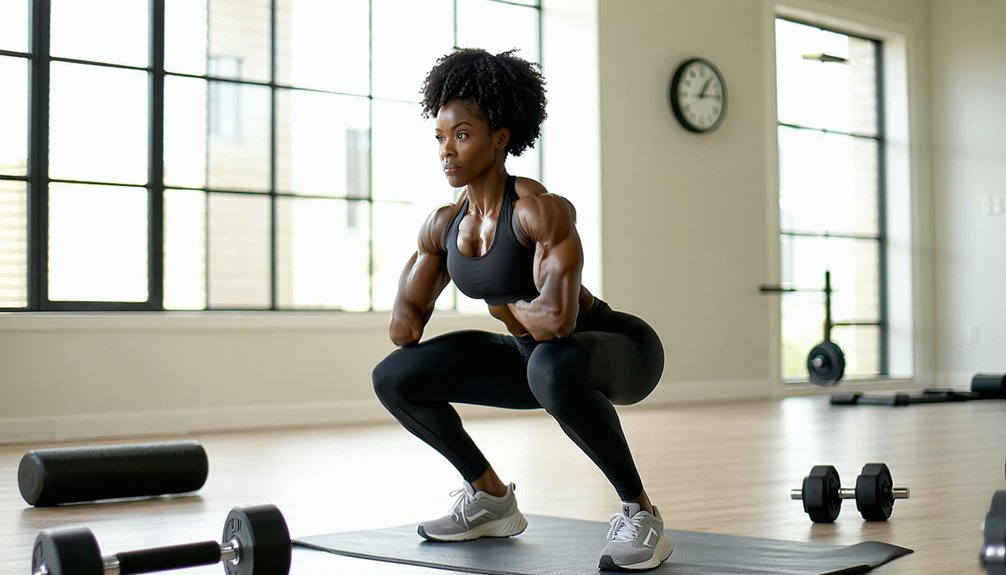
Once you know your weekly frequency, session structure determines whether that time actually builds bone and muscle.
Start with 5 minutes of warm up sequencing—bodyweight squats or band pull-aparts—to prep your joints and nervous system before loading up.
Your main set should hit five patterns: squat, push, pull, hinge, and lunge, in that order, for 2–3 sets of 8–12 reps within 20–30 minutes. Push to an RPE of 7, where the last few reps feel genuinely hard, and add load only when you’re moving well at the top of your rep range. Tempo variations—slower eccentrics, controlled pauses—keep tension high without maxing out fatigue. This type of resistance training also helps stabilize blood sugar and supports prevention of diabetes over time. Leading with the squat or hinge pattern while your nervous system is fresh also triggers a stronger systemic hormonal response, including growth hormone and testosterone release that supports broader strength adaptations.
Close with 4 minutes of balance work and optional core stability, since sessions built this way typically show visible changes within the first couple of months, with real transformation taking 6–12 months. This structure honors your body’s power, not just its endurance.
Squats and Hinges for Lower Body Strength
Squats and hinges form the backbone of your lower body strength work, targeting the muscles and bone density that decline fastest after 40. Goblet squats build quad and glute strength while keeping your posture upright. Sumo squats and deadlifts widen your stance to fire inner thighs and glute medius. Staggered stance and split squats correct imbalances and sharpen balance. Slow your squat tempo down—eccentric and banded goblet squats increase time under tension, driving hypertrophy and bone density where you need it most.
Your hinge cadence matters just as much. B stance and single-leg deadlifts isolate your posterior chain with minimal knee bend. Drive through full hip extension on sumo deadlifts. This work reclaims your strength, joint by joint, rep by rep.
Push and Pull Exercises for a Stronger Back
Because your upper body strength hinges on balance, pairing pulling and pushing movements builds a back that’s both thick and stable.
Your pulls—lat pulldowns, single-arm dumbbell rows, bent-over rows, inverted rows, and assisted pull-ups—target your lats, rhomboids, and rear delts, building thickness while correcting imbalances.
Your pushes—overhead presses, face pulls, reverse flys, kettlebell presses, and farmer’s carries—train scapular rhythm, keeping your shoulder blades moving in sync with each rep to protect your joints.
Mix your grip variation across exercises to challenge muscles from different angles and build well-rounded strength.
Start with 3 sets of 10-12 reps, keep elbows close on rows, squeeze your shoulder blades at the peak, and hinge with a flat back. Building this strength matters beyond the gym, since low back pain is projected to affect 843 million people globally by 2050. Strong back muscles also provide crucial support for your vertebrae, disks, and ligaments, helping protect these structures as you age.
Train twice weekly, rest fully, and progress steadily. Aiming for 2–3 sessions weekly with recovery time between them provides the stimulus needed for strength gains. You’ve earned this strength.
Adding Unilateral Moves for Balance and Stability
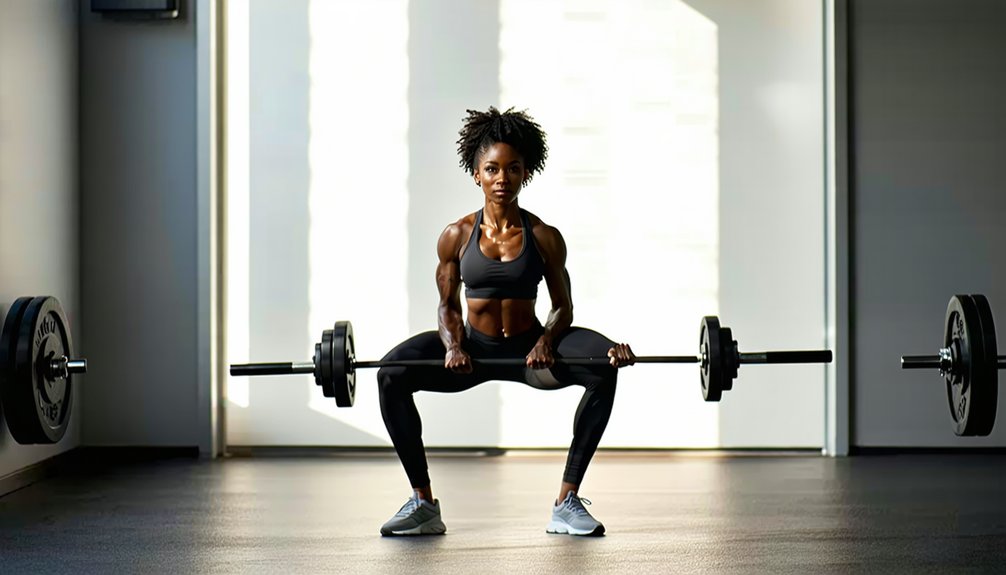
Balanced pulling and pushing builds a strong back, but working both sides of your body together can mask hidden weaknesses. Unilateral training exposes those imbalances and forces each side to carry its own load. Single leg stability work, like single-leg hip thrusts or step-ups, sharpens reactive balance and protects your joints from repetitive strain—critical as your body changes after 40.
Core bracing keeps your form honest during single-arm rows, overhead presses, and kettlebell swings, preventing lateral leaning or hip drift. Stack your hips, engage your abs, and keep your knee tracking straight during lunges.
Start with support—a wall, table, or railing—if you need it. Progress by adding reps, holding positions longer, or standing on unstable surfaces. Your stability is your foundation for freedom of movement.
How Do You Progress Your Weights Safely?
Since your joints and connective tissue need more time to adapt after 40, progress your weights in small, deliberate increments rather than big jumps. Add 1–2kg to upper body lifts and 2–3kg to lower body lifts weekly during accumulation phases—this microload progression protects your joints while still building strength.
Keep 1–2 reps in reserve on nearly every set; that’s your autoregulation cue for whether you’re ready to add load or hold steady. Don’t chase weekly increases obsessively—accept maintenance weeks when your body signals fatigue.
Limit heavy work above 80% of your max to 2–4 sets weekly, and deload every fourth week to 60%. This isn’t slow progress—it’s sustainable strength, built to last, reclaiming power on your own terms.
What Should You Eat to Fuel Your Workouts?
Progressing your loads carefully only works if you’re feeding your body enough to recover from them. Aim for 1.6–2.2 grams of protein per kilogram daily, leaning on high quality proteins like lean beef, poultry, fish, eggs, and low-fat dairy to rebuild the muscle you’re breaking down.
Round out your plate with 3–5 grams of carbs per kilogram, favoring complex carbs for sustained energy.
Carb timing matters too: eat a balanced meal 2–3 hours before training, and refuel within 30–60 minutes after with a 2:3:1 carbs-to-protein-to-fat ratio.
Keep fats between 20–35% of your calories, sourced from nuts, avocados, and fatty fish. Hydrate with 2.5–4 liters of water daily—your strength depends on it.
Recovery Habits That Support Your Training
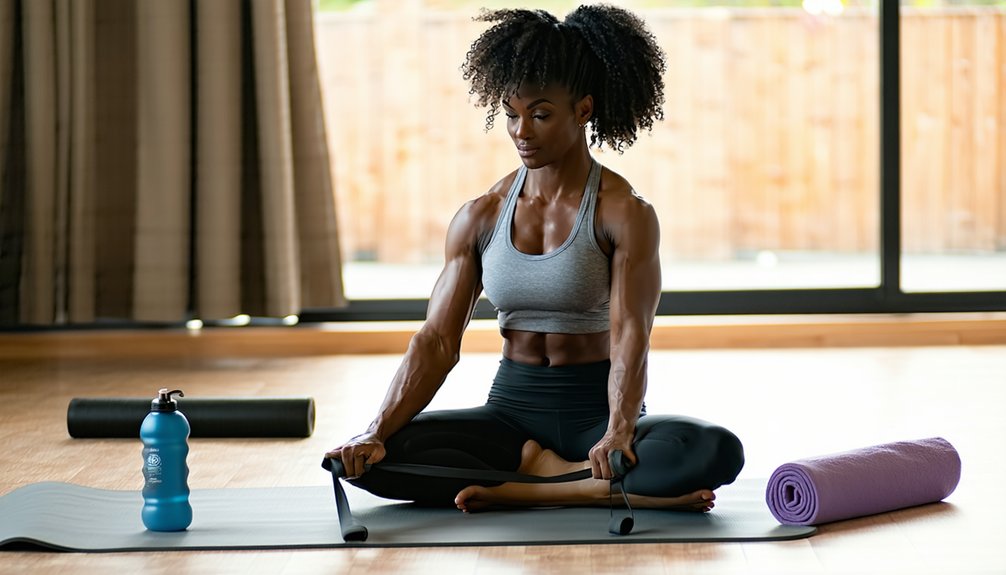
Lifting hard is only half the equation—recovering well determines whether that effort turns into strength. Your body rebuilds muscle during rest, not during the workout itself. Prioritize sleep hygiene: aim for 7-9 hours nightly, with consistent bedtime and wake times to protect your hormone cycles and recovery capacity.
Stress management matters just as much. Chronic cortisol spikes eat away at muscle you’re working to build, so treat calm as part of your training plan, not an afterthought.
Schedule real rest days—walking or stretching count. Give muscle groups 48-72 hours before hitting them again, and follow three weeks of hard training with one deload week. Add mobility work and foam rolling to keep joints strong and resilient. Recovery is where your power actually consolidates.
Finding the Right Equipment and Trainer
Recovery habits work best when you’ve got the right tools and guidance behind your training in the first place. Start with equipment organization: adjustable dumbbells, resistance bands, a stability ball, and a foam roller cover most of your needs without cluttering your space. Add mini bands and a mat if you’re building on a budget—body-weight moves count too.
Trainer vetting matters just as much. You want someone who prioritizes low-impact designs, understands joint stiffness after 40, and programs compound lifts with strict form. Ask about their experience with bone density work and progressive overload protocols. Experts like Dr. Stacy Sims model this approach—barbell-based, structured, and safe.
Your body deserves tools and guidance built for where you’re now, not where you used to be.
Building a Community That Celebrates Your Progress
Rarely do you build strength alone, and you shouldn’t have to. Seek out Black-owned gyms and studios where inclusive training feels natural, not forced. Join virtual sisterhoods led by Black instructors—these online spaces offer accountability when in-person options aren’t accessible. Connect with local fitness groups built specifically for Black women; shared experience creates rapport that generic gyms can’t replicate.
Your community should offer cultural affirmation, not just workout plans. Dance-based classes celebrating cultural expression, group strength sessions, and shared meditation practices reduce stress collectively. Involve family where you can—shared meals and shorter, flexible sessions keep goals sustainable.
Progress compounds when you’re witnessed. Surround yourself with people who recognize your strength, honor your body, and celebrate every rep you claim.
Frequently Asked Questions
Can Strength Training Help With Hot Flashes or Menopause Symptoms Directly?
Yes—you’ll cut hot flash frequency and intensity markedly. Resistance training supports hormone regulation and vascular health, easing vasomotor symptoms while building strength. You’re not just surviving menopause; you’re reclaiming your body’s power through consistent, targeted training.
Is It Safe to Strength Train With Existing Joint Issues or Arthritis?
Yes, you can strength train safely with joint issues. Modify exercises to fit your body, use joint friendly equipment, and progress gradually. You’ll build strength and reclaim confidence—pain-free movement is your birthright, not a privilege you have to earn.
How Long Until I See Visible Results From Strength Training?
You’ll feel noticeable strength within 6-12 weeks, and others will notice by 12-16 weeks. Full body composition metamorphosis reveals itself around 6 months. Stay consistent, train smart, and trust your body’s powerful process—your liberation through strength is unfolding right on schedule.
Can I Strength Train if I’ve Never Exercised Before?
Yes, you absolutely can! Start with beginner guidance focused on technique basics—body-weight squats and modified push-ups first. Perfect your form before adding load. Your body’s ready; you’re building strength and freedom, one rep at a time.
Does Hair Care or Sweating Affect How Often I Can Train?
No—your hair shouldn’t limit your training. Wear protective styles, prioritize scalp ventilation with breathable headwear, and rinse post-sweat. This keeps your scalp healthy while you train as often as your strength goals demand. Your consistency matters more than your wash day.
Conclusion
You’re not too old to build strength—you’re at the exact point where it matters most. Your bones, muscles, and hormones are shifting, but consistent training changes that path. Show up two to three times a week, prioritize squats and hinges, fuel your body properly, and let recovery do its job. Find equipment and trainers who get it, and surround yourself with women who push you forward. Start now; your future self will thank you.
References
- https://ebanliving.com/the-importance-of-strength-training-for-black-women/
- https://www.youtube.com/watch?v=Q7OLfPijN4k&vl=en
- https://themomedit.com/its-time-to-lift-i-my-4-week-strength-program-for-women-40/
- https://www.youtube.com/watch?v=esKWNox-I5c
- https://www.momsintofitness.com/why-strength-training-is-important/
- https://www.youtube.com/watch?v=7Zi7eEuHkCs&vl=en
- https://www.puregym.com/blog/strength-training-women-40/
- https://www.herdailyfit.com/guides/strength-training-women-over-40-guide/
- https://www.nia.nih.gov/news/how-can-strength-training-build-healthier-bodies-we-age
- https://lilyandloaf.com/a/blog/post/why-strength-training-is-essential-for-women-over-40

