
Aim for 30 grams of protein at breakfast to flip your body from overnight fasting mode into steady, fueled energy. You’ll hit your leucine threshold for muscle repair while keeping blood sugar stable and cravings at bay. Think eggs with Greek yogurt, protein-packed smoothies, or tofu scrambles—options that curb ghrelin and enhance fullness hormones for hours. Stick around, and you’ll find plenty of ways to make this number effortless every morning.
TLDR Key Takeaways
- Aim for 30 g of breakfast protein to shift the body from catabolic to fueling mode and boost fullness hormones.
- Stock high-protein foods like chicken, eggs, Greek yogurt, cottage cheese, and legumes for quick, versatile meal options.
- Try no-prep grab-and-go choices like hard-cooked eggs, yogurt cups, or turkey roll-ups for busy mornings.
- Boost smoothies with protein powder, Greek yogurt, or nut butter for a quick 25 g protein energy source.
- Meal-prep options like burritos, casseroles, or tofu scrambles offer freezer-friendly, protein-rich breakfasts for sustained energy.
Why 30 Grams of Protein Matters at Breakfast
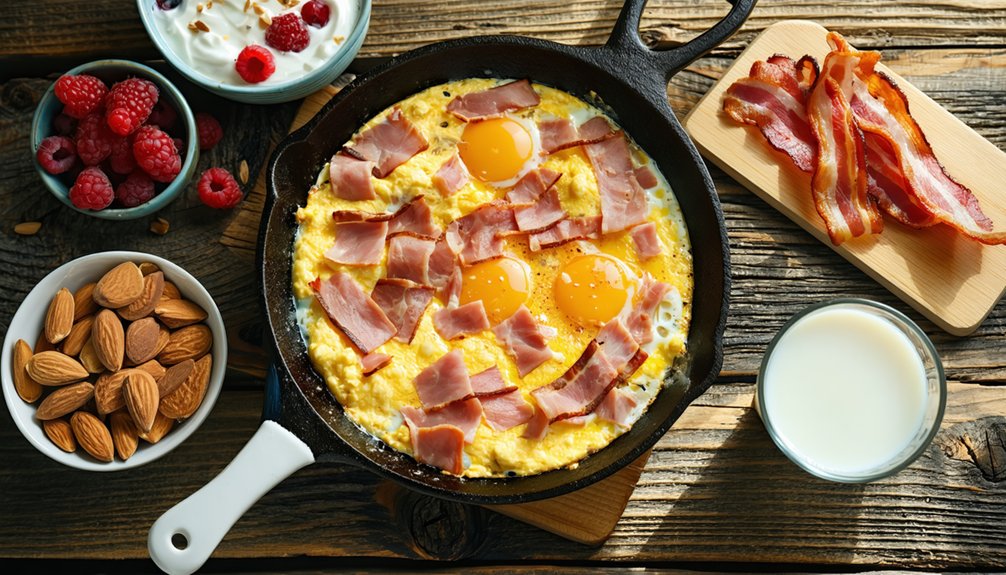
When you break your overnight fast with 30 grams of protein, you flip a metabolic switch that changes how your body runs for the rest of the day.
After 8-10 hours without food, you’re in a catabolic state. Hitting this threshold triggers metabolic switching, moving you from breakdown mode into fueling mode. You’re not just eating—you’re commanding your biology.
This number isn’t arbitrary. It delivers 2.5-3 grams of leucine, the exact amount needed to cross your leucine threshold and stimulate muscle protein synthesis.
Fall short, and you miss the signal your muscles need to rebuild and strengthen. Beyond muscle repair, protein also helps regulate hormones like estrogen and progesterone, which play a role in mood and sleep.
You’ll stabilize blood sugar, sharpen insulin sensitivity, and curb the afternoon cravings that derail your goals. Protein also decreases ghrelin while increasing fullness hormones like CCK and GLP-1, extending satiety for hours. Research shows that a high-protein breakfast can also increase calories burned and reduce cravings for carbs later in the day. This is science working for your freedom, not restriction holding you back.
Best High-Protein Foods to Stock in Your Kitchen
Your kitchen’s protein arsenal starts with the animal-based staples that pack the most punch per bite. Skinless chicken breast delivers 32 grams per 100 grams, while roasted beef tenderloin brings 28. Stock shelf stable jerky and canned chicken, beef, turkey, or pork for grab-and-go fuel. Eggs and Greek yogurt round out your daily essentials.
Legumes free you from relying solely on meat. Lentils, chickpeas, cannellini beans, black beans, and Legione beans all offer substantial protein with fiber to match. Chickpeas alone provide 15 grams of protein per cup, making them one of the most efficient legume choices.
Nuts and seeds diversify your intake—hemp seeds, pumpkin seeds, chia, and almonds work in Hemp seedwiches or smoothies. Walnuts add roughly 4 g protein per ounce along with heart-healthy omega-3 fatty acids.
Finish your stock with tempeh, tofu, edamame, quinoa, chickpea pasta, and soy milk—your complete plant-protein toolkit for breakfast plunge. For an even bigger boost, consider edamame noodles, which pack about 25 g protein per 2-ounce serving.
Grab-and-Go High-Protein Breakfasts for Busy Mornings
Once your kitchen’s stocked with these protein staples, the next step is turning them into meals you can actually grab on a rushed morning.
Hard-cooked eggs, Greek yogurt cups, and meat sticks need zero prep—just grab and go. Protein wraps using turkey roll-ups deliver 15–20 grams without a single dish to wash. Frozen burritos and oatmeal muffins reheat in seconds, giving you a warm option even on your busiest days.
Breakfast smoothies solve the “I can’t eat in the morning” problem entirely. Blend protein powder with fruit, milk, and seeds, or try a peanut butter banana version with Greek yogurt for roughly 25 grams. For an even quicker option, leftovers from dinners like chicken, lean beef, or salmon can be repurposed into a protein-packed breakfast with minimal effort.
Southwest tofu scrambles and yogurt parfaits round out your rotation—proof that skipping breakfast isn’t your only option anymore. Meal prep casseroles like the Sweet Potato Breakfast Casserole also reheat well, making them another solid grab-and-go choice for busy mornings. Cottage cheese bowls are another versatile option, offering 20+ grams of protein per cup whether you prefer sweet or savory combinations.
Cinnamon Protein Pancakes That Keep You Full
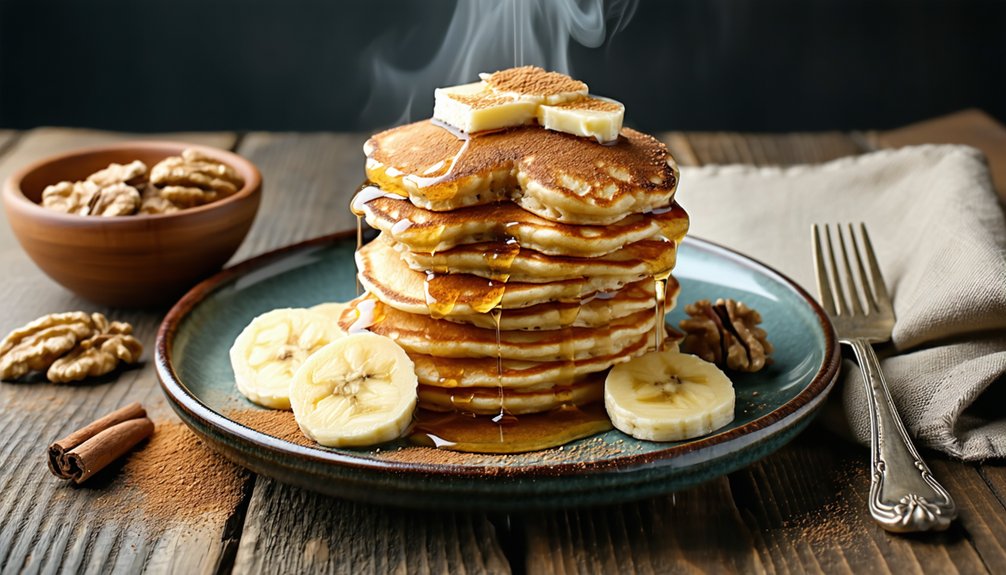
Whisk cottage cheese into your batter and you’ll add 25g of protein per cup while keeping the texture moist and tender.
Swap in Greek yogurt for 15-20g of protein per half-cup, or crack in whole eggs for 6g each plus amino acids that stabilize your energy. Adding vanilla protein powder to your dry ingredients alongside the flour boosts protein content while keeping the batter light and fluffy.
Egg whites add fluff without the yolk’s fat, giving you texture tweaks that lighten every bite.
Smart cinnamon sourcing matters: ground cinnamon delivers 15mg of antioxidants per teaspoon without added sugar. Letting your batter rest for 5–10 minutes before cooking helps develop a fluffier, more tender pancake.
Swirl in a filling of cinnamon, almond butter, and monk fruit sweetener for low-sugar richness, or press a cinnamon-sugar crust into the surface for contrast. For the best caramelized crust, sprinkle the topping onto the raw batter before flipping, since adding it after cooking prevents it from caramelizing properly.
Cook at medium-low heat, flip when bubbles surface, and stop mixing once combined—you’ll own a fluffy stack that fuels your freedom all morning.
Loaded High-Protein Breakfast Burritos Worth Waking Up For
Load up a dozen eggs with 12–14 grams of protein from browned, drained breakfast sausage and you’ll pack roughly 72 grams of egg protein alone into the mix. Stir in 2 ounces of cream cheese for richness, then fold in black beans for 10–12 grams of plant-based protein and 15 grams of fiber. Top with 6–8 ounces of shredded cheddar, providing 40–50 grams across six burritos. Warm tortillas until pliable, place 1 cup of cooled filling in the center, and roll tight. Wrap individually in foil for freezer storage up to three months, or bake fresh at 425°F. Bake frozen burritos directly at the same temperature for 20 minutes—no thawing required. For reheating quickly, you can also microwave the burrito unwrapped or thawed for 1–2 minutes until warm. If you prefer a crispier finish, you can reheat in an air fryer at 350°F for about 10 minutes. For a leaner take on the filling, consider swapping in lean beef chorizo instead of traditional sausage to cut back on grease while keeping bold flavor. Add spicy avocado for creaminess, and experiment with meal variations to keep breakfast exciting and liberating.
Southwest Tofu Scramble: A Plant-Based Protein Boost
Craving a plant-based breakfast that actually delivers? This Southwest tofu scramble packs roughly 30 grams of protein per serving, no eggs required. Extra-firm tofu gives you the density you need, and tofu pressing for 15-20 minutes removes excess water so your scramble stays firm, not soggy.
Crumble it into bite-sized pieces, then sauté onions, bell pepper, garlic, and jalapeño for 5-8 minutes before adding your tofu. Cook uncovered for 5-7 minutes to brown properly.
Stir in black beans, corn, and nutritional yeast—that quarter cup adds 8 grams of protein plus an egg-like flavor you won’t miss. Finish with lime juice, top with avocado or salsa, and you’ve got a meal that fuels you without compromise. Freeze extras for up to a month.
Spinach and Feta Omelets Packed With Protein
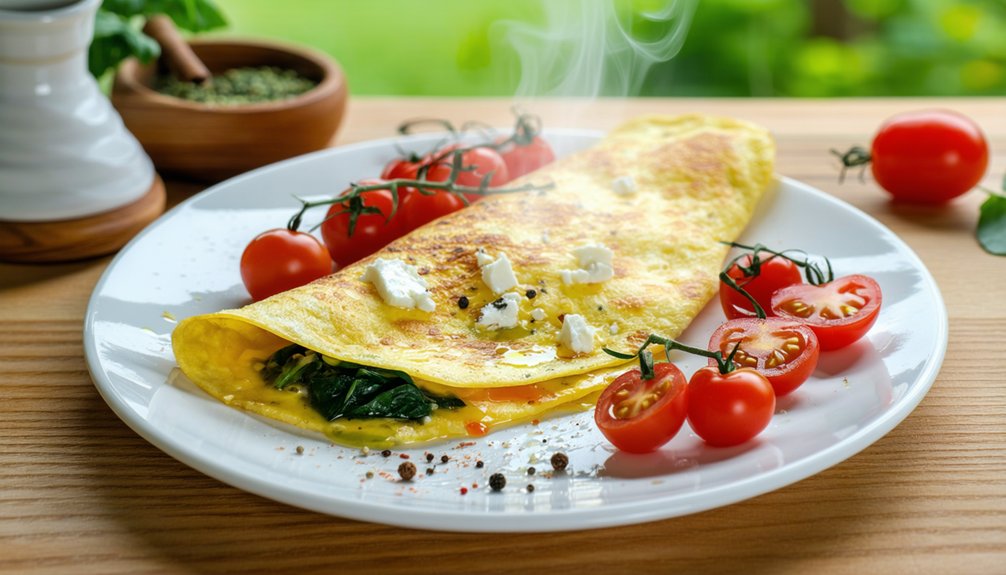
Sometimes the classics work best. This omelet delivers 17g of protein and 296 calories per serving, with 23g fat and just 4g carbs—macros that keep you full without spiking your blood sugar.
You’ll whisk 2-3 eggs with seasonings, then sauté onion, garlic, and spinach until wilted. Spinach preservation matters here: cook it just until tender, so it stays lively and doesn’t turn watery in your fold.
Use ¼ cup crumbled feta for that salty punch, letting you skip added salt entirely. Want feta substitutions? Swap in goat cheese or a dairy-free crumble without losing the flavor payoff.
In 10 minutes, you’ve got a portable, high-satiety meal that fits your schedule and your macros—no compromise required.
Egg and Sausage Breakfast Sandwiches That Travel Well
If your morning runs on a tighter schedule than an omelet allows, an egg and sausage sandwich gives you the same protein payoff in a format you can eat with one hand. Build it on a toasted English muffin for shape retention, layering sausage, egg, and cheese in that order for stability.
Mix whole eggs with egg whites to increase protein while cutting fat, and choose ground pork, beef, or turkey sausage depending on your flavor variations preference.
For portable packaging, wrap assembled sandwiches in foil or parchment and freeze the halves separately—sausage with the bottom muffin, egg and cheese with the top. Reheat in an air fryer at 375°F or microwave at reduced power. You get a grab-and-go breakfast that holds together, no utensils required.
More Vegetarian High-Protein Breakfasts to Try
Eggs and sausage aren’t your only path to a protein-packed morning—plant-based options often deliver just as much punch.
Tofu scrambles with soyrizo, mushrooms, and onions rival any egg dish, while chickpea scrambles work if you’re avoiding tofu altogether.
Try a chickpea frittata for a vegetarian spin loaded with plant protein, or whip up an edamame hash to combine iron and fiber with substantial protein content.
Breakfast fried rice with vegan bacon and tofu turns leftovers into a hearty morning meal.
Sweet potato hash bowls satisfy without eggs, and vegan burritos stuffed with beans and tofu mixtures keep you full for hours.
These options prove you don’t need animal products to fuel your day—variety keeps breakfast exciting and nutritionally complete.
Greek Yogurt and Cottage Cheese Protein Bowls
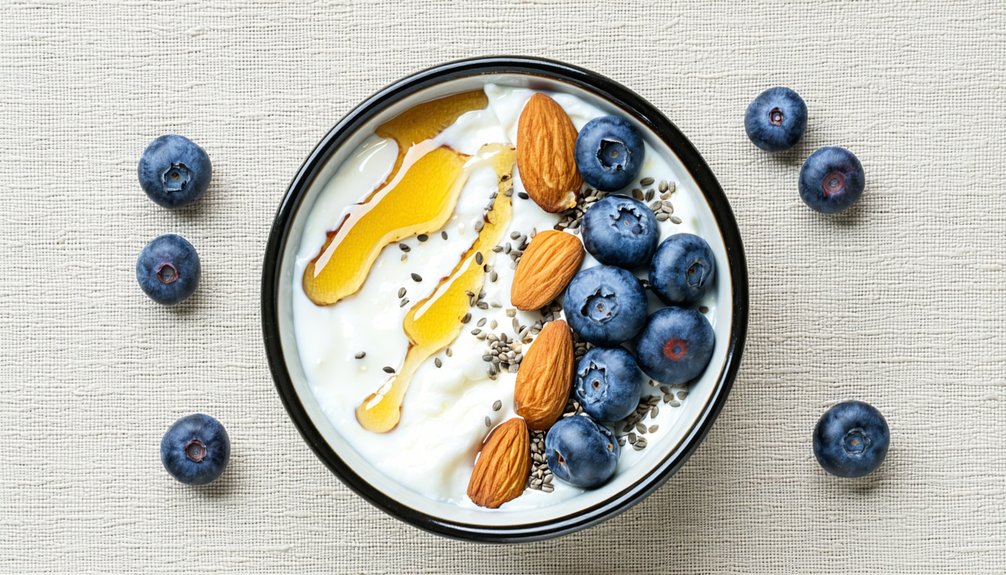
Skip the spoon-and-yogurt-container routine and build a bowl that actually works for you.
Start with ¾ to 1 cup of plain Greek yogurt as your base—portion sizing that delivers 19 grams of protein and 150 calories per cup while keeping calories in check. Stir in a scoop of protein powder or 10 grams of collagen before adding toppings; this guarantees smooth incorporation and higher protein density. Add a tablespoon of peanut butter for extra protein and flavor.
Layer on granola, nuts, or seeds like chia or flax for texture and sustained energy.
Fresh berries, bananas, or chopped apples bring natural sweetness and fiber.
You’re not just eating breakfast—you’re claiming the probiotic benefits, calcium, and B12 that keep your gut and metabolism working for you, not against you.
Meal Prep Ideas for High-Protein Mornings All Week
In light of busy weekday mornings, batch cooking becomes your best defense against skipped meals and fast-food drive-thrus. You’ve got options: overnight oats with protein powder, chia pudding, or Greek yogurt cereal jars for no-cook mornings. Sausage egg bites, sheet pan eggs, or egg muffin cups handle the savory side, while freezer burritos and Kodiak sheet pan pancakes round out your rotation.
Pick three breakfasts—sweet, savory, no-cook—and prep double batches, freezing one set for next week. Use portion swaps to keep flavors fresh: rotate fruit, veggies, or protein sources without changing your base recipe. Storage labels matter here—date everything so you’re grabbing the oldest jar first.
Target 20–30 grams of protein per meal, and you’ll reclaim your mornings for good.
How to Build Your Own High-Protein Breakfast Bowl
Once you’ve got a base, a bowl, and a plan, building your own high-protein breakfast bowl becomes formula rather than guesswork.
Start with your protein: 2–3 eggs, ¾ cup Greek yogurt, or 1¼ cups cottage cheese. Layer baby spinach at the bottom, then add non-starchy vegetables—peppers, tomatoes—for volume without excess calories.
Layering techniques matter here: build from base to topping so every bite delivers balanced flavor and texture, not a pile of mismatched ingredients.
For portion sizing, aim for 25–40g protein per bowl. Add ⅓ cup quinoa for complex carbs, ½ avocado for healthy fats, and a tablespoon of hemp hearts or walnuts for crunch.
Season with garlic powder, smoked paprika, or oregano. You control the ratios—own your fuel, own your morning.
Frequently Asked Questions
Can I Get 30 Grams of Protein Without Eating Eggs Every Day?
Yes, you can! You’ll hit 30 grams easily with plant based shakes blending pea milk and powder, or by pairing protein rich tofu with lentils. Skip eggs entirely—you’re not limited, you’re liberated to choose what fuels you.
Will High-Protein Breakfasts Help With Weight Loss?
Yes—you’ll curb hunger, fight metabolic adaptation, and naturally practice portion control later in the day. You’re not restricting yourself; you’re freeing your body to regulate itself. Eating 25-30 grams of protein enables you to lose weight sustainably, without deprivation.
How Long Can Meal-Prepped High-Protein Breakfasts Stay Fresh in the Fridge?
Your shelf life varies: eggs and meats last 3–4 days, grain bowls 5 days, yogurt parfaits 4–5 days, seafood only 2–3 days. Storage tips: use airtight containers, refrigerate promptly, and trust your senses—own your freedom to eat safely!
Is It Safe to Eat High-Protein Breakfasts Every Day Long-Term?
Yes, you’re free to enjoy high-protein breakfasts daily—evidence shows no harm to kidney function or bone health in healthy people. Just balance meals with fiber and whole foods, stay hydrated, and choose lean proteins over processed options.
Can High-Protein Breakfasts Work for People With Dairy or Gluten Allergies?
Yes, you can absolutely thrive! You’ll find dairy free alternatives like soy or almond milk, plus gluten free grains such as quinoa and oats, providing ample protein. You’re not restricted—you’re enabled to build satisfying, allergy-friendly breakfasts freely.
Conclusion
You don’t need fancy ingredients to hit 30 grams of protein at breakfast—you just need a plan. Stock your kitchen with eggs, Greek yogurt, and cottage cheese, then rotate through grab-and-go options, pancakes, burritos, or build-your-own bowls to keep things interesting. Meal prep on Sundays, and you’ll set yourself up for steadier energy and fewer mid-morning cravings all week long.
References
- https://therealfooddietitians.com/high-protein-breakfast-ideas/
- https://engagement.source.colostate.edu/want-to-stop-craving-snacks-and-sweets-a-high-protein-breakfast-could-help/
- https://www.gobento.com/blog-2-1/high-protein-breakfast
- https://www.facebook.com/groups/899986394346008/posts/1014969759514337/
- https://www.health.com/25-high-protein-breakfast-ideas-to-keep-you-full-7566320
- https://www.menshealth.com/nutrition/g38848211/high-protein-breakfast-ideas/
- https://www.womenshealthmag.com/uk/food/healthy-eating/a64902166/protein-breakfast-ideas/
- https://cooking.nytimes.com/article/high-protein-breakfast-meal-prep-ideas
- https://drbrighten.com/breakfast-with-30-grams-of-protein/
- https://drruscio.com/30g-protein-breakfast/

