
To audit your beauty products, ignore fear words like “toxic” and “irreversible”—they’re marketing, not science. Instead, pull the full INCI ingredient list, check for “clinically proven” claims backed by blinded studies with 30+ participants, and verify lab accreditation (ISO/IEC 17025). Skip proprietary blends that hide dosing. Cross-check ingredients against EWG’s database. These concrete steps replace panic with proof—and there’s a full checklist ahead to guide you.
TLDR Key Takeaways
- Recognize fear-based phrases like “toxic nasties” or “cellular aging crisis” as manufactured urgency, not science.
- Separate marketing puffery (“gorgeous hair”) from measurable claims (“87% saw reduced wrinkles”) requiring proof.
- Demand clinically proven claims show sample size, blinding, randomization, and statistical significance.
- Check the full INCI ingredient list yourself instead of trusting brand marketing copy.
- Verify lab credibility through ISO/IEC 17025 accreditation and detailed Certificate of Analysis data.
Spot the Fear-Based Tactics Brands Use Against You
Because fear sells faster than facts, beauty brands routinely exaggerate immediate health and aging risks to push you toward checkout. You’ll spot sensational language everywhere: “irreversible damage,” “toxic nasties,” “cellular aging crisis.” These phrases invent urgency where none exists—aging is natural, not an emergency requiring instant intervention.
Watch for the “clean vs. dirty” chemical divide, too. Brands vilify parabens or sulfates while branding their own products “100% natural,” ignoring that natural doesn’t mean safe. Terms like “clean beauty” and “non-GMO” are thrown around without any standardized definition, making them marketing buzzwords rather than meaningful claims. This is manufactured division, not science.
You’ll also notice social coercion baked into the pitch—messaging that ties your worth to smooth skin, implying rejection or ridicule if you skip a product. This tactic mirrors how fear-based marketing works best when consumers already sense a problem but haven’t yet acted, pushing them toward impulsive purchases. Recognize this pattern: identify a “problem” you never had, then sell urgency before you can think critically. Naming these tactics is your first step toward freedom from them. Rather than reacting emotionally, always ask for specific evidence behind any dramatic claim before making a purchase decision.
Why “Cure” and “Rejuvenation” Claims Are Red Flags
When a label promises to “cure” your skin, you’re reading a legal impossibility dressed up as marketing. Cosmetics can’t treat medical conditions—period. False cures rely on consumer perception surveys, not measurable biology, because no topical formula can ethically claim clinical resolution.
“Rejuvenation” plays the same game with cellular myths. Reversing aging at a cellular level requires lasers or surgery, not serums. Brands skip independent testing, borrow supplier data, and call it proof. That’s marketing semantics, not science. Claiming equivalence to injectables like neurotoxins or fillers is a major red flag that signals illegal medicinal positioning.
Watch for clinical misclaims: studies missing blinding, endpoints, or real duration. If a brand won’t show you peer-reviewed, placebo-controlled data with real participants, it’s selling you a story. Credible clinicals typically involve at least 30 participants to hold up to scrutiny from retailers and regulators alike. Similarly, unregulated terms like non-toxic provide reassurance without any factual grounding in cosmetic science, since dose and concentration—not blanket labels—actually determine safety. You deserve ingredients that work, not words engineered to bypass your skepticism.
Check the Label for a Full Ingredient List
Where do you actually find the truth about what’s in your beauty products? Skip the marketing copy and go straight to the INCI list on the back label, side panel, or brand website. This is your primary source—everything else is noise.
Watch for red flags: smaller brands sometimes swap trade names for INCI names, violating regulatory standards. If your product’s label is worn, smudged, or missing, use package photography from retailers like Sephora or Ulta, who maintain updated ingredient records. For international products, label translation through Google Translate reveals what’s really inside, even on non-English sites.
Bottom line: no full ingredient list means no way to verify claims. That’s not transparency—it’s a dodge. Demand the full list before you buy. Once you have that list, you can paste it into an analyzer that is 100% independent and free from brand or sponsor influence to get a science-backed breakdown of each ingredient. Many of these tools function as an ingredient checker, letting you search or scan a barcode to instantly pull up safety ratings and potential concerns for each item on the list.
Decode Vague Terms Like “Proprietary Blend”
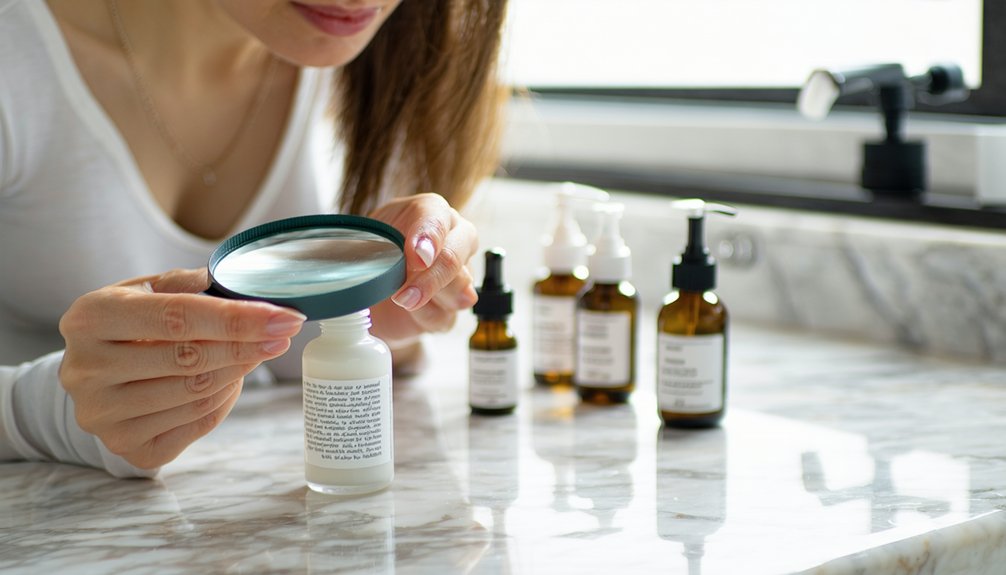
Since a proprietary blend hides individual ingredient amounts behind a single total weight, it’s effectively a locked box: you know what’s inside, but not how much of each thing. That’s the opposite of ingredient transparency, and it robs you of dosing clarity when you’re trying to judge whether a product actually works.
Here’s your move: check ingredient order. If the advertised active sits near the end of the list, it’s likely “fairy dusted”—present for marketing, not efficacy. Run the preservative test: if phenoxyethanol or sodium benzoate shows up in the first five ingredients, expect a water-heavy, diluted formula. This ingredient ordering rule exists because, aside from a limited trade secret protection exception, ingredients must generally be listed from most-to-least by weight. Watch for a long roster of ingredients paired with a suspiciously small total serving weight, since that combination is often a red flag signaling underdosed actives.
You don’t need a lab to spot this. You just need to read critically, trust the pattern, and stop letting vague labeling dictate your choices.
What Does That EWG Safety Score Mean?
That number stamped on your favorite serum’s EWG listing isn’t a simple average—it’s a weight-of-evidence verdict. The score has two parts: a hazard rating (1-10) and a data availability rating. Green means 1-2, yellow spans 3-6, red covers 7-10. Here’s where interpretation subtleties matter: the consolidated score reflects the highest single hazard endpoint, not a blended calculation. One risky ingredient can push an entire product into red territory.
Understand the score limitations, too. A low number doesn’t guarantee safety—it might just mean researchers haven’t studied that ingredient yet. Untested chemicals often get a “gentleman’s C” by default. Different scoring approaches exist too, since some frameworks instead use a weighted average of ingredient scores rather than simply taking the worst offender. This mirrors how EWG’s own Food Scores database combines nutrition, ingredient, and processing concerns into one overall rating rather than isolating a single factor. Beyond the numeric score, some brands pursue EWG Verified status, a separate certification requiring products to meet specific criteria set by the organization. Don’t stop at the headline score. Read the ingredient-level breakdown to see what’s actually driving your rating.
Cross-Check Ingredients in the EWG Skin Deep Database
Knowing how the score gets calculated only helps if you actually pull up the ingredient list and check it yourself.
Grab the full INCI list from the packaging, not the shortened version on a brand’s website—missing lists are a red flag for weak ingredient transparency.
Head to ewg.org/skindeep and search each ingredient by its exact INCI name, or scan the barcode with the EWG Healthy Living app for direct matches. EWG built this database because personal care products are made with over 10,500 unique chemical ingredients, and consumers deserve a way to check them.
Don’t stop at the overall product score. Remember that the product hazard score is not a simple average of the individual ingredient hazard scores.
Click into individual ingredients, especially those buried past position five, and read the health effects section for real hazard interpretation.
Flag anything scoring 4 or higher, and pay close attention to endocrine disruption callouts.
This is how you take your power back from vague marketing claims.
Separate Puffery From Deceptive Marketing Claims
Once you understand the ingredient math, you still have to reckon with the words wrapped around it. Marketing puffery is legal because it’s opinion, not fact—”gorgeous hair” or “radiant skin” makes no measurable promise. Deceptive claims, though, cross into legal definitions of performance: volumizing, moisturizing, clinically proven. These require evidence thresholds brands can’t always meet with 20-person, non-blinded studies using “before” states as controls.
Train yourself to spot the shift from feeling to fact. “You’ll love this” is puffery. “87% saw reduced wrinkles” demands proof. Consumer perception surveys aren’t clinical trials, and enhanced photos aren’t performance data. Ask what’s actually measured, not implied. That question separates liberation from manipulation—and puts you back in control of what you buy.
Ask for Proof Behind Every Clinical Study
When a label says “clinically proven,” don’t just take the words at face value—ask what backs them.
Real substantiation means a study with adequate sample size—typically at least 30 participants—and clear randomization integrity, so results aren’t skewed by bias.
Look for statistical significance, like p < 0.0001, showing real differences between groups, not chance.
Ask if the design was double-blind, using baseline measurements instead of vague before-and-after photos.
Demand access to the data itself—if a brand truly has proof, they’ll hand it over without hesitation.
FTC rules require “competent and reliable scientific evidence” for these claims.
You have every right to demand transparency before you trust a single result.
How to Spot a Legitimate Testing Lab
Not every lab that slaps “certified” on a report deserves your trust. Real credibility starts with third party accreditation—ISO/IEC 17025 specifically for heavy metal analysis, verified through the ILAC directory, not just a claim on a website. Look for GLP certification and CNAS recognition if mutual recognition matters to your market.
Then demand method transparency. A trustworthy lab names its testing method (EPA 6010D or equivalent), lists detection limits per metal, and includes calibration dates—not vague pass/fail summaries. The Certificate of Analysis should show a specific LOQ, ideally ≤0.1 ppm for lead.
Finally, confirm the report tests finished product, matches your exact lot number, and isn’t a stale one-off from years ago. Recurring testing signals real accountability.
Does the Testing Reflect Your Skin Tone?
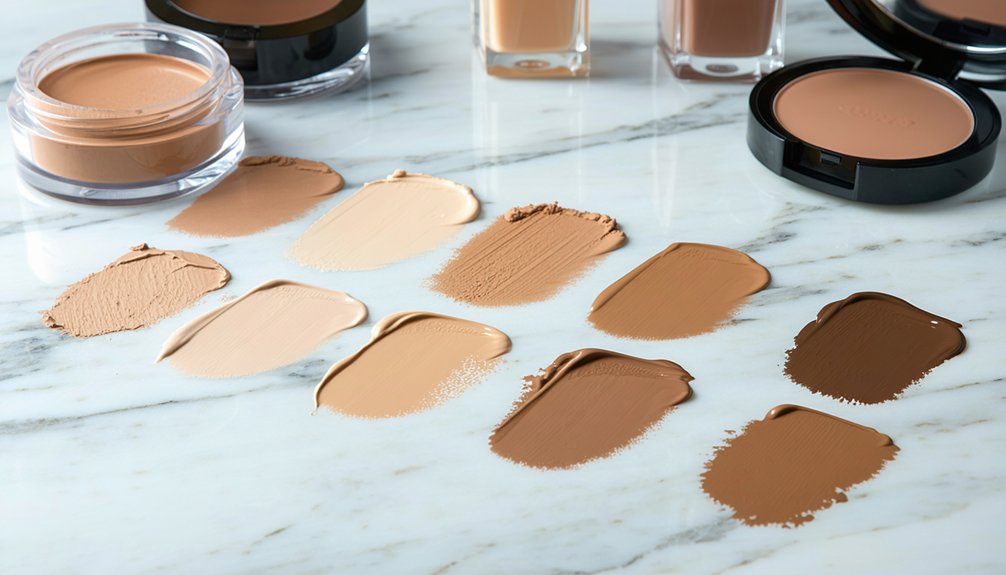
Why does a lab report matter less than who’s sitting in the trial room? A pristine certificate means nothing if the testing pool skipped Fitzpatrick types IV–VI. You deserve to know whether a product was validated on skin like yours, not just on a narrow slice of light tones. Ask brands if they include diverse skintones—at least 30% from deeper skin types—before you trust their claims.
Testing conditions matter too. Lighting calibration can make or break accuracy: harsh overhead LEDs or backlighting skew results, especially for melanin-rich skin, producing grayish or washed-out readings. Legitimate labs control for this. Before you buy, check whether testing happened in balanced, natural light with real tonal diversity represented. Your skin’s truth shouldn’t depend on someone else’s data.
Verify Claims With Independent Consumer Surveys
Rarely does a brand’s own testimonial page tell you what independent verification can. When you’re auditing claims, trust the data: 85% of shoppers rank independent verifiers as their top resource, and independent checks prove nearly three times more trustworthy than social media. Only 37% bother with company websites—you shouldn’t either, not as your primary source.
Look for brands that use independent surveys and consumer panels with clear verification protocols, not cherry-picked reviews. Legitimate panels disclose response incentives and methodology, so you know results aren’t skewed. Skip brands that only cite in-house testimonials; they’re outranked by third-party checkers for good reason.
Your power comes from demanding proof outsiders generated, not proof brands paid for themselves.
Your 10-Point Cosmetic Safety Checklist
Independent data only gets you so far—you still need to run your own audit on every product you own. Here’s your 10-point checklist.
Read the full label, including warnings and ingredient lists. Confirm water-based formulas contain a broad-spectrum preservative, not just an antioxidant. Run expiration checks on every product—texture, smell, or color changes mean it’s time to toss it.
Prioritize container sanitation: keep lids tight, wash your hands before application, and never add water or saliva to eye products. Skip products near your eyes unless they’re formulated for that use.
Patch-test anything new. Store everything away from heat and sunlight. Never share makeup. Stop using anything that causes irritation and consult a professional. This is how you take control.
Frequently Asked Questions
Can I Report a Suspicious Cosmetic Brand Directly to Regulators?
Yes, you can. File consumer complaints directly through FDA MedWatch, or call 1-888-SAFEFOOD. You’re engaging in legitimate regulatory whistleblowing—use online forms, attach labels, and demand accountability. Your voice triggers real investigations.
What Legal Action Can Be Taken Against Misbranded Cosmetic Products?
You can pursue injunctive relief through federal courts, seek civil penalties against violators, request FDA seizure actions, or file private litigation—holding misbranded cosmetic makers accountable while reclaiming your power as an informed consumer.
Are Color Additives Really the Only FDA Pre-Approved Ingredients?
No—you’re not limited to color additive premarket approval alone. Cosmetic regulation also covers GRAS ingredients and pre-approved additives. Don’t fall for misleading labeling claiming otherwise; you deserve accurate, evidence-based facts to make truly informed choices.
How Often Should Brands Audit Their Own Product Formulations?
You’ll want annual reviews as your baseline, but don’t stop there—run batch audits whenever formulas change or new data emerges. This combination keeps you informed and enabled, not dependent on marketing hype or fear-driven claims.
What Co-Packer Agreements Should Brands Require for Accountability?
You need agreements with clear manufacturing oversight—audit rights, CAPA reviews, and certification proof—plus liability clauses that assign indemnification for defects, contamination, or SOP failures. Don’t sign without both; they’re your bargaining power for real accountability.
Conclusion
You don’t need to fear your beauty routine—you need to question it. Read past the marketing, check the full ingredient list, verify lab credentials, and confirm testing includes skin tones like yours. Skip the “proprietary blend” mystery and lean on real data: EWG scores, independent surveys, verified claims. Run every product through your 10-point checklist. That’s how you build a routine based on evidence, not fear.
References
- https://certified-laboratories.com/blog/how-to-cosmetic-personal-care-claims-substantiation/
- https://www.fda.gov/cosmetics/cosmetics-laws-regulations/fda-authority-over-cosmetics-how-cosmetics-are-not-fda-approved-are-fda-regulated
- https://www.theecowell.com/blog/skincareclaims
- https://www.beautyindependent.com/how-make-beauty-product-claims-without-getting-into-trouble/
- https://bbbprograms.org/media/insights/blog/beauty-product-claims
- https://www.asa.org.uk/advice-online/beauty-and-cosmetics-general.html
- https://famandiaye.com/blog/inclusion-audit-steps-inclusive-beauty/
- https://www.youtube.com/watch?v=q7Q0GIOs2Uk
- https://www.alibaba.com/product-insights/a-no-nonsense-guide-to-identifying-fake-clean-beauty-claims-using-ewg-skin-deep-inci-cross-checking.html
- https://theunbiasedscipod.substack.com/p/fear-based-marketing

