
You can reclaim joy through small, intentional acts: reciting ancestral affirmations, dancing, singing, or journaling to release stress and honor heritage. Spend 15-20 minutes outdoors to lower cortisol, set boundaries without over-explaining, and lean on sister circles for support. Rejecting Eurocentric beauty standards and prioritizing rest aren’t indulgent—they’re survival. These practices counter weathering and systemic harm. Keep going below to uncover exactly how each ritual works to protect your mind, body, and spirit.
TLDR Key Takeaways
- Joy is resistance: choosing self-love and rest actively counters systemic miseducation and devaluation.
- Reject Eurocentric beauty standards; redefine wellness through confidence, compassion, and personal style.
- Practice unapologetic rest—prioritize 8+ hours of sleep and step back from draining obligations.
- Use micro rituals like journaling, short walks, or deep breathing to rebuild joy daily.
- Join sister circles or community spaces like choirs or yoga to sustain collective joy and healing.
Why Black Joy Is a Foundation for Wellness
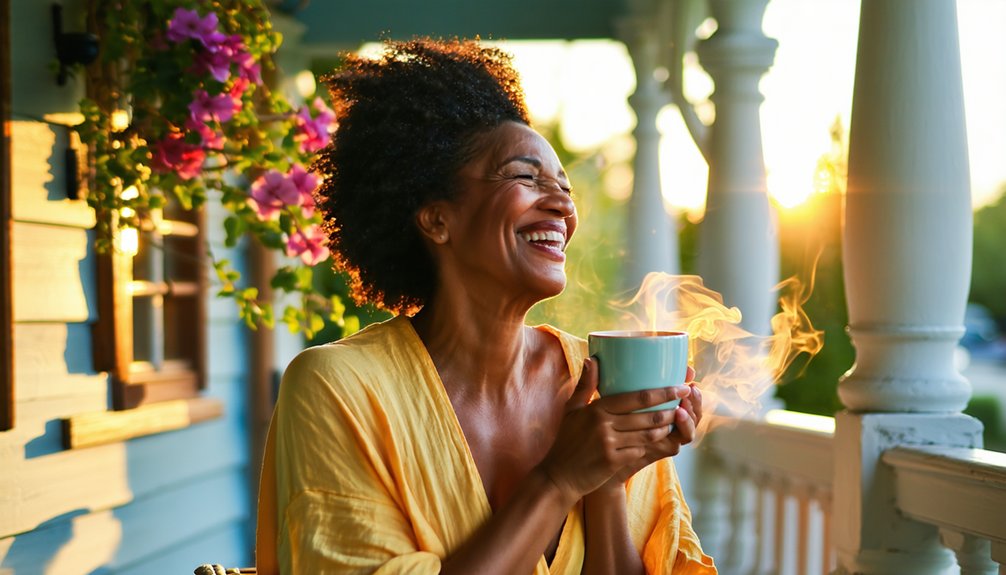
Because systemic miseducation teaches Black women to devalue their own worth, Black joy becomes a necessary act of resistance. When you love yourself unapologetically, you counter that miseducation directly. This isn’t a luxury—it’s a strategy for healing trauma that weighs on your mental well-being.
Your joy taps into cultural resilience, a strength passed down through generations of Black women who refused to be erased. It’s ancestral healing in action, dismantling obstacles systemic oppression built to isolate you. When you connect with community, you dismantle those walls together. This joy holds pain and collective struggle in tension rather than dismissing it, honoring what advocates call Black joy as both rest and resistance.
Wellness isn’t just the absence of illness—it’s abundance in mind and body. By prioritizing vibrancy over mere survival, you align with a health definition that centers you, your joy, and your worth. This holistic view of wellbeing echoes the belief that joy functions as a weapon and superpower against injustice and structural racism.
The Ways Society Makes Black Women Sick
To understand why joy matters as resistance, you need to see what you’re up against. Structural violence shapes your healthcare access before you even walk through a door—longer travel times, higher medical debt, and limited insurance stack the odds against you.
When you do seek care, 21% of you face unfair treatment from providers, and 22% who’ve given birth report being denied pain medication. This isn’t accidental. Medical mistrust you carry is earned, rooted in history that framed your body as biologically inferior and your pain as invention.
Meanwhile, racism itself gets under your skin—literally. Chronic stress raises cortisol, weakening your immune system and fueling hypertension, diabetes, and disease. You’re not imagining it. You’re surviving a system built to wear you down. This chronic stress response is part of what researchers call weathering, a process linked to premature aging and long-term health decline. Even your zip code can predict how sick this system will make you, regardless of your income or education. Having a doctor who shares your background can change everything, with visits to racially concordant providers linked to feeling more respected and truly heard.
Rejecting Beauty and Wellness Standards Built for Others
Since Eurocentric beauty standards were never built with you in mind, they leave you fighting a losing battle when you try to meet them. The relaxers, the restrictive eating, the shrinking—these are symptoms of a system designed to devalue you, not personal failures. Cultural rejection of these standards isn’t bitterness; it’s survival.
You don’t owe anyone conformity to a beauty ideal rooted in your erasure. Beauty abolition means dismantling the whole structure—refusing the no-win choice between chemical exposure and constant self-monitoring. It means redefining beauty on your own terms: confidence, compassion, personality over physical policing.
Decolonizing wellness starts with you rejecting standards built for someone else’s body, someone else’s hair, someone else’s life. Your worth was never up for negotiation.
Building Self-Worth Through Black Joy
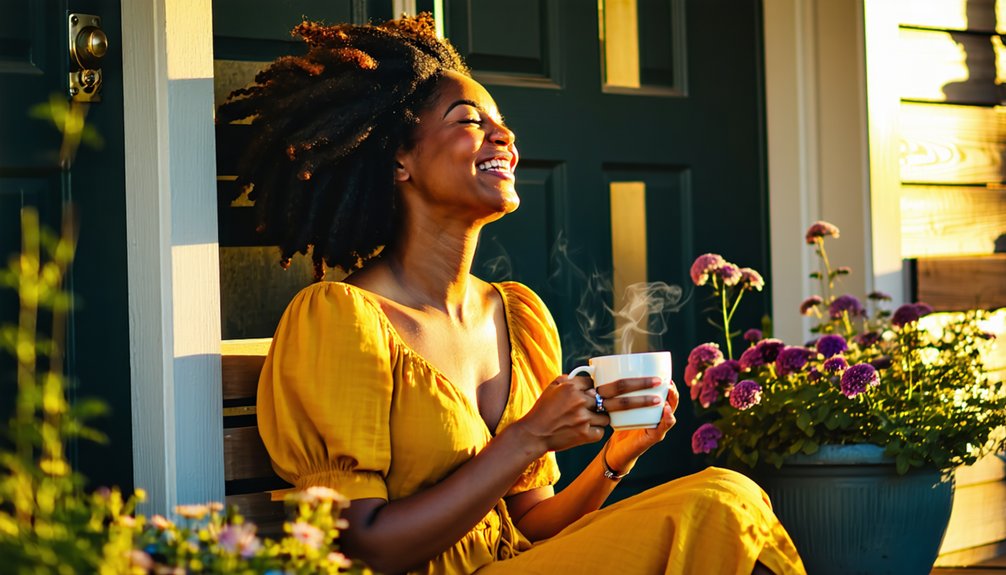
Rejecting someone else’s blueprint for beauty only gets you halfway there—you’ve got to replace it with something that’s actually yours. That’s where Ancestral Affirmations come in: recite “Black is beautiful” daily, and build personalized statements that celebrate your Blackness on your own terms. Pair this with Mirror Rituals—moments where you look at yourself and name the qualities that make you uniquely powerful. This isn’t vanity; it’s reclamation.
Root your affirmations in gratitude and mindfulness. Ask yourself what specifically brings you joy, then trace it back to your identity. Lean into family and community traditions that reflect your heritage. This kind of joy is not escapism, but rather a way of holding pain and affirmation in tension as enslaved Africans once did in envisioning future freedom. Movement and dance can also serve as a celebration of that joy, honoring both ancestors and self. Engaging in these practices supports positive coping skills that nurture a healthier self-view over time. Self-worth isn’t found in someone else’s mirror—it’s built through consistent practices that remind you who you’ve always been.
Putting Yourself First Without Guilt
When you’ve spent a lifetime putting everyone else’s needs before your own, prioritizing yourself can feel foreign—even wrong. But putting yourself first isn’t selfish; it’s survival.
Start with boundary rituals: say “no” without over-explaining, step back from toxic friendships or jobs that drain you, and limit social media that fuels comparison. Strategize how to create space when demands pile up—your time and energy deserve protection.
Unapologetic rest is part of this practice, too. Set a bedtime alarm to enforce 8+ hours of sleep. Swap childcare with trusted friends to reclaim personal hours. Redirect small spending toward wellness experiences instead of guilt-driven obligations. Consider taking a warm Epsom salt bath with eucalyptus or lavender oils to help your body recover and unwind. Prioritizing rest and setting boundaries can also be understood as a form of resilience rather than indulgence, especially for women who carry generations of unspoken labor. Left unchecked, chronic overgiving can lead to burnout, a state of physical, emotional, and mental exhaustion where you feel you have no more to give. Every boundary you set is a declaration: your needs matter, and you don’t owe anyone an apology for meeting them.
Practicing Radical Self-Care After the Pandemic
The pandemic didn’t just disrupt your routines—it exposed how little care you’d been giving yourself all along. Now’s the time to rebuild through radical self-care, not survival mode.
Start with micro rituals: five minutes of journaling, a short walk, deep breathing before bed. These small acts compound into real healing.
Pair this with boundary mapping—identify where your energy leaks and protect those spaces fiercely. Say “no” without guilt. Schedule sacred time and defend it like an appointment you can’t miss.
Reflect critically on the coping habits you formed during crisis. Some may no longer serve you. Research shows Black women carry higher allostatic loads than White women, White men, and Black men regardless of socioeconomic status, making this reflection especially critical.
Green therapy, movement, hydration, sleep—these aren’t extras. They’re foundational. Healing after trauma means choosing yourself, deliberately and daily. This is especially urgent given gendered racial trauma often left unaddressed due to underuse of mental-health support.
Finding People Who Truly See You

Because healing doesn’t happen in isolation, you need people who get it without explanation. Sister circles give you that—spaces where mutual understanding replaces the exhausting work of translating your reality. You don’t have to explain the microaggression or justify your exhaustion; someone already knows.
These circles work through mirror listening: hearing your own struggles reflected back through someone else’s story. That recognition is powerful. It validates what you’ve felt but couldn’t always name.
Visible allies matter here too—women who show up consistently, who champion your wins and hold space for your grief. This isn’t performative support. It’s trust built on shared vulnerability, free from judgment. A recent qualitative study of Black women healthcare professionals during the pandemic found that sister circles served as a vital mental health support mechanism during that “double pandemic” of COVID-19 and systemic racism. This kind of communal support matters even more given that Black patients are three times as likely to experience discrimination in healthcare settings.
Find your circle. Let them see you fully, without armor, without editing.
Using Cooking, Art, and Writing to Release Emotion
Chopping vegetables, mixing spices, tasting as you go—these small acts ground you in the present moment. Cooking meditation doesn’t erase your anxiety, but it gives you space to process it, turning your kitchen into a site of solitude and community care rooted in Black land-based healing traditions.
Art moves stagnant energy through your body. When you create instead of suppress, you protect your heart while feeling what’s real—and feeling is how you heal.
Art journaling combines both practices: you write to reveal what you’re carrying, then let imagery capture what words can’t. Journaling helps you respond mindfully to triggers instead of reacting from wounds.
Accept your experience without shame. Add affirmations, therapy, or spiritual practice to deepen the release.
Lowering Cortisol Through Time in Nature
Sometimes the most healing canvas isn’t your kitchen table or journal page—it’s the ground beneath your feet. Your nature minutes matter more than you think. Just 10 minutes outside creates measurable shifts in your stress physiology. Even 5 minutes lifts your mood.
But if you want a real cortisol reset, aim for 20 to 30 minutes—that’s where cortisol drops fastest, up to 18.5% per hour beyond your body’s natural rhythm. You don’t need a mountain trail. Sit in your backyard. Listen to water. Touch grass. Look at the sky.
Consistency beats duration: 15 minutes daily outweighs two hours once a week. Two hours weekly is your baseline for real health gains—five hours is your ceiling.
Your nervous system deserves this reset. Claim it.
Reconnecting With Self Through Meditative Solitude
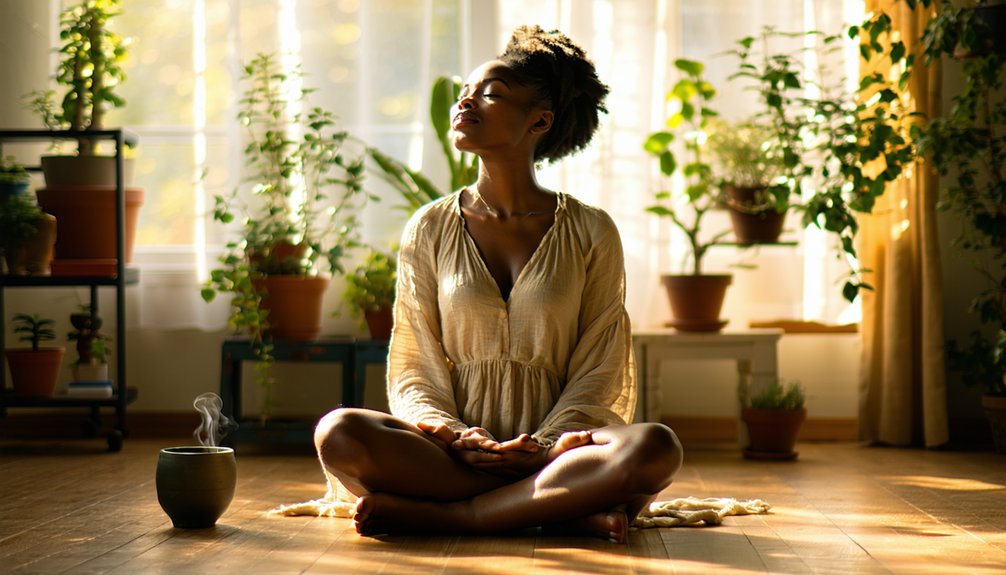
While nature resets your cortisol, meditative solitude resets your relationship with yourself. This isn’t isolation—it’s intentional stillness that trains your mind to crave reconnection instead of avoidance. Settle into a comfortable position, let your breath flow naturally, and notice each inhale and exhale.
Body awareness matters here. Scan your throat, chest, solar plexus, and belly for tension or ease. Let thoughts drift by like leaves on water, observing without judgment—like a curious friend would.
This practice sharpens clarity about your life’s direction and builds internal self-worth, so you depend less on outside validation. Quiet review reveals patterns of anger, entitlement, or fear you’ve been carrying. Over time, you reconnect with your wholeness, your moral core, and the wisdom already living inside you.
Sustaining Resilience Through Songs and Creativity
Singing carries memory in your bones. Black spirituals once coded resistance into melody, and 78% of Black families still pass down these Ancestral Anthems to preserve resilience. During the Great Migration, 92% of migrants leaned on music to cope. That legacy lives in you.
Creative Rituals do more than soothe—they heal. Expressive arts lower cortisol by 23%, while creative writing enhances emotional regulation by 35% in women managing discrimination-related stress. Group singing raises oxytocin by 18%, and community choirs report a 50% drop in depressive symptoms after six months.
Your creativity isn’t indulgence—it’s inheritance. Every song you sing, every art you make, turns pain into power. Claim your Ancestral Anthems. Build your Creative Rituals. Let joy anchor your resistance.
Centering Black Joy Through Yoga and Community Care
Rooting into your body on the mat gives you a homecoming yoga can’t fake. Evidence shows you respond powerfully to yoga built to feel safe and seen—non-linear, somatic movement that opens your senses and channels energetic wisdom. Grounding breathwork anchors you: deep inhales release what no longer serves you, while stretches through legs, shoulders, and core give you physical support. You’re free to modify, exit any posture that doesn’t feel right—your body’s wisdom leads.
The Black Women’s Yoga Collective offers community embodiment through shared practice: stacking wrists under shoulders, pressing through feet, sinking into low crescent lunges together. Egyptian Yoga reconnects you to ancestral roots through grounding palm placements and breath awareness. Child’s pose, shavasana, crescent lunges reaching skyward—each posture centers your joy.
Frequently Asked Questions
How Much Time Should I Dedicate Daily to Practicing Black Joy?
You don’t need hours—just 15 minutes daily for brief rituals like jazz breaks or gratitude checks. Add 30 minutes total for mindful breaks throughout your day. You’re reclaiming freedom in small doses, building joy that sustains your liberation.
Can Black Joy Practices Be Done Alongside Professional Therapy or Medication?
Yes—you can absolutely combine joy practices with clinical care. Therapy compatibility isn’t an issue; medication integration works fine alongside these practices too. You’re building a village, not replacing professional treatment. Joy complements your healing, it doesn’t compete with it.
What if I Don’t Have Access to Nature or Yoga Classes?
You don’t need nature or studios—turn your home into indoor retreats. Try creative rituals like dancing freely, journaling, or curating uplifting digital spaces. Joy lives in accessible moments: breathwork, jazz records, laughter. Your space, your sanctuary, your liberation.
How Do I Start Practicing Joy With a Busy Work Schedule?
Block 15 minutes on Friday’s calendar like a meeting. Stack micro moments throughout your day—tea, texts, dance breaks. Turn commute rituals into gratitude practice. You don’t need extra time, just intentional claiming of what’s already yours.
Are There Specific Songs or Playlists Recommended for Building Resilience?
Curate seven Upbeat Anthems and Healing Hymns from artists like Alicia Keys and Aretha Franklin. You’ll recharge your soul, reclaim your strength, and build lasting resilience—one liberating track at a time.
Conclusion
Joy isn’t a luxury—it’s your birthright and a legitimate wellness practice. When you step into nature, dance to a song that moves your spirit, sit in meditative solitude, or gather with community, you’re actively lowering cortisol and rebuilding what stress tries to break down. You don’t need permission to prioritize yourself. Start small: one boundary, one breath, one moment of joy today. Your well-being deserves that investment, and you’re worth it.
References
- https://www.psychdiscourse.com/reclaimingtheafricanspirit/
- https://www.youtube.com/watch?v=FBwNFhNrHwo
- https://www.womansworld.com/wellness/how-black-joy-supports-health-resilience-and-wellbeing
- https://pmc.ncbi.nlm.nih.gov/articles/PMC9899679/
- https://www.self.com/story/centering-black-joy-and-peace
- https://theonn.ca/2022/02/prioritizing-black-joy-is-central-to-black-wellness/
- https://today.usc.edu/black-history-month-health-wellness-and-a-generous-dose-of-joy/
- https://www.youtube.com/watch?v=TidPo41bqVk
- https://www.bu.edu/articles/2023/racism-sexism-and-the-crisis-of-black-womens-health/
- https://pmc.ncbi.nlm.nih.gov/articles/PMC8020496/

