
Your calcium needs shift with age: 1,300 mg if you’re a teen, 1,000 mg in adulthood, and 1,200 mg after 51. You’ll also need 600–2,000 IU of vitamin D daily to actually absorb that calcium—without it, your bones can’t use what you’re taking in. Food sources beat supplements for safety and absorption. Getting the balance right matters more than maxing out one nutrient. Here’s what you need to know before choosing your approach.
TLDR Key Takeaways
- Women need 1,000 mg calcium daily (19–50) and 1,200 mg after age 51 to offset bone loss.
- Vitamin D (600–2,000 IU daily) is essential for calcium absorption and effective bone protection.
- Prioritize dietary calcium sources like dairy, sardines, and leafy greens over supplements for better absorption and safety.
- Combined calcium and vitamin D reduces hip fracture risk by 16%, more effective than vitamin D alone.
- Consult a doctor before supplementing, especially with osteoporosis, malabsorption issues, or high supplement doses.
How Much Calcium Do Women Need at Every Age?
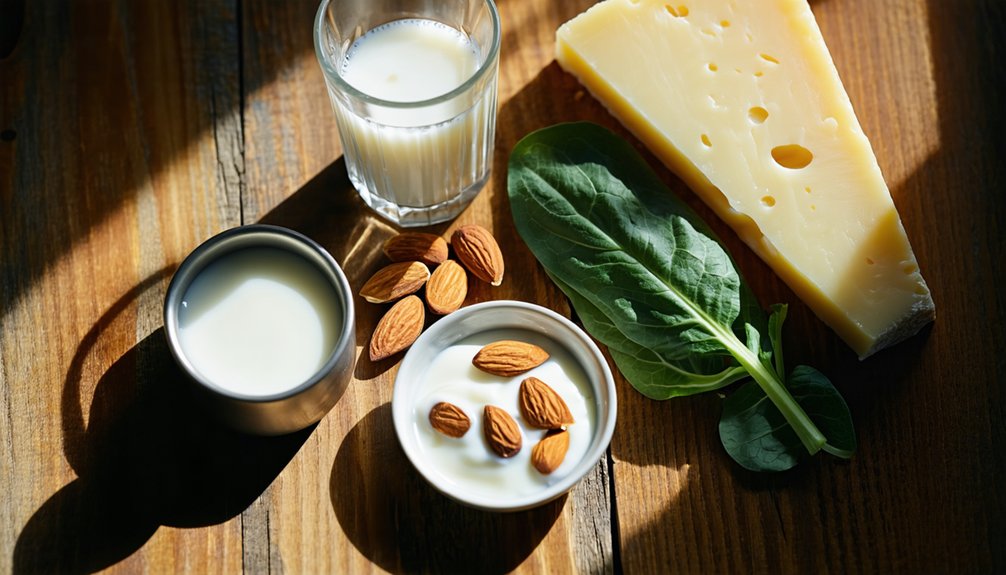
Nearly every stage of a woman’s life comes with a different calcium target, and knowing yours matters for long-term bone health.
Your adolescent intake peaks at 1,300 mg daily between ages 12–18, fueling the bone mass you’ll draw on for decades.
From 19–50, you need 1,000 mg daily, whether you’re pregnant, breastfeeding, or neither—at least 700 mg should come from food alone.
Once you hit perimenopausal needs and cross into your 50s, your requirement jumps to 1,200 mg daily, helping offset accelerated bone loss after menopause, a risk that is especially pronounced for post-menopausal women. Since vitamin D is essential for calcium absorption, most adults should also aim for 600 IU (15 mcg) daily.
That target holds steady past 70, though international guidelines vary, with the United Kingdom recommending as little as 700 mg daily for women.
Upper limits shift too: 2,500 mg for younger women and adolescents, dropping to 2,000 mg at 51+. Know your number, own your bone health.
What Vitamin D Levels Support Calcium Absorption?
Hitting your calcium target only works if your body can actually absorb it, and that’s where vitamin D comes in. Your intestines rely on vitamin D to drive the absorption mechanisms that pull calcium from food into your bloodstream. Without it, you’re not truly protected—regardless of how much calcium you consume.
Research points to optimal thresholds around 32 ng/mL (80 nM) for maximizing calcium uptake and guarding against secondary hyperparathyroidism. To reach this, most adults need 600–2,000 IU of vitamin D daily, with women over 50 often requiring 800–1,000 IU. Those with absorption issues, obesity, or gastrointestinal conditions may need up to 4,000 IU. Most healthcare providers consider a target healthy 25-hydroxy vitamin D level to generally fall between 30–60 ng/ml. The FNB considers a serum 25(OH)D level of ≥50 nmol/L sufficient for most people’s overall health. If secondary hyperparathyroidism persists despite adequate calcium and vitamin D intake, providers may consider prescribing calcitriol to boost gut absorption of calcium.
Know your numbers, know your needs—that’s how you take control of your bone health, not just guess at it.
Best Food Sources for Calcium and Vitamin D
Loading up on the right foods can get you closer to your calcium and vitamin D targets than supplements alone. Dairy remains a reliable foundation—milk, yogurt, and ricotta each deliver 300+ mg per serving.
Canned sardines with bones pack 325 mg of calcium into just 3 ounces, making them one of the most efficient choices available. Leafy greens like collards and kale offer solid non-dairy options, while fortified beverages—almond, soy, rice milk, and calcium-fortified orange juice—provide 300–450 mg per serving, giving you flexibility outside traditional dairy. Keep in mind that spinach, despite containing 260 mg of calcium per cooked cup, has high oxalate content that reduces bioavailability to only about 5%.
Round out your intake with tofu, canned salmon, and shrimp for calcium plus protein. Calcium-prepared tofu can supply over 86% DV in just half a cup, making it one of the most concentrated plant-based sources available. Nuts, seeds, and dried figs add smaller but meaningful contributions. Baked beans also contribute, with a 4 oz serving offering an estimated 160 mg of calcium. Mixing these sources daily builds bone strength without relying solely on pills.
Why Food Beats Supplements for Bone Strength
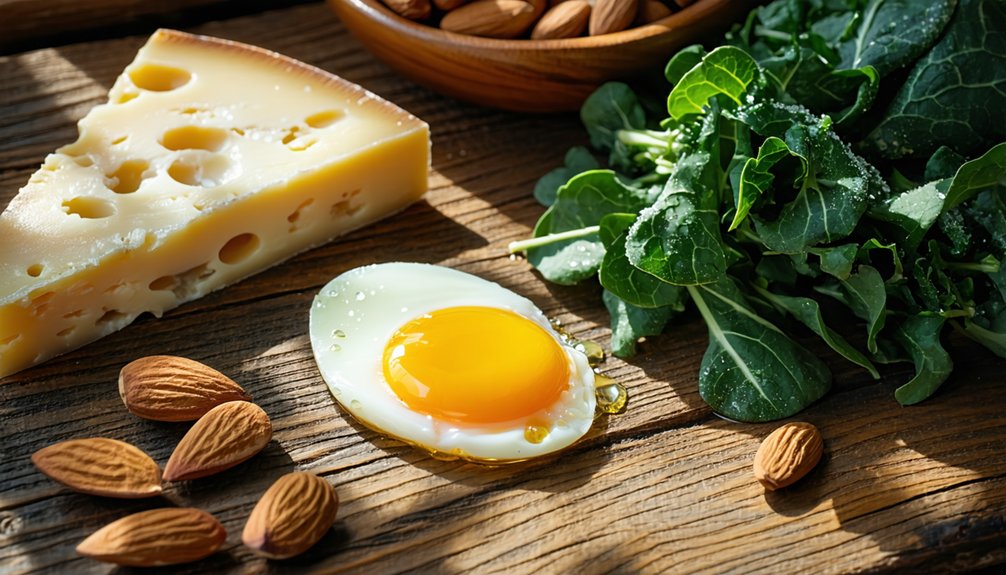
When you eat calcium-rich foods, your body actually absorbs the mineral more efficiently than it does from pills alone. Meal timing matters here—stomach acid produced during eating helps you absorb calcium far better than swallowing a supplement on an empty stomach. Your food also feeds your gut microbiome, which plays a role in nutrient absorption that isolated pills simply can’t replicate.
Beyond absorption, whole foods deliver co-factors and micronutrients that work together with calcium to optimize bone mineralization. Fatty fish gives you vitamin D alongside natural fats that enhance uptake, while fortified foods add extra nutrients supplements miss entirely. Salmon, tuna, mackerel, beef liver, and egg yolks are naturally rich in vitamin D2 and D3, making them valuable dietary sources beyond just calcium.
The safety data seals it: dietary calcium doesn’t raise your cardiovascular risk, while supplements might. Randomized trials have even signaled an increased risk of coronary events linked to calcium supplements rather than calcium from food. Choosing food over pills means claiming both stronger bones and long-term freedom from unnecessary health risks.
When Should Women Consider Calcium Supplements?
In light of your age and life stage, your calcium needs shift markedly. If you’re 19-50, you need 1,000 mg daily; past 51, that climbs to 1,200 mg as menopause accelerates bone loss.
Before reaching for supplements, track your dietary intake for 3-5 days to spot real gaps. Vegans, those on high-protein or high-sodium diets, and anyone with malabsorption issues like Crohn’s disease often can’t meet needs through food alone.
Watch for medication interactions, too—long-term corticosteroid use and acid-suppressive drugs affect calcium absorption and demand attention. Conditions like osteoporosis, osteomalacia, or hypoparathyroidism are clear medical indications.
If bone density testing reveals low levels, or dietary adjustments aren’t enough, talk to your healthcare provider about supplementation that fits your body’s actual needs. Common over-the-counter options include calcium carbonate and calcium citrate, each with different absorption requirements. Keep in mind that experts recommend taking no more than 500 mg of calcium at a time, since the body cannot absorb large amounts in a single dose. When choosing a product, look for one independently tested or certified by NSF, U.S. Pharmacopeia, or ConsumerLab.com to ensure label accuracy.
What Does the Research Say About Fracture Prevention?
What Does the Research Say About Fracture Prevention?
Since fracture prevention is the ultimate goal of calcium and vitamin D supplementation, the research deserves a closer look. Daily supplementation with calcium plus vitamin D cuts hip fracture risk by 16%, but vitamin D alone shows no meaningful fracture reduction. A large meta-analysis of observational studies also found that every 10 ng/mL increase in 25(OH)D levels was linked to a 20% reduction in hip fracture risk.
Community effectiveness tells a different story: healthy, community-dwelling adults see little to no benefit, and the USPSTF says evidence remains insufficient for this group. Deficiency impact changes the equation entirely—nursing home residents with low vitamin D levels experience real fracture prevention, unlike their community-dwelling counterparts.
Dosing matters too: 800–1,000 IU/day lowers fracture and fall risk, while lower or higher doses don’t. Your takeaway? Supplementation works best when you’re deficient, not as a blanket fix.
How Calcium and Vitamin D Build Bone Density
Because your bones constantly remodel themselves, they depend on a steady supply of raw materials and the hormonal signals that direct their use. Calcium gives your skeleton its structural mineral base, while vitamin D enables intestinal absorption so that mineral actually reaches your bloodstream.
Together, they slow bone remodeling by reducing osteoclastic resorption cavities—the pits that weaken bone surfaces over time. Vitamin D also raises circulating 25(OH)D, a marker your body relies on for regulating mineral incorporation into new bone tissue.
Protein rounds out the process, supplying the structural scaffolding calcium binds to. This isn’t a quick fix: you’re feeding a continuous biological cycle, giving your body what it needs to rebuild strength from the inside out.
Do Calcium Supplements Raise Heart Disease Risk?
Since researchers first flagged a possible link between calcium supplements and cardiovascular disease, the evidence has split rather than converged.
One meta-analysis shows a 15% higher CVD risk and 16% higher CHD risk in postmenopausal women taking 1000 mg/day, while other reviews—including reexamined WHI data—find no connection at all.
You should know supplement timing matters: large single doses spike plasma calcium levels sharply, unlike food sources, which release calcium gradually and pose no risk.
If you have diabetes, you’re likely at higher risk from supplements specifically.
Food-based calcium, even at high totals, correlates with lower atherosclerosis risk.
Your safest path: prioritize dietary calcium, question high-dose supplements, and demand your doctor address dose and timing directly.
How Much Calcium and Vitamin D Is Too Much?
How Much Calcium and Vitamin D Is Too Much?
Given the uncertainty around cardiovascular risk, you’re better off knowing exactly where the hard safety limits sit for both nutrients. If you’re 19–50, cap total calcium at 2,500 mg daily; at 51 and older, drop that ceiling to 2,000 mg.
Push past 1,500 mg and you risk stomach pain, diarrhea, or constipation. Kidney stone risk climbs near 2,000 mg, especially if genetic susceptibility predisposes you to stone formation.
For vitamin D, stay at 600–800 IU unless your medical team advises otherwise—never exceed 4,000 IU without supervision. Supplement timing matters less than total daily load, so track everything from food, drinks, and pills together. Know your numbers—own your bone health decisions.
Lifestyle Habits That Protect Your Bones

Beyond nutrient intake, your daily habits shape bone strength just as powerfully. You own your bone health when you take control of movement, substances, and environment. Perform weight-bearing exercises 3 to 4 days weekly, and add resistance training with progressive weight to build density. Get 2.5 hours of moderate aerobic activity weekly through walking or cycling, plus muscle-strengthening work twice weekly. Quit tobacco entirely and cap alcohol at one drink daily, staying under 14 units weekly. Reduce sodium intake to protect what you’re building.
Prioritize sleep quality—your body repairs and remodels bone during rest. Focus on fallproofing homes by clearing clutter and securing loose rugs. These choices compound over time, giving you real command over your skeletal future.
Managing Osteoporosis With Your Doctor
Teaming up with your doctor turns bone health from guesswork into a targeted plan. Walk in with a written list of questions, your medications, supplement doses, past fractures, and family history—this communication training sharpens every visit and puts you in control of the conversation.
Your doctor confirms diagnosis with a DXA scan, checks for secondary causes of bone loss, and may order vertebral imaging if you’ve lost height or have back pain. Together, you’ll assess fall risk and discuss treatment preferences, including bisphosphonates, calcium, and vitamin D.
Expect ongoing monitoring: repeat bone density tests, occasional bone turnover markers, and annual reviews of whether medication remains necessary. If you need specialized care, ask for referrals to endocrinologists or use the Bone Health and Osteoporosis Foundation directory. Stay proactive—your bones, your terms.
Exercise and Bone Health: What Works?
Because bone responds directly to mechanical stress, the exercises you choose matter as much as the calcium and vitamin D you take. Weight-bearing activities like walking, jogging, and dancing outperform swimming or biking for building density. Plyometric exercises—jumping rope, stomping, high-impact moves—signal your bones to strengthen, and a 2023 Cureus review confirms they help counter postmenopausal osteoporosis specifically.
Pair this with resistance training two to three times weekly at 70-80% of your max lift, targeting your spine, hips, and wrists—the areas most vulnerable to fracture.
Don’t skip balance training. Tai Chi, single-leg stands, and unstable-surface work protect you from falls that cause breaks in the first place. Aim for 150 minutes of moderate movement weekly, plus strength work twice. Your bones respond to what you demand of them—so demand more.
Frequently Asked Questions
Can I Take Calcium and Vitamin D Supplements Together Safely?
Yes, you can take them together safely under a healthcare provider’s guidance. Watch for drug interactions, check supplement timing—take vitamin D with fatty meals, split calcium doses under 500mg—and avoid duplicate dosing to stay enabled and protected.
Should Men Worry About Calcium and Vitamin D Intake Too?
Yes, you should absolutely care about men’s intake—your bones need protection too! Evidence shows no meaningful bone differences in how you respond to supplementation versus women. Get 1,000-1,200mg calcium and 600-800 IU vitamin D daily; you’ve earned strong, fracture-resistant bones.
How Long Does It Take to See Bone Density Improvements?
You’ll typically notice measurable changes within 3 to 6 months, though full bone remodeling cycles take 6 to 12 months. Your mineralization rate depends on genetics, hormones, and consistent nutrition—so stay patient and keep pushing forward.
Does Caffeine Intake Affect Calcium Absorption or Bone Health?
Caffeine’s effect is minor if you’re getting enough calcium—don’t obsess over caffeine timing. Your bone microarchitecture stays resilient when calcium intake meets recommendations. You’re free to enjoy coffee; just prioritize calcium-rich foods daily for lasting skeletal strength.
Are Plant-Based Calcium Sources as Effective as Dairy?
Yes—you can absolutely thrive without dairy. Fortified plant milks match dairy’s calcium, but you’ll want to check plant calcium bioavailability, since oxalate content in spinach or beans can block absorption. Choose kale, fortified drinks, and low-oxalate greens for real results.
Conclusion
Your bones don’t need guesswork—they need consistent action. Get your calcium from food first, add vitamin D through sunlight or supplements when necessary, and don’t overdo either one. Pay attention to your age-specific requirements, stay active with weight-bearing exercise, and talk to your doctor if you’re at risk for osteoporosis. Strong bones aren’t built overnight, but they’re built through the choices you make every day.
References
- https://www.bonehealthandosteoporosis.org/patients/treatment/calciumvitamin-d/
- https://www.mayoclinic.org/healthy-lifestyle/nutrition-and-healthy-eating/in-depth/calcium-supplements/art-20047097
- https://www.bonehealthandosteoporosis.org/patients/treatment/calciumvitamin-d/get-the-facts-on-calcium-and-vitamin-d/
- https://ods.od.nih.gov/factsheets/Calcium-HealthProfessional/
- https://myhealth.alberta.ca/Health/pages/conditions.aspx?hwid=za1487
- https://www.health.harvard.edu/diet-and-nutrition/how-much-calcium-do-you-really-need
- https://healthy.kaiserpermanente.org/health-wellness/health-encyclopedia/he.getting-enough-calcium-and-vitamin-d.za1487
- https://medlineplus.gov/ency/patientinstructions/000490.htm
- https://www.ncbi.nlm.nih.gov/books/NBK56056/
- https://www.betterhealth.vic.gov.au/health/healthyliving/calcium

